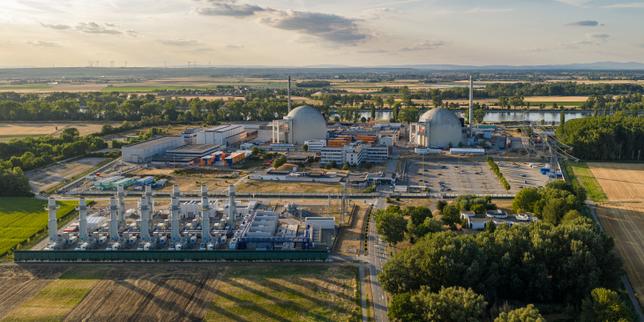
Germany spent decades shutting down its conventional nuclear reactors, completely stepping away from traditional fission energy. Yet, a massive change is quietly taking shape along the Rhine river. The decommissioned Biblis nuclear power station in Hesse, once a symbol of the country's nuclear phase-out, is getting a second life. It isn't being revived to burn coal or split atoms the old way. Instead, developers want to turn it into a world-class center for nuclear fusion.
If you look past the political irony, the move makes a lot of practical sense. Building an energy research facility from scratch takes decades and billions in zoning and grid approvals. Biblis already has heavy-duty industrial infrastructure, massive concrete reactor domes, turbine halls, and crucial high-voltage grid connections sitting right where they are needed. For a different perspective, consider: this related article.
The Plan for Biblis
The initiative centers around Focused Energy, a laser-fusion company that recently pulled in $240 million in funding to advance its commercial pilot plant goals. Backed by utility giant RWE—the very company that operated the old fission plant—the project aims to transition the site into a high-tech laser fusion campus.
Instead of building a greenfield site, engineers can reuse existing structures for target fabrication, laser testing laboratories, and administrative support. RWE brings decades of heavy nuclear site experience to the table, turning what could have been a risky scientific venture into a structured industrial project. Related coverage on the subject has been shared by Ars Technica.
Why Fusion is Different From Fission
Public hesitation around anything bearing the word "nuclear" is completely natural, especially in Germany. But fusion operates under an entirely different set of physical rules than traditional fission.
There is no chain reaction that can run away out of control. There is no long-lived high-level radioactive waste requiring hundreds of thousands of years of underground storage. While components near the reaction chamber experience some activation, the operational footprint is dramatically cleaner. German lawmakers have recognized this distinction, moving to establish specialized regulatory frameworks that separate fusion safety rules from traditional nuclear laws.
The Financial and Industrial Weight
This is not just a neat academic experiment. Major financial backers, including the European Innovation Council Fund and the German Federal Agency for Disruptive Innovation, are putting serious money behind the effort.
The state of Hesse has backed the regional transformation, and local academic institutions like the University of Darmstadt plan to expand their research footprint directly into the Biblis area. By co-locating heavy industrial engineering with academic physics, the region hopes to anchor a brand-new supply chain for laser technology. Solid-state lasers designed for these pilot systems need to be manufactured with industrial reliability rather than as one-off laboratory instruments.
Repurposing old industrial sites saves time, cuts down material waste, and utilizes existing grid assets that would otherwise sit idle. Watch how this public-private model unfolds over the next few years, because it might just become the blueprint for recycling heavy energy infrastructure across Europe.
L'Allemagne rêve grand avec le centre de Biblis qui cherchera comment atteindre la fusion nucléaire
This video provides a visual overview of how the former nuclear site in Biblis is planned to be repurposed for laser-driven nuclear fusion research.