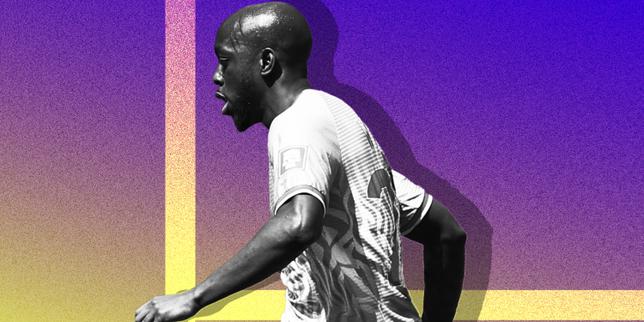
The mainstream football media loves a nostalgia trap, and right now, they are falling face-first into the "Black Stars of 2010" narrative. Every preview of Group L repeats the same lazy, romantic consensus: Ghana has qualified for its fifth World Cup, Jordan Ayew is in goal-scoring form, Carlos Queiroz brings veteran tournament leadership, and the talent pool from Manchester City to Athletic Club will naturally spark another historic African run.
It is a comforting story. It is also completely disconnected from tactical reality.
The belief that this Ghanaian squad can cruise past Panama and trade blows with England and Croatia is built on a fundamental misunderstanding of tournament mechanics. I have watched national associations pour millions into aging star rosters only to wonder why they crater under the summer heat. Ghana is not building a dark horse; they have built a structurally flawed, fragile collective that is uniquely ill-equipped for the specific tactical examinations of Group L.
The Mohammed Kudus Illusion and the Striker Problem
The casual analysis begins and ends with lamenting the injury of Mohammed Kudus. Commentators treat his absence like a minor software bug that can be patched over by shifting responsibilities to Antoine Semenyo or Iñaki Williams.
This misses the tactical point entirely.
Kudus was not just Ghana's best player; he was the structural glue holding an otherwise disjointed attack together. During the qualification campaign, Kudus functioned as the vital transition mechanism, dropping deep to escape pressure and carrying the ball into the final third. Without him, Ghana's progression metrics collapse.
Look at the options left behind. Carlos Queiroz’s squad is heavily weighted toward direct, space-eating transitions. Iñaki Williams is an elite weapon when running into 40 yards of green grass behind a high defensive line for Athletic Club. But against Panama's low block in Toronto, or Croatia's hyper-compact mid-press in Philadelphia, that space does not exist.
Worse, the burden of creation has devolved onto Jordan Ayew. At 34 years old, Ayew managed seven goals during qualification, a stat line the media has paraded as evidence of a late-career renaissance. It is a mirage. International qualification against Comoros and Chad rewards individual physical persistence. The World Cup group stage rewards structural efficiency. Relying on Ayew to be both the primary physical outlet and the creative hub against tactical juggernauts is a recipe for static, predictable possession.
The Queiroz Contradiction
The appointment of Carlos Queiroz was hailed as a masterstroke of pragmatism. The logic seemed sound: hire the ultimate defensive architect, lock down the backline, and pinch 1-0 wins.
Instead, the tactical execution has yielded a total identity crisis.
Queiroz demands a highly disciplined, positionally rigid defensive shape. Yet, Ghana’s current personnel is hardwired for instinctive, high-intensity dueling. Look at the recent international friendlies. Five consecutive defeats prior to a frantic, disjointed 1-1 draw against Wales have exposed a team caught between two worlds. The players want to step up and press; the system commands them to drop and contain.
When a manager tries to force a reactive, low-block system onto a squad missing its primary defensive anchor partnership through injury, disaster follows. Jerome Opoku and Jonas Adjetey are being asked to display elite international positional discipline when they are fundamentally accustomed to proactive, front-foot defending at the club level. The result is the worst of both worlds: a low block that still manages to leave massive gaps between the defensive and midfield lines. Thomas Tuchel's England or Luka Modrić’s Croatia will exploit those vertical spaces within fifteen minutes.
Dismantling the Group L Narrative
The football public looks at Group L and asks: "Can Ghana replicate the magic of 2010?"
That is the wrong question. The correct question is: "Can Ghana survive a three-match tactical gauntlet without a functional midfield?"
Let us brutally break down the matchups that the optimists think favor the Black Stars.
The Opening Trap: Panama
The consensus view marks June 17 in Toronto as a guaranteed three points for Ghana. This assumes Panama will play the role of compliant underdog. Under pressure, Panama has developed a highly physical, transition-heavy style that excels at punishing teams with poor rest-defense structures. If Thomas Partey is left isolated in the pivot while Ghana’s full-backs push high to break down a stubborn block, Panama’s wingers will carve the Black Stars open on the counter. A draw or a narrow loss here destroys Ghana's tournament before it even begins.
The Midfield Execution: England and Croatia
To progress, Ghana must take points from either England or Croatia. This is where the structural deficit becomes catastrophic.
Croatia’s midfield remains an elite laboratory of ball retention and tempo control. Ghana's midfield, absent Kudus and reliant on an overworked Partey alongside inexperienced domestic or secondary-league options, cannot compete for territory.
Imagine a scenario where Ghana attempts to sit in Queiroz’s preferred mid-block against Croatia. Without an elite press-resistant midfielder to relieve pressure upon winning the ball, Ghana will turn possession over immediately. They will be trapped in their own defensive third, suffocated by sustained waves of horizontal circulation until a central defender misses a rotation.
Against England, the problem flips. Tuchel’s sides excel at drawing opponents out and exploiting the half-spaces. If Ghana defends as deeply and passively as they did against Wales, Bukayo Saka and Jude Bellingham will simply operate between the lines with impunity.
The Myth of the "Easy" Expanded Format
The final defense mechanism of the hopeful fan is the expanded 48-team format. "Four of the best third-placed teams advance," they cry. "Ghana just needs one win!"
This structural change actually punishes flawed, top-heavy teams. In the old 32-team format, a single chaotic game or a red card could swing a four-team group. In the expanded format, goal difference across all groups becomes the ultimate arbiter for third-place qualification.
A team with a broken defensive structure that suffers a heavy defeat to a ruthless side like England will find its goal difference ruined. Pragmatic, deeply organized mid-tier European and South American teams will systematically accumulate low-scoring draws or narrow wins, securing those third-place spots with a goal difference of zero or plus-one. Ghana’s structural instability makes them highly susceptible to a blowout, effectively eliminating them from the third-place lottery even if they manage to scrape a chaotic win against Panama.
The path forward for Ghanaian football requires discarding the romantic ghost of 2010. Success at this level cannot be willed into existence by individual star power or conservative coaching cliches. Until the structural issues in possession and the defensive identity crisis are solved, the Black Stars are destined to be a high-profile casualty of tactical reality.
For an additional breakdown of how African nations are structurally adapting their tactical approaches ahead of the tournament matches in North America, this tactical review of continental setups offers excellent context on the evolving dynamics of international football systems.