The coffee machine in the corner of the fifth-floor breakroom was leaking again. It made a rhythmic, tinny plip-plip sound into a plastic cup left behind by someone who had already been restructured out of existence. Elena stared at the drop. She had spent twelve years building financial models for mid-sized logistics firms, translating the chaotic pulse of global shipping into tidy rows of blue-and-black ink. She knew the exact weight of a percentage point. She knew how a bad harvest in Argentina or a strike in Rotterdam rippled outward until it bruised a balance sheet in Chicago.
Then came the algorithms.
They did not arrive with marching bands or robotic overlords. They arrived as an update. A quiet patch installed on a Tuesday night. By Wednesday morning, the software had ingested ten years of Elena’s forecasting data, digested it in milliseconds, and spat out projections that were twenty percent leaner and thirty percent more accurate than her best work.
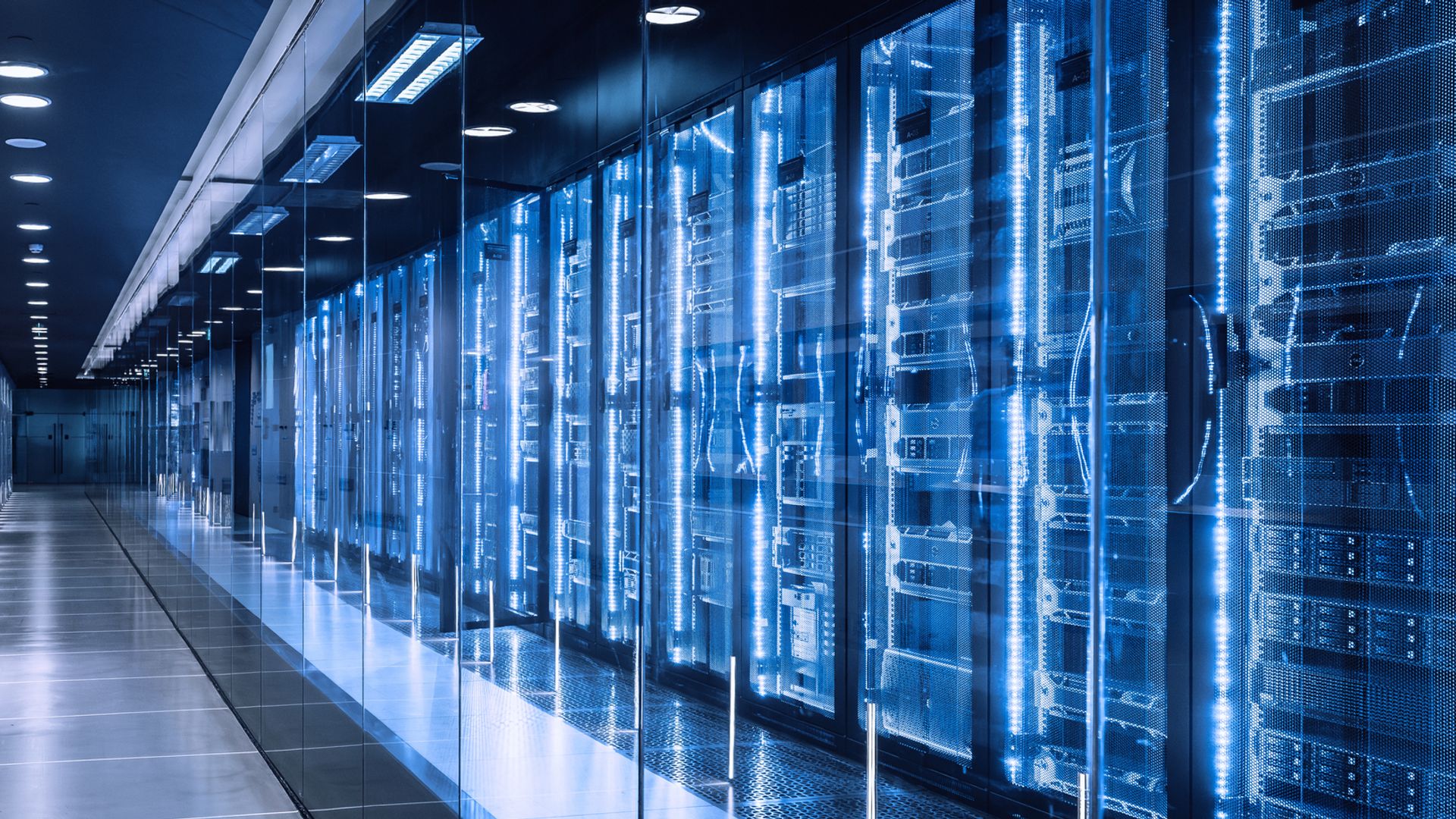
Nobody cheered in the office. There was no dramatic showdown at a whiteboard. There was only the low hum of the server racks downstairs and the sudden, freezing realization that the thing she spent her entire adult life mastering could now be replicated by a machine consuming pennies of electricity per hour.
We tend to measure economic revolutions by what they build. Steam engines laid iron tracks across continents. The internet spun an invisible web of communication that shrank the globe into a glowing screen. But the transition currently unfolding does not look like progress from the inside. It feels like gravity.
When Bank of England Governor Andrew Bailey recently issued a stark warning about artificial intelligence triggering a global economic downturn, financial journalists treated it as a curiosity. They translated his bureaucratic cadence into familiar headlines about productivity gains and labor market friction. They spoke of efficiency. They spoke of optimization.
They missed the human core of the equation entirely.
Efficiency is a wonderful thing on a spreadsheet. In practice, efficiency means elimination.
To understand why a sudden, hyper-accelerated wave of automation threatens to pull the rug out from under the global economy, you have to look past the stock tickers and examine the plumbing of daily life. Economies are not giant engines driven purely by cold mathematical output. They are giant, precarious ecosystems of income and consumption.
Consider a hypothetical town in Ohio, though it could be anywhere. Let us call it Millfield. For decades, Millfield survived on the back of regional insurance offices, mid-level accounting firms, and logistics coordinators. People like Marcus, a thirty-eight-year-old loan processor who spent fifteen years learning the labyrinthine rules of commercial real estate underwriting. Marcus makes a decent living. He pays a mortgage. He takes his family to the local diner on Friday nights. He buys shoes for his kids, contributes to the local little league, and occasionally hires a plumber when the basement floods.
Marcus is the economy.
Every dollar Marcus earns is immediately recycled back into the local community. His salary becomes the diner owner’s revenue, which becomes the waiter’s tip, which becomes grocery money down the street. It is a continuous, breathing circle of human activity.
Now, introduce a specialized corporate intelligence model capable of processing three thousand loan applications an hour with zero human error and zero need for healthcare benefits, dental plans, or paid parental leave.
The bank downtown does what any rational, profit-maximizing entity must do in a competitive market. It adopts the software. It lets go of Marcus and forty of his colleagues. The corporate profit margin ticks upward by three-tenths of a percent. The shareholders nod in quiet satisfaction during the quarterly earnings call in London or New York.
But Marcus cannot pay his mortgage anymore.
Multiply Marcus by ten million. Across white-collar sectors—legal research, coding, customer service, financial analysis, copywriting, administrative management—the tools of automation are eating upward through the income brackets. We are no longer just replacing factory floors with robotic arms; we are replacing the cerebral cortex of the modern office worker.
This is where the macroeconomic machinery begins to seize.
Classical economic theory assumes that displaced labor simply flows into new, more productive industries. When tractors replaced farmhands, those workers built automobiles. When personal computers automated ledger books, those accountants migrated to financial software development. The wheel turns, and humanity climbs higher up the value chain.
There is a terrifying flaw in applying that historical trajectory to the current moment.
The speed of previous transitions was measured in generations. It took decades for agriculture to industrialize, giving the workforce time to bleed slowly into emerging sectors, time to retrain, time to age out and be replaced by a younger population with different skills.
The current transition is happening in quarters.
There is no waiting period for an AI model to learn a new profession. A system trained on legal briefs today can master corporate tax law tomorrow and medical diagnostics by the weekend. The velocity of displacement vastly outstrips the velocity of human adaptation. You cannot retrain an entire global white-collar workforce into plumbing and electrical work overnight. Even if you could, the physical trades would quickly saturate, driving wages down to subsistence levels.
When millions of high-earning and mid-earning professionals lose their purchasing power simultaneously, consumer demand collapses.
You can automate the writing of legal briefs. You can automate the generation of marketing campaigns. You can automate the analysis of credit risk. But an algorithm does not buy a house. A server rack does not take its family out to dinner. Artificial intelligence does not purchase shoes, finance local little leagues, or pay property taxes to fund public schools.
When the income goes away, the spending goes with it. And when spending stops, the corporate profits that justified the automation in the first place turn to ash.
This is the hidden doom loop that central bankers whisper about behind closed doors. It is a crisis not of scarcity, but of hyper-abundance without distribution. We are engineering a world where it is possible to produce infinite amounts of cognitive output with near-zero human labor, while forgetting that the entire architecture of global trade relies on humans having money in their pockets to buy the things being produced.
Elena sat at her desk, watching the gray light of a Tuesday afternoon filter through the blinds. On her dual monitors, a script she had written was quietly executing a hundred hours of back-testing in thirty seconds. It did the job better than she could. It didn't get tired. It didn't have a mortgage. It didn't worry about the future.
She closed her notebook, clicked save on a file she knew would never be looked at by human eyes again, and listened to the coffee machine downstairs, still plipping away into an empty cup in a room full of ghosts.