Silence.
In East Asia, when the loudest man in the room suddenly vanishes from the public stage, the quiet that follows is never peaceful—it is heavy, electric, and thick with the scent of diesel smoke and old grievances. Building on this theme, you can find more in: Why Houthi Claims About Riyadh and Saudi Oil Are Mostly Theater.
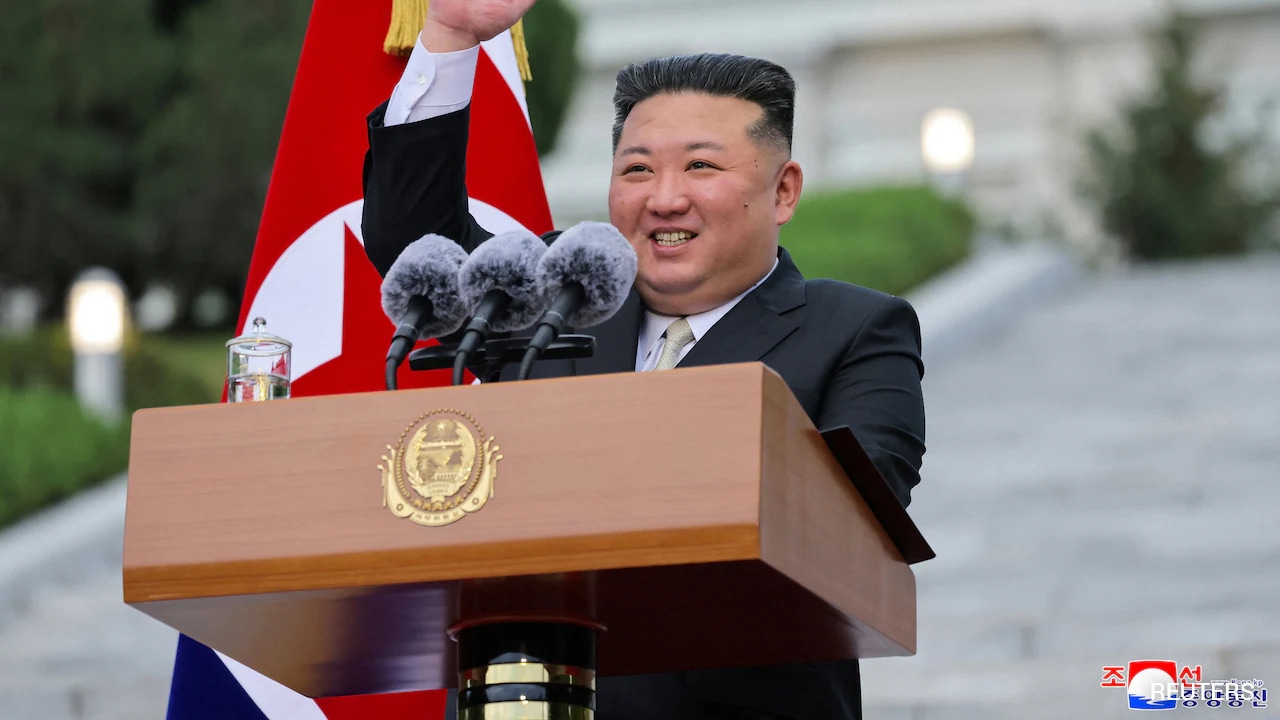
According to intelligence assessments and official claims from South Korea’s National Intelligence Service, North Korean leader Kim Jong Un recently crossed the heavily fortified Yalu River border into China. On paper, this is a dry diplomatic bulletin, the kind of headline that scrolls across the bottom of a cable news screen while people pour their morning coffee. A leader leaves his capital. A neighbor reports the movement. Analysts nod and file the report.
Look closer at the tracks, though. Analysts at The Washington Post have shared their thoughts on this matter.
When a leader who rarely leaves his own borders boards an armored, olive-green train in the dead of night, the tremor registers far beyond the ministries of Seoul, Beijing, and Washington. It shakes the kitchen tables of families split in half since 1953, rattles the fragile calculations of factory workers in border towns, and forces an entire region to hold its breath while waiting to see what kind of deal is being struck behind closed doors.
The Sound of Steel on the Yalu
To understand why a single unannounced trip across a river matters so deeply, consider a hypothetical character—let us call her Ji-hoon—a sixty-eight-year-old grandmother living in a modest apartment in Incheon, South Korea. Ji-hoon has spent most of her adult life watching the northern horizon the way coastal fishermen watch dark clouds gathering over the sea. Her older brother stayed behind in Pyongyang when the peninsula fractured seven decades ago. She has not heard his voice since the late 1990s.
For Ji-hoon, geopolitical intelligence is never abstract. When South Korean officials announce that Kim Jong Un is in China, she does not hear a sterile assessment of bilateral diplomacy. She hears the clatter of heavy steel wheels crossing the Sino-Korean Friendship Bridge at Dandong. She wonders whether this secret journey means food aid will flow into the North before winter tightens its grip, or whether it signals another round of weapons testing that will slam the door on family reunions for another decade.
Her anxiety mirrors the reality that intelligence analysts in Seoul face every time Pyongyang goes dark.
North Korea remains one of the most opaque states on earth. Its leadership treats travel schedules not as public calendars, but as state secrets guarded with the same intensity as missile silos. Unlike heads of state in democratic nations—whose flights are tracked by aviation enthusiasts and whose motorcades are broadcast live—Kim Jong Un moves through a fog of deliberate misdirection.
Because Pyongyang rarely confirms a trip until the leader is either standing beside a foreign counterpart or safely back inside North Korea, South Korea’s intelligence apparatus must piece together the truth from fragments. Satellite imagery of cleared rail lines. Unusual security cordons around Beijing’s Diaoyutai State Guesthouse. Sudden spikes in encrypted radio traffic along the border. A sudden clearing of schedules for senior Chinese officials.
When Seoul states publicly that Kim is in China, it is not offering casual speculation. It is signaling to the world—and to Beijing and Pyongyang—that the veil has been pierced.
Why the Armored Train Matters
History repeats itself on those tracks.
Long before Kim Jong Un took power, his father, Kim Jong Il, and his grandfather, Kim Il Sung, relied on the exact same method of travel. They shunned commercial aviation, favoring slow, heavily fortified trains equipped with armored plating, satellite communications, and conference rooms. Those trains were rolling fortresses, physical manifestations of a regime that trusts nothing outside its own perimeter.
Consider the sheer choreography required to move one man across a few hundred miles of track.
- Three trains, not one. Historical security protocols established by the Kim family typically involve an advance security train to inspect the rails for explosives, the main train carrying the leader, and a third train following behind with additional bodyguards and support staff.
- Total rail shutdown. Civilian rail traffic along the route grinds to a complete halt, stranding ordinary commuters and halting freight shipments for hours or days.
- Visual blackouts. Local authorities in Chinese border cities like Dandong frequently erect temporary barriers or restrict hotel bookings overlooking the river to prevent photographers from capturing a glimpse of the carriages.
Think of this diplomatic dance like two chess players sitting in a dimly lit room where only one of them is allowed to move the pieces in public. China and North Korea share a relationship forged in the crucible of the Korean War—one that Mao Zedong famously described as being as close as "lips and teeth." Yet the reality beneath that poetic metaphor has always been far more complicated, defined by mutual suspicion, economic dependency, and shifting strategic calculations.
Beijing wants stability on its northeastern border. A sudden collapse of the Pyongyang government would send millions of refugees across the Yalu River and potentially bring United States-allied forces right up to China’s doorstep. At the same time, Beijing bristles when North Korea’s nuclear ambitions provoke stronger military alliances between Washington, Seoul, and Tokyo.
Pyongyang, meanwhile, needs China’s economic lifeline. International sanctions have choked off most of North Korea’s legitimate trade, leaving China as its primary supplier of fuel, grain, fertilizer, and diplomatic cover at the United Nations Security Council. Yet North Korea’s leadership fiercely guards its independence, deeply resenting any perception that it is merely a client state taking orders from Beijing.
The Invisible Stakes Behind Closed Doors
When South Korean intelligence claims Kim Jong Un has entered China, the immediate question echoing across diplomatic corridors is simple: Why now?
Every summit between Pyongyang and Beijing carries a hidden ledger. Neither side travels without an agenda, and neither side gives away leverage for free.
For North Korea, the motives usually cluster around three urgent pressures. First comes economic survival. Years of international sanctions, compounded by border closures and climate-driven agricultural shortfalls, have strained the North Korean economy. Securing quiet assurances of fuel, food, or eased border trade from Beijing can buy the regime precious breathing room.
Second comes diplomatic leverage. Whenever North Korea prepares for high-stakes negotiations—or prepares to escalate tensions through missile launches or nuclear posturing—consulting with Beijing ensures that its most powerful neighbor will not join international efforts to punish Pyongyang further.
Third comes military and technological alignment. In an era where global alliances are hardening and great-power competition between the United States and China dominates international politics, Pyongyang sees an opening to position itself as an indispensable strategic partner to Beijing.
For South Korea, watching this alignment unfold from across the Demilitarized Zone is deeply unsettling.
Seoul’s policymakers must constantly calculate whether a warmer relationship between Beijing and Pyongyang leads to restraint or emboldenment. Does Chinese counsel persuade Kim Jong Un to pause weapons development in exchange for economic relief? Or does Chinese diplomatic backing convince Kim that he can test more powerful missiles without facing meaningful consequences at the United Nations?
Nobody outside the inner circle of those meetings knows for certain. And that uncertainty is precisely what makes these moments so nerve-wracking for everyone living on the peninsula.
Living Under the Shadow of Rumor
Anyone who has spent time studying or reporting on inter-Korean affairs knows a humbling truth: certainty is a luxury you almost never get.
In Seoul, intelligence briefings are scrutinized like ancient prophecies. A single phrase from the National Intelligence Service can send currency markets twitching, prompt emergency meetings at the presidential office, and dominate evening broadcasts. Yet even the sharpest analysts admit that North Korea’s internal decision-making remains a black box.
You learn to live with ambiguity. You learn that a leader’s absence from state media for two weeks might mean a secret diplomatic mission to Beijing—or it might mean he is inspecting a coastal resort, recovering from an illness, or simply waiting for the right moment to unveil a new weapons system.
Consider what happens next in the streets of Seoul and the border towns of northern China when South Korea’s claim hits the news wires.
In Dandong, merchants who rely on cross-border trade stare across the murky green water of the Yalu River, wondering if the customs gates will finally swing wider next week. In Seoul, defense officials quietly review readiness postures along the Demilitarized Zone, knowing that major diplomatic trips by North Korean leaders have historically preceded both unexpected peace overtures and sudden military provocations. And in Washington, diplomats pick up secure phones to coordinate responses with their South Korean and Japanese counterparts, trying to read the tea leaves before the official state media announcements even drop.
The human cost of this perpetual guessing game rarely makes the headlines, yet it permeates daily life across Northeast Asia.
Young South Korean men serving their mandatory military service along the frozen ridges of the DMZ stand watch through the night, their binoculars fixed on guard posts just a few hundred meters away, knowing that a handshake in Beijing could change the temperature of their border overnight. Ordinary North Korean citizens, insulated from outside news by strict state information controls, may not even know their leader has left the country until days later—when carefully edited photographs suddenly appear on the front page of Rodong Sinmun, showing him smiling beside Chinese leaders in immaculate banquet halls.
The Echoes of Past Journeys
To see where this latest journey might lead, look back at 2018.
For the first seven years of his rule, Kim Jong Un did not leave North Korea once. Foreign analysts wondered if he would ever travel abroad, or if domestic consolidation kept him tethered to Pyongyang. Then, in March 2018, an unverified rumor swept through Beijing: a mysterious green train had arrived at the main railway station under heavy security.
For two days, neither China nor North Korea said a word. South Korean and Western intelligence agencies scrambled to confirm who was aboard. Only after the train had departed did Beijing and Pyongyang officially announce that Kim Jong Un had met with Chinese President Xi Jinping.
That single secret trip reshaped the diplomacy of the entire region. Within months, Kim was walking across the military demarcation line to meet South Korean President Moon Jae-in, and boarding an Air China jet to Singapore for an unprecedented summit with U.S. President Donald Trump.
Yet history also offers a darker warning.
Other unannounced visits to China by North Korean leaders have been followed not by historic handshakes, but by nuclear detonations, long-range ballistic missile tests, and years of bitter diplomatic freeze. The train itself is neither an olive branch nor a weapon; it is simply a vehicle carrying the ambitions, fears, and calculations of a state determined to survive on its own terms.
What Remains When the Smoke Clears
Eventually, the official photographs will surface, or the silence will stretch until another crisis overtakes the news cycle. Analysts will dissect the seating arrangements, measure the length of the red carpet, and count which generals stood behind the leader during the banquet toasts.
But strip away the diplomatic jargon and the intelligence assessments, and the core reality remains starkly human.
Half a world away from the glittering conference rooms of Beijing, our hypothetical grandmother in Incheon—Ji-hoon—turns off the evening news. Outside her window, the lights of the port flicker against the dark water of the Yellow Sea. She pours a cup of barley tea, sits at her kitchen table, and looks at a faded black-and-white photograph tucked beneath the glass tabletop—a picture of a young boy standing beside his sister before a line was drawn across a map by men who never had to live on either side of it.
A train has crossed a river in the dark, and somewhere in a room sealed off from the world, powerful men are deciding what the next chapter will look like for millions of people who were never invited to the table.