Walk down the boardwalk in Asbury Park on a Tuesday in November, and you will hear the sound of forgetting.
It sounds like wind rattling the padlocks on shuttered storefronts. It sounds like the Atlantic Ocean chewing away at wooden pilings that have stood since the boardwalk was a glittering promenade for Victorian vacationers. For decades, New Jersey’s musical soul has existed mostly as a rumor, passed down through scratched vinyl records, fading Polaroids, and the half-remembered stories of aging bar band guitarists who swear they once shared a stage with a skinny kid from Freehold. Discover more on a similar subject: this related article.
Memory is a fragile currency. Without a vault to hold it, it evaporates.
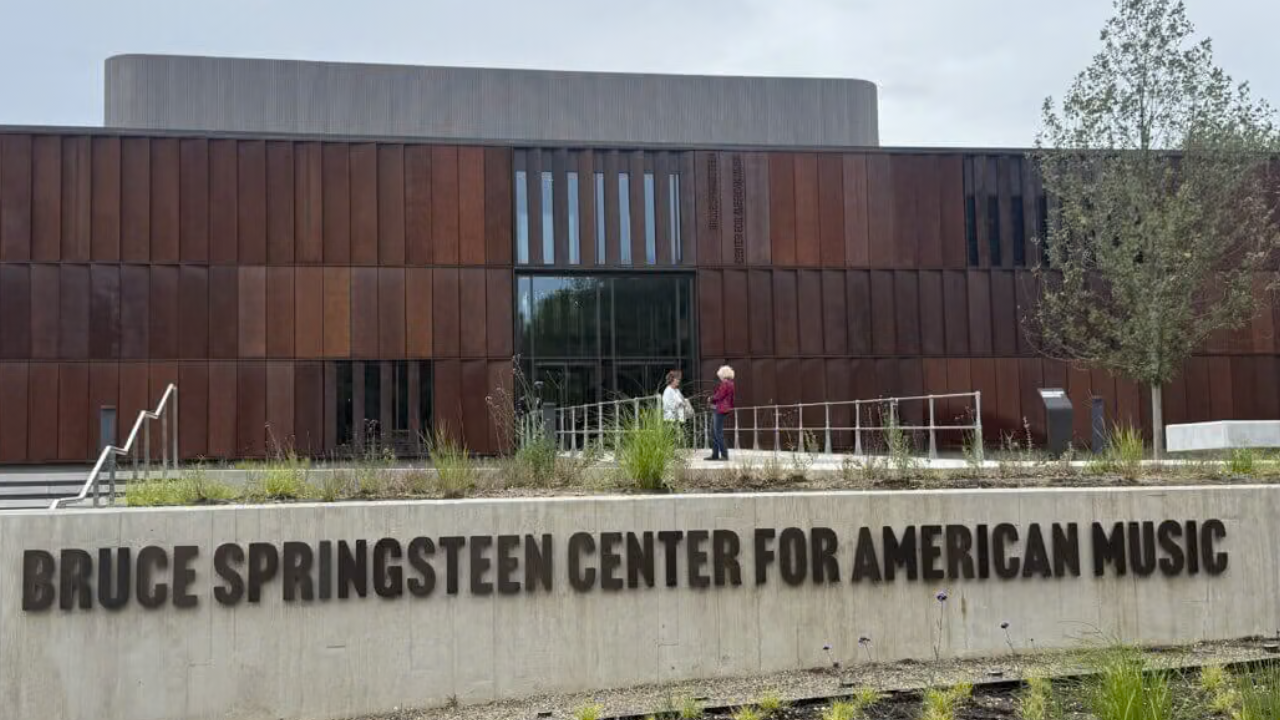
That is why the doors swinging open at the Bruce Springsteen Archives & Center for American Music at Monmouth University matter so much more than a ribbon-cutting ceremony or a press release could ever convey. On paper, the news is straightforward: a new, 30,000-square-foot facility in West Long Branch, New Jersey, has officially welcomed the public, housing tens of thousands of artifacts tied to Springsteen alongside the broader sweep of American musical history. More reporting by IGN explores related views on the subject.
Read that sentence again, and you might feel nothing. It sounds like a museum. It sounds like glass cases, velvet ropes, and quiet hallways where teenagers are told not to touch the walls.
You would be wrong.
What just opened on that campus a mile from the ocean isn't a mausoleum for rock-and-roll nostalgia. It is a rescue mission for the American working-class imagination.
The Weight of a Spiral Notebook
To understand what happens when you step inside this building, you have to picture a hypothetical eighteen-year-old kid—let’s call her Maya—sitting at a wooden table in the reading room. Maya isn't a millionaire collector from Manhattan. She’s a sophomore studying songwriting who works twenty hours a week at a diner off Route 35 to pay for her textbooks. She thinks great songs fall out of the sky fully formed, beamed straight into the brains of geniuses while the rest of us struggle to rhyme fire with desire.
Then an archivist slides a gray acid-free box across the table.
Inside isn't a platinum record. It’s a cheap spiral notebook from 1974. The pages are yellowed, the margins choked with crossed-out lines, ink blots, and desperate revisions. Maya looks at the handwriting and realizes she is staring at the agonizing, unglamorous labor behind "Born to Run." She sees the false starts. She sees the moments where the songwriter nearly gave up on a verse that millions of strangers would eventually scream at the top of their lungs in packed stadiums.
Everything changes in that moment.
When you strip away the myth of effortless genius, you leave room for actual human hope. That is the quiet radicalism of an archive built around process rather than just celebrity. I have spent years digging through music history collections across the country, and most of them suffer from the same fatal flaw: they worship the trophy instead of the sweat. They show you the sequined jumpsuit, the smashed Stratocaster, the Grammy statuette gleaming under halogen spotlights. Those objects tell you that a rock star was a god. A scribbled lyric sheet with three coffee rings on it tells you that a rock star was a person sitting at a kitchen table at three in the morning, terrified that the words wouldn't come.
Why Monmouth and Why Now
People outside New Jersey often ask why a sprawling center for American music belongs in West Long Branch rather than New York City, Nashville, or Cleveland. It is a fair question, and if you only look at tourist foot traffic, Manhattan wins every time.
Put it in Midtown, though, and the story dies.
New York turns everything into a commodity. Put a working-class songwriter’s handwritten notes three blocks from Times Square, and they become just another stop between a Broadway matinee and an overpriced steakhouse. You lose the geography that made the music possible in the first place.
Monmouth County is the soil. From this campus, you are minutes away from the Greasy Lake of Springsteen’s early mythology, a short drive from the Stone Pony’s sticky floors, and within earshot of the coastal highways that connect decaying industrial towns to the endless horizon of the Atlantic. The location isn't an accident of real estate; it is an act of preservation. It keeps the artifacts tethered to the exact social and economic pressure cooker that forged them.
Think of the archive as a lighthouse built on the cliffs where the shipwrecks actually happened. You don't build a lighthouse in a landlocked museum district because the tourists are already there. You build it on the jagged coast so anyone navigating those same dark waters can find their bearings.
More Than One Man’s Shadow
There is a real danger whenever an institution carries a single towering name on its facade. Visitors walk through the front doors expecting a shrine—an endless loop of "Dancing in the Dark" and walls papered with leather jackets. Even I wondered, when the plans for this building were first announced years ago, whether the gravity of Bruce Springsteen’s fame would crush the broader mission of studying American music.
It is an honest concern. One giant shadow can easily starve everything else of sunlight.
Yet walking through the exhibition galleries and research spaces reveals a deliberate, stubborn refusal to treat Springsteen as an island. His artifacts—nearly 35,000 items spanning photographs, periodicals, oral histories, concert posters, and personal instruments—function less like a monument and more like a doorway. You walk through that door and immediately collide with the lineage that fed him.
You see the dust-bowl urgency of Woody Guthrie, who understood long before rock and roll existed that an acoustic guitar could be a weapon against amnesia. You feel the gospel thunder of Sam Cooke and the raw, aching storytelling of Hank Williams. You trace the bloodlines connecting folk troubadours, blues pioneers, soul visionaries, and punk upstarts.
Springsteen never pretended he invented the wheel; he spent fifty years pointing furiously at the people who built the road before he got his driver’s license. The Monmouth center takes that obsession and turns it into physical architecture. A visitor comes to see the famous Fender Esquire from the cover of Born to Run, and three steps later they are standing face-to-face with the civil rights protest songs, the labor union ballads, and the forgotten regional R&B singles that made that guitar speak the way it did.
The Invisible Crisis of the Digital Age
We live in an era where we assume everything is saved forever because it lives in the cloud.
That assumption is a lie.
Ask any historian or sound engineer what is happening to the cultural record of the twentieth and twenty-first centuries, and they will tell you a horror story. Magnetic tape is shedding its oxide layer in basements across America, turning priceless live recordings into silent brown dust. Early digital hard drives are failing. Floppy disks are unreadable. Basement floods in coastal towns—something Jersey Shore residents know intimately after Hurricane Sandy—wipe out shoeboxes of irreplaceable photographs and master tapes in a single afternoon.
Meanwhile, streaming platforms have flattened music history into an endless, context-free playlist. A nineteen-year-old listening on earbuds hears a 1965 soul track immediately after a 2026 bedroom pop song, with zero sense of the political turmoil, studio technology, or human struggle that separated them. Music becomes wallpaper. Disposable. Weightless.
An archive pushes back against that weightlessness.
Inside the climate-controlled vaults at Monmouth University, temperature and humidity are calibrated to the fraction of a degree. Fragile paper is stabilized. Deteriorating audio reels are digitized at archival resolutions before the tape disintegrates entirely. Oral histories are recorded with the roadies, sound engineers, club owners, and backup singers whose names never appeared on album covers, capturing memories before those voices go silent forever.
Consider what happens next when a researcher, a documentary filmmaker, or a curious high school teacher gains access to those primary sources. Instead of repeating third-hand Wikipedia summaries, they can hear the exact inflection in a 1973 radio interview. They can read the tour itinerary showing how a band survived on fifteen dollars a day while driving a broken-down van through snowstorms in the Midwest. History stops being an abstract timeline and recovers its pulse.
Inside the Experience
So what does it actually look like when you plan a visit?
You arrive on the tree-lined campus in West Long Branch, where the Georgian architecture of Wilson Hall—itself a filming location for the 1982 movie Annie—sits just across from a sleek, modern structure designed to house both public exhibitions and serious academic scholarship. The building doesn't scream for attention with neon guitars or gimmicky roadside attractions. It carries the quiet dignity of a library combined with the electric charge of a backstage hallway right before house lights go down.
The public galleries rotate exhibits drawn from the vast holdings, meaning a trip this winter won't look identical to a trip next summer. One gallery immerses you in the anatomy of a live performance—not just the glamour of the stage, but the grueling logistics, setlist revisions, and split-second improvisations that turn a three-hour concert into a communal ritual. Another space pulls back the lens to examine how American songwriters have chronicled war, economic collapse, migration, and faith across more than a century.
There is a 230-seat theater built for intimate performances, film screenings, and conversations where artists dissect their craft without the soundbite pressure of late-night television. Upstairs and behind secure doors sit the research rooms, open by appointment to students, journalists, biographers, and everyday fans who want to look closely at the raw materials of American culture.
Let’s return for a moment to our hypothetical student, Maya, sitting at that reading table. After two hours with the 1974 notebooks, she closes the folder, walks out into the crisp November air, and heads toward her car. She doesn't suddenly possess Bruce Springsteen’s talent. What she possesses is something far more useful: proof that greatness isn't magic. It is revision. It is stubbornness. It is paying attention to the lives of ordinary people who rarely get their names in the paper.
What We Risk Losing
There are plenty of cynical voices ready to dismiss any rock-and-roll archive as boomer self-indulgence—another victory lap for a generation refusing to leave the stage.
I understand that skepticism. We have all seen nostalgia weaponized to sell overpriced box sets and convince people that nothing good has happened since 1975. If this center merely served to tell young visitors that the best days of American music are behind them, it would be a failure before its first season ended.
Look closer at the mission, though, and the exact opposite emerges.
Every great leap forward in American music happened because someone raided the archive of the past and stole what they needed to build the future. Bob Dylan raided Woody Guthrie and the folk anthologies. Chuck Berry raided country swing and jump blues. Hip-hop producers in the Bronx raided James Brown’s drum breaks and turned forgotten vinyl into a global revolution. You cannot remix a history you have never been allowed to touch.
By opening these doors to the public—and embedding the center directly inside a working university where eighteen-year-olds walk past its windows every single day—Monmouth University has placed a loaded toolbox right in the path of the next generation.
Outside on the Jersey Shore, the winter wind still rattles the padlocks on the boardwalk, and the Atlantic keeps chewing at the pilings. Things wear down. Eras end. The people who built the soundtrack of the twentieth century are growing older, and no building on earth can stop the clock.
Inside the vault in West Long Branch, however, the lights are on, the boxes are labeled, and a kid from down the highway is turning the page of a spiral notebook, realizing for the first time that her own story might be worth writing down.