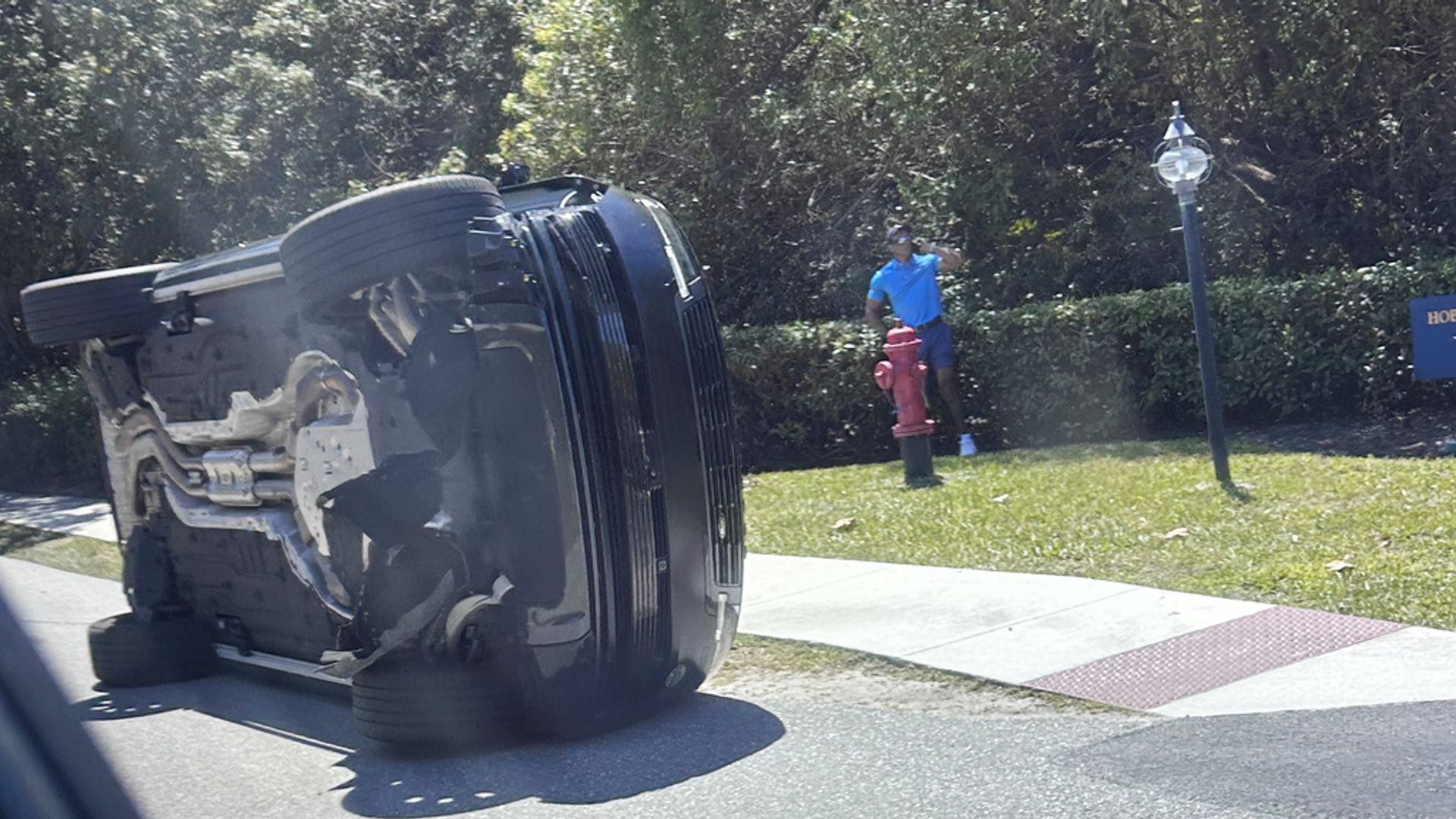
The pre-dawn light in Rancho Palos Verdes usually carries a sense of sterile peace. It is the kind of quiet that only extreme wealth can buy, where the Pacific breeze meets manicured lawns and the world feels buffered from the chaos of ordinary life. But on that Tuesday morning, the silence was shattered by the scream of tires and the sickening crunch of a luxury SUV transforming into a cage of twisted metal.
When the first responders arrived at the scene, they didn't just find a car wreck. They found the remains of a myth.
Tiger Woods lay trapped inside the wreckage of a Genesis GV80, a vehicle designed to be a fortress of safety. The impact had been so violent that the car was a mangled shell, resting hundreds of feet from where it had first left the road. His legs, the foundation of the most celebrated swing in the history of the game, were shattered.
The Mirror of the Broken Windshield
Imagine the scene through the eyes of the first deputy on the scene. Carlos Gonzalez didn't see a golfing deity. He saw a man. He saw a human being who was dazed, trapped, and possibly dying.
Woods was conscious, but he was drifting. The report would later describe his eyes as bloodshot and his demeanor as confused. It is the kind of detail that cuts through the carefully curated image of a Nike-sponsored superstar. It brings him down to the level of every other person who has ever woken up in a hospital bed wondering how they got there.
The report also mentioned something else. It mentioned the pills in his pocket. These weren't just chemicals. They were symbols of a long, agonizing battle with a body that had begun to fail him years ago.
Consider the physical toll of being Tiger Woods. Every swing he ever took was an act of controlled violence. His back had been carved open by surgeons multiple times. His knees had been rebuilt. He lived in a constant state of repair, a cycle of agony and recovery that would have broken a lesser man a decade earlier.
The pills in his pocket weren't evidence of a party. They were the tools of a man trying to survive his own greatness. They were the quiet companions of a career built on the absolute refusal to quit, even when the nerves in his spine were screaming for him to stop.
The Geometry of a Disaster
The investigators looked at the tire marks, or rather, the lack of them. There were no skid marks on the pavement. No signs of braking. The car didn't slide into the brush; it flew into it.
The data from the vehicle's "black box" told a story of a man who never touched the brakes. Instead, the throttle was pressed to 99 percent in the final moments before the impact.
This wasn't a reckless teenager speeding for the thrill of it. This was something different. It was the movement of someone who was not entirely there. The road in that section of Rolling Hills Estates is a steep, winding descent. It is a place where gravity does most of the work, and the human at the wheel is supposed to be the anchor.
On that morning, the anchor was gone.
The bloodshot eyes mentioned in the report are a window into a soul that was likely exhausted. Woods had been hosting a tournament. He had been filming content for a media partner. He was performing the role of Tiger Woods, a job that is far more taxing than actually playing the game.
The invisible stakes of being a legend are rarely discussed. You are expected to be perfect, to be resilient, and to be available. You are a brand, a legacy, and a father. Sometimes, the weight of all those roles becomes a fog that even the brightest headlights cannot pierce.
The Fragility of the Hero
We often treat our sports heroes like they are made of granite. We forget that they are made of bone and blood, and that bone can snap and blood can spill.
When the news broke, the world stopped. People who don't know a birdie from a bunker felt a pang of genuine grief. It wasn't just about the golf. It was about the vulnerability of an icon. It was the realization that the man who seemed invincible was actually the most fragile person on that hillside.
The report noted that Woods had no memory of the crash. He didn't know where he was going or how he had ended up in the dirt. That kind of amnesia is a mercy, perhaps. But it is also a terrifying indicator of how far he had drifted from the reality of the road.
The paramedics had to use the "jaws of life" to pull him from the vehicle. That phrase is often used in news reports, but think about what it actually means. It means the car had become a tomb. It means the only way out was to cut the world open.
The Long Walk Back
The aftermath of the crash wasn't just a medical recovery. It was a spiritual one. The reports of pills and bloodshot eyes were fodder for the tabloids, but for those who understood the context of his life, they were a cry for help.
Woods has spent his entire life in the public eye. He has been the prodigy, the champion, the disgraced husband, and the comeback king. This crash was the latest, and perhaps most brutal, chapter in a story that is as much a tragedy as it is a triumph.
He survived. That in itself is a miracle. But the cost of that survival is etched into every step he has taken since. The limp is there. The pain is there. The memory of that morning in Rancho Palos Verdes is likely a blur, but the consequences are a permanent fixture of his daily existence.
The pills in his pocket were a reminder that even the most elite athletes are subject to the same laws of biology and chemistry as the rest of us. We want them to be gods, but they are just men who have learned how to do extraordinary things with very ordinary bodies.
When you look at the facts of the report, don't just see a celebrity scandal. See a man who was pushed to his absolute limit by his own ambition and the expectations of a world that refused to let him grow old.
The wreckage of that Genesis SUV was eventually hauled away. The road was cleared. The quiet returned to the hills of Southern California. But for the man who was pulled from that metal cage, the road would never be the same again.
He was left with the scars, the reports, and the heavy silence of a world that watched him fall, waiting to see if he would ever find the strength to stand up one more time.
The sun eventually rose that day, just as it always does. It shone on the debris and the broken glass, illuminating the cold reality that no matter how fast you drive or how high you climb, the earth is always waiting to pull you back down.