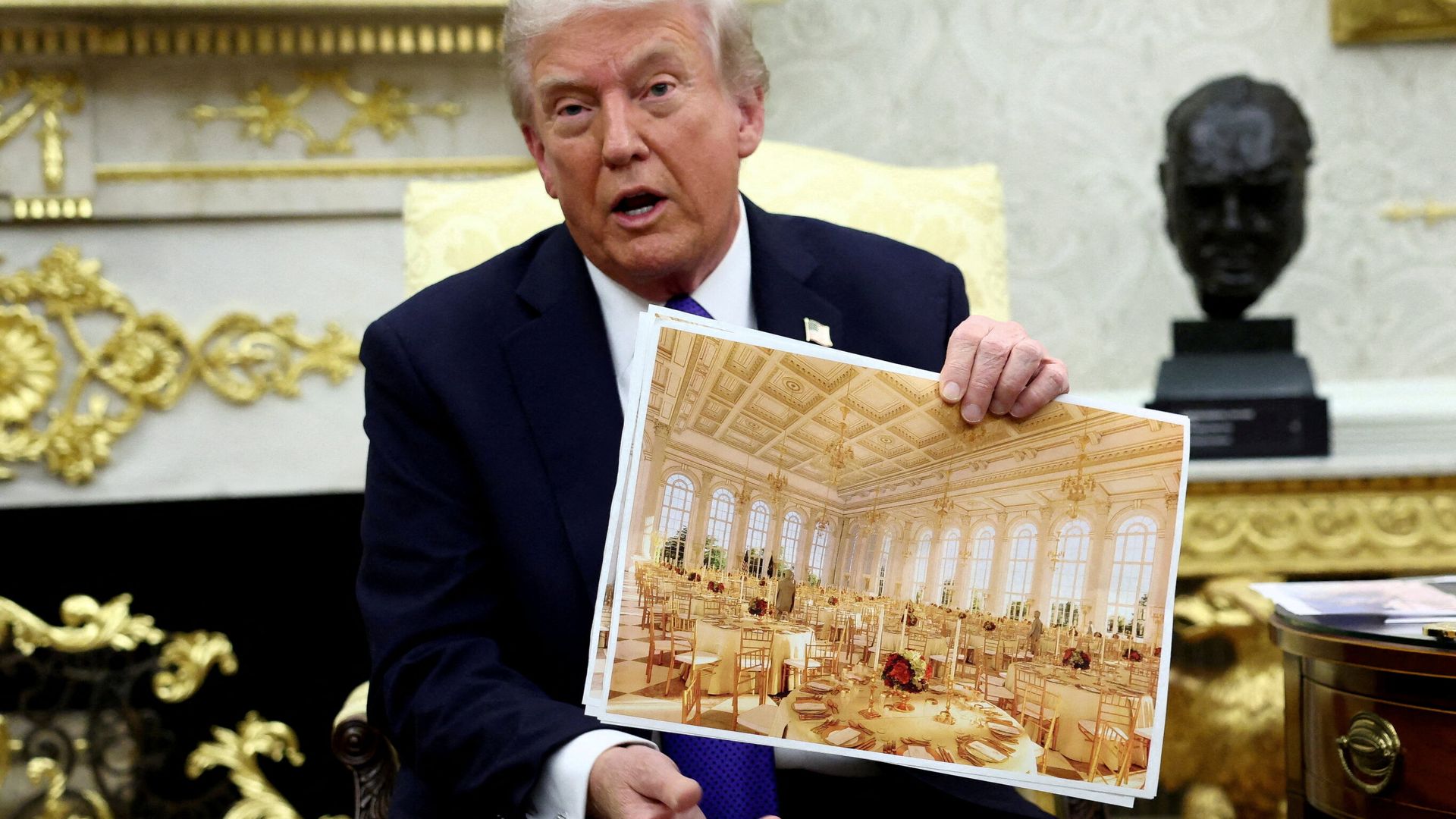
The recent judicial intervention halting Donald Trump’s ambitious White House ballroom expansion has triggered a predictable storm of political theater, but the real story lies in the collision of executive vanity and federal procurement law. While the former president frames the injunction as a partisan attack on "aesthetic excellence," the legal reality is grounded in the mundane, rigid world of government contracting. A federal judge paused the multi-million dollar project not because of the color of the curtains, but because the administration bypassed mandatory competitive bidding processes designed to protect taxpayer funds. This wasn’t just a design choice. It was a procedural bypass that backfired.
The Architecture of a Legal Meltdown
The ballroom project was pitched as a necessary modernization of the Executive Mansion’s social capacity, a way to host world leaders without the constant reliance on temporary tents. On paper, it makes sense. However, the mechanism used to greenlight the construction was a "sole-source" contract, a tool typically reserved for national security emergencies or situations where only one specific vendor on earth can perform the task.
The administration argued that the unique historical nature of the White House required a specialized firm with "unmatched intimacy" with the property’s layout. The courts didn't buy it. In government work, intimacy is no substitute for an open market. When the judge issued the stay, it wasn't a comment on the gold leaf; it was a demand for transparency.
This shutdown reveals a fundamental misunderstanding of how the "People's House" actually functions. It is a museum, an office, and a home, but legally, it is a federal asset. You cannot renovate it like a private club in Palm Beach. The General Services Administration (GSA) has rules that exist specifically to prevent the kind of insider Dealing that this project appeared to favor.
Follow the Paper Trail to the Dust
To understand why this hit a wall, you have to look at the timeline of the contract award. Usually, a project of this scale—involving structural changes to a National Historic Landmark—takes years of vetting, environmental impact studies, and public comment. This project moved at a speed that raised red flags across the oversight committees.
- The Bid Process: There wasn't one. The contract was handed to a preferred developer with deep ties to the hospitality industry.
- The Oversight Gap: The National Capital Planning Commission was reportedly briefed only after the heavy machinery was already idling on the South Lawn.
- The Budgetary Bloat: Estimates for the ballroom jumped from $15 million to nearly $45 million in a single quarter, with little explanation for the 300% increase.
When the injunction landed, Trump’s reaction was focused on the "obstruction" of his vision. But for the analysts watching the ledger, the obstruction was coming from within. By trying to outrun the bureaucracy, the administration guaranteed a collision with the judiciary.
The Preservationists vs The Populists
Inside the Beltway, this isn't just a fight about money. It’s a war over the soul of federal aesthetics. Preservationists argue that any addition to the White House must be "subordinate" to the original 1792 design. The proposed ballroom, described by critics as "Louis XIV meets Atlantic City," represented a jarring departure from the restrained Neoclassical style that has defined the American presidency for over two centuries.
The legal challenge actually came from a coalition of historical societies and taxpayer watchdog groups. They argued that the project would cause "irreparable harm" to the site’s historic fabric. This isn't just flowery language; it's a specific legal standard. Once you knock down a wall in a 200-year-old building, you can't just put the original bricks back. The damage is permanent.
The judge’s ruling highlighted that the administration failed to conduct the "Section 106" review required by the National Historic Preservation Act. This isn't a suggestion. It is a mandate. Ignoring it is like trying to build a skyscraper without a foundation; eventually, the whole thing falls over.
The High Cost of Cutting Corners
There is a pervasive myth that government efficiency is an oxymoron and that the only way to get things done is to bulldoze the rules. In reality, the rules are the only thing that keeps these projects from becoming bottomless pits of litigation. By skipping the vetting stage, the administration essentially invited every disgruntled contractor and architectural critic in the country to sue.
They did.
The result is a construction site that is now costing thousands of dollars a day just to maintain in its current, half-finished state. Security details have to be posted around open trenches. Equipment rentals continue to pile up. The "savings" promised by an accelerated timeline have vanished, replaced by legal fees and the mounting costs of bureaucratic paralysis.
The Ripple Effect on Future Renovations
This halt sets a massive precedent for how future administrations handle the White House grounds. If the court eventually rules that the ballroom project must start from scratch with an open bid, it will serve as a warning to any future executive who thinks they can treat federal property as a personal portfolio.
It also puts the GSA in an impossible position. The agency is caught between an executive branch that wants results yesterday and a judicial branch that demands adherence to the 1966 National Historic Preservation Act. This tension isn't going away. It is the new baseline for any federal construction in the modern era.
The ballroom was supposed to be a legacy piece, a shimmering monument to a particular brand of American power. Instead, it has become a case study in the limits of executive reach. It stands as a skeleton of steel and rebar, a reminder that in Washington, the process is often more powerful than the person at the top.
A Warning to the Market
Investors and contractors who play in the federal space should take note. The days of "handshake deals" for high-profile projects are over, regardless of who sits in the Oval Office. The courts are increasingly unwilling to defer to executive "emergencies" when those emergencies involve interior decorating.
If you want to build for the government, you have to play by the government’s rules. There are no shortcuts. There are no exceptions for "greatness." The moment you try to bypass the competition, you hand your opponents the very shovel they will use to bury the project.
The ballroom project is currently a ghost site. The machinery is silent, the workers are gone, and the only thing moving is the pile of legal briefs growing on the judge's desk. This isn't a victory for "the left" or "the right." It’s a victory for the boring, necessary, and utterly non-negotiable rule of law. The White House will eventually get its upgrades, but they won't be delivered on a silver platter or through a back door. They will be bought and paid for through the same grueling, public, and transparent process that every other federal building must endure.
Stop looking at the gold leaf and start looking at the statute books.