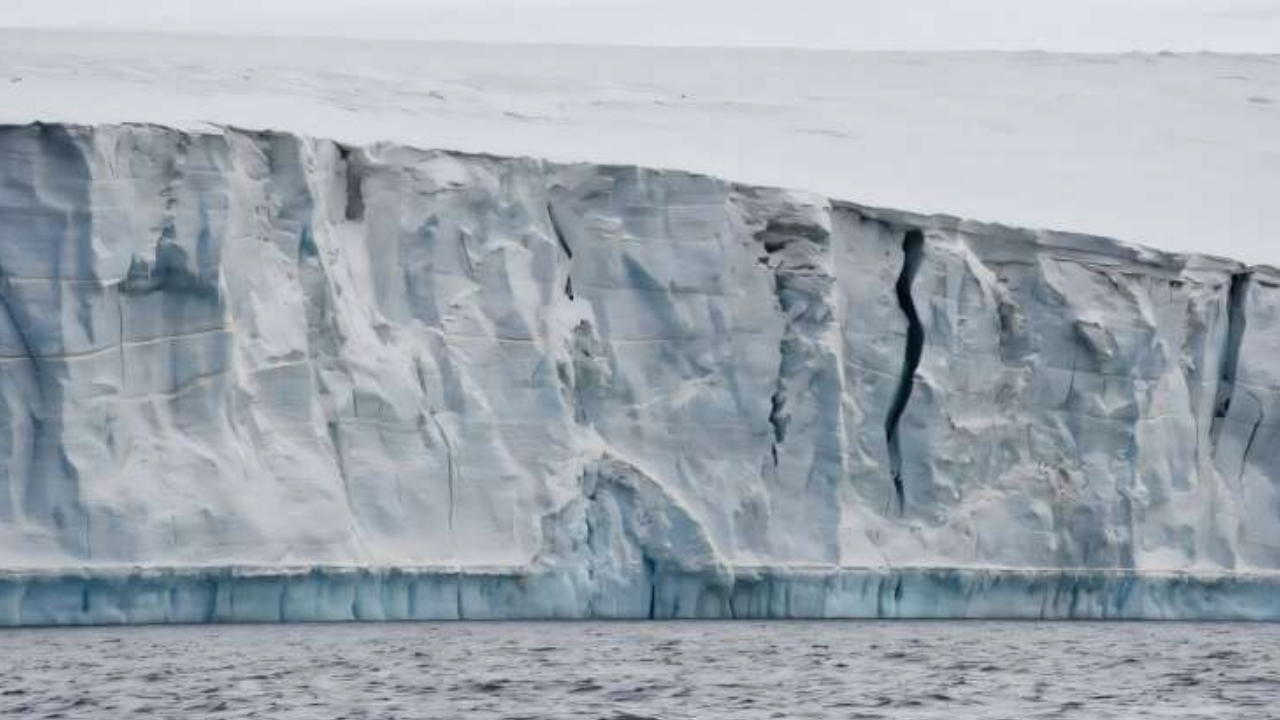
Vertical glacier cliffs retreat rapidly when warmer ocean water undercuts their bases, yet they can also stabilize—or stall out—once the ice front reaches shallower water, narrower fjords, or bedrock ridges that limit calving. Long-term collapse remains far less certain because ice mechanics rarely follow a straight line, and a front that sheds ice at breakneck speed this decade can slow down the next without signaling permanent safety.
Watch a beat reporter cover a cryosphere story long enough and you start recognizing a familiar pattern. A study drops with dramatic numbers about receding ice fronts, headlines scream about runaway doom, and then a closer read reveals that the physics on the ground is much messier than a single trend line suggests. Glaciology has never been a neat ledger of losses. It is a tug-of-war between gravity, ocean heat, submarine topography, and ice strength, played out in places where instruments freeze, satellites only see surfaces, and ship time costs tens of thousands of dollars a day. If you found value in this post, you should check out: this related article.
Why Rapid Glacier Cliff Retreat Does Not Automatically Mean Collapse
When people picture a calving front, they often imagine a giant wall of ice toppling like a domino line all the way back to the continental interior. That mental model misses how marine-terminating glaciers actually behave. A glacier advancing into seawater or a deep glacial lake loses mass through surface melt, basal melting where water eats away at the ice underwater, and calving, the breaking off of icebergs from the front.
Retreat accelerates when warm water erodes a notch near the waterline or deeper below it, leaving overhanging ice that shears off under its own weight. Once a front pulls back into deeper water, buoyancy and reduced back-stress can speed up retreat even further. Yet retreat is a boundary shift, not an automatic ticket to total sheet collapse. For another look on this story, see the latest coverage from NBC News.
Consider a hypothetical example of a tidewater glacier sitting inside a steep-walled fjord. Suppose warm currents push into the basin and melt the lower face of the ice cliff, triggering rapid calving that pulls the front back three kilometers over a decade. That sounds like an unstoppable slide. Now suppose that three-kilometer retreat brings the ice front onto an underwater sill—a shallow ridge of rock or glacial sediment—where the water depth drops sharply. Suddenly, less warm water can reach the deep face, icebergs ground out before breaking free cleanly, and the front slows or holds position. The earlier retreat was real. The assumed collapse never arrived.
Bedrock geometry acts like a series of gates along a valley floor. If the bed slopes downward inland—what glaciologists call a reverse bed slope—retreat into deeper water can feed faster ice discharge and more calving. If the bed rises inland or narrows laterally between rock walls, friction and geometry can check that momentum, at least until conditions shift again.
The Blind Spots Inside Ice Cliff Science
Anyone reading glossy summaries of polar research should ask a blunt question before treating a model as gospel. What did the researchers actually measure, and what were they forced to guess?
Satellite altimetry and radar interferometry have transformed how scientists track ice speed, surface elevation, and terminus position across vast regions. Those tools are indispensable. Still, satellites cannot look straight through hundreds of meters of opaque ice or map every nook of a submerged grounding zone with millimeter precision.
- Subglacial topography remains patchy in many fjords and ice-sheet margins because mapping hidden rock under thick ice requires painstaking airborne radar or seismic surveys that leave gaps between flight lines.
- Ocean circulation near the ice face is notoriously hard to capture because icebergs, sea ice, and katabatic winds make winter and near-front ship operations hazardous or impossible.
- Fracture mechanics and crevasse depth govern when a tall cliff fails structurally, yet ice behaves partly like a viscous fluid over long timescales and partly like a brittle solid during sudden breaks.
Because direct measurements at the exact point where ice, bedrock, and ocean meet are scarce, researchers rely on numerical models to test hypotheses. Good scientists state their assumptions openly. Media coverage often flattens those caveats into certainty. When a paper says long-term collapse is less certain, that is not hedging for effect; it reflects real gaps in observing what happens beneath the surface over decades and centuries.
Ocean Heat Versus Air Temperature
A common mistake in public debate is blaming every glacial shift on warm summer air alone. Air temperature matters enormously for surface melt and snow accumulation in the accumulation zone high up the mountain or ice sheet. Down at the water's edge, the ocean often calls the shots.
Water carries vastly more heat per unit volume than air. When relatively warm subsurface water flows into a fjord—driven by wind patterns, shelf dynamics, or density differences—it can melt submerged ice far faster than warm breezes melt the top of the cliff. Even if air temperatures cool for a stretch, warm water tucked beneath a fresher, colder surface layer can keep chewing at the base of the glacier.
Conversely, a glacier that retreats out of deep water onto a shoal or into a narrower channel may see its calving rate drop even while regional temperatures stay elevated. That dynamic explains why neighboring glaciers fed by similar weather can behave differently. One may race backward while the next holds steady or fluctuates in fits and starts.
| Factor | What It Does at the Cliff | Why It Complicates Long-Term Forecasts |
|---|---|---|
| Subsurface ocean heat | Melts ice below the waterline and undercuts the front | Depends on wind-driven circulation and sill depth, not just surface air |
| Bedrock and fjord shape | Controls water depth, grounding stability, and side friction | Hidden under ice or deep water; small bumps can stall retreat |
| Ice thickness and fracturing | Sets stress levels and how tall or unstable a cliff can get | Tall cliffs face higher stress, yet local flaws and meltwater matter too |
| Surface melt and snowfall | Changes mass balance upstream and runoff into the glacier | Meltwater can reach the bed and lubricate flow, or vary year to year |
Stabilization in one stretch does not erase vulnerability further upstream. A glacier can pause on a high spot today and resume retreating if warming pushes past the next threshold or if thinning reduces its grip on the bed. Treating a temporary pause as permanent recovery is just as careless as treating rapid retreat as instant doom.
What Policymakers and Analysts Actually Need
Decision-makers in coastal engineering, insurance, shipping, and regional planning do not need panic headlines, and they certainly do not need false comfort. They need clear distinction between near-term cliff dynamics and multi-century sea-level commitments.
Rapid retreat at a specific glacier cliff matters locally and regionally. It alters sediment plumes, fjord ecosystems, local iceberg hazards, and the pace at which ice drains from a basin. At the same time, global sea level reflects the combined behavior of mountain glaciers, Greenland, and Antarctica over long horizons, where emissions pathways and ice-sheet stability interact over generations.
Analysts reviewing new cryosphere studies should look past the headline verb and check four practical details:
- Time horizon: Is the study tracking years, decades, or centuries, and how far do the observations actually stretch?
- Physical mechanism: Did the authors tie retreat to ocean warming, bed geometry, calving physics, or surface melt?
- Uncertainty bounds: Where do model assumptions carry wide spreads rather than tight consensus?
- Local vs. global scope: Does a dramatic finding apply to one glacier system or a broader ice sheet?
Ice cliffs do not care about neat narratives or news cycles. They respond to physics, push against rock and water, pause when geometry allows, and give way when stresses mount. Read the evidence with steady eyes, separate what is measured from what is projected, and keep watching the bed beneath the ice.