The smell of burning rubber does not wash out of wool. You can hang your coat on the balcony for three days in the biting November wind, letting the Frankfurt dampness soak into the fibers, and still, when you bring it inside, the acrid ghost of melting asphalt and tear gas clings to the collar.
I learned this standing two blocks off the Zeil, Frankfurt’s gleaming commercial artery, watching a nineteen-year-old boy in a thrifted North Face jacket stare at a shattered luxury storefront. He wasn’t grabbing handbags. He wasn’t running. He was just standing there, breathing hard, watching the blue strobe lights of police vans paint the wet cobblestones in frantic, alternating flashes of panic and authority.
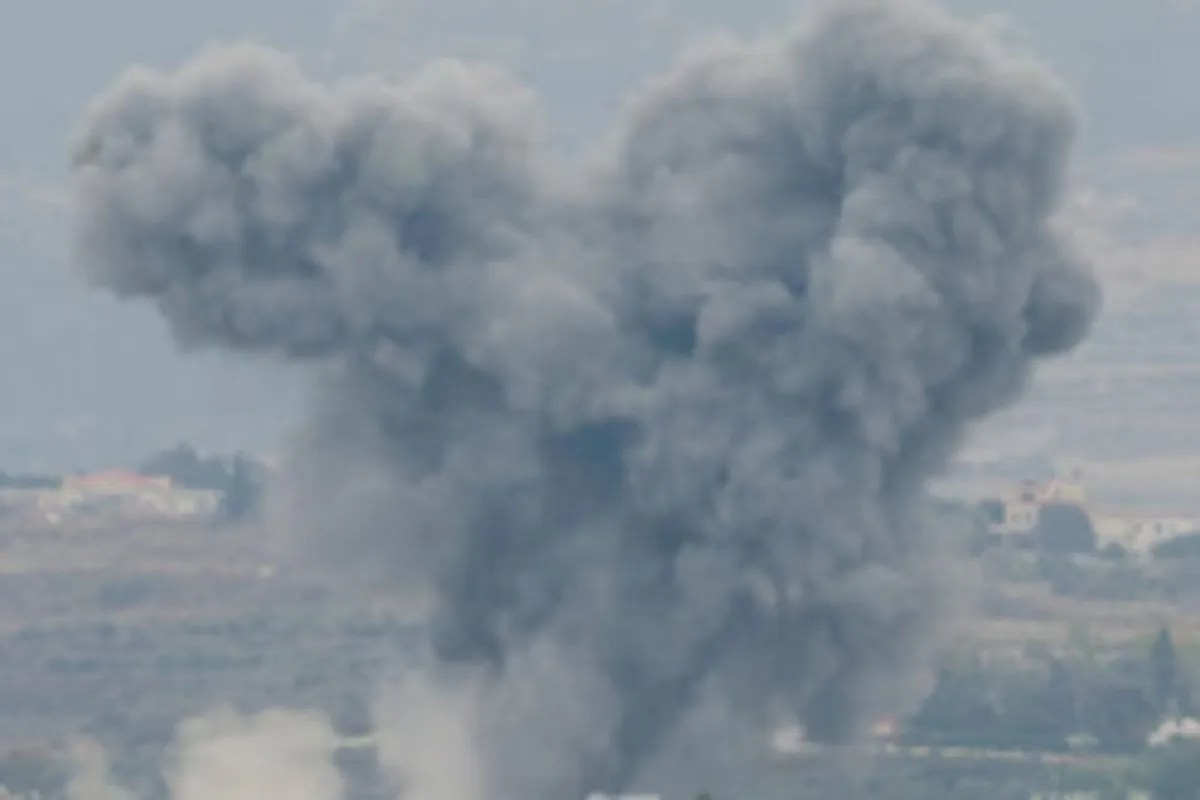
Behind him, a trash bin burned with a low, greasy roar. Somewhere down the street, the sharp crack of a bottle—or perhaps a homemade incendiary—echoed off the glass facades of the European Central Bank’s neighbors.
If you read the standard wire reports the next morning, the story was tidy. Easy to digest over coffee. Gen Z protests rock Germany. Looting in Frankfurt. Firebombs thrown at cops. The headlines framed it as a sudden eruption of senseless hooliganism, a mindless contagion of violence imported from the fringes of social media.
They lied by omission.
To understand why young people are hurling stones at riot shields in the financial heart of Europe’s largest economy, you have to stop looking at the broken glass and start looking at the math. You have to look at the quiet, suffocating desperation of a generation that was promised a sturdy ladder and handed a rope made of sand.
The Architecture of a Broken Promise
For decades, the German social contract was simple, predictable, and famously solid. You worked hard, you respected the rules, you navigated the rigorous apprenticeship or university track, and in return, the state guaranteed stability. Not extravagance, perhaps, but dignity. A warm apartment. A reliable train. A pension that wouldn't force you to collect returnable bottles from public bins at seventy-five.
Consider Lukas, a composite of dozens of twenty-somethings I have spoken with across Hesse and North Rhine-Westphalia over the past two years. Lukas is twenty-two. He works forty hours a week as a logistics coordinator while finishing an evening degree. On paper, he is the exact kind of industrious young citizen the German economy desperately needs to offset its rapidly aging workforce.
In reality, Lukas spends fifty-eight percent of his net income on a thirty-square-meter studio apartment with single-pane windows that weep condensation all winter.
When he buys groceries at the discount supermarket, he watches the total climb by twenty or thirty percent compared to just a few years ago. When he tries to take the regional train to visit his mother, delays and cancellations have become so routine they are no longer news—they are a running joke with a bitter punchline. And when he looks at his paycheck, he sees massive deductions funding a pension system that every honest economist admits will be functionally bankrupt by the time his hair turns gray.
Lukas did not throw a firebomb in Frankfurt. He stayed home, nursing a cheap beer and scrolling through livestreams of the chaos.
"I don't condone burning shops," he told me quietly when we met at a noisy kebab stand the following afternoon. He rubbed his eyes, the dark circles beneath them looking bruised. "It’s stupid. It hurts the wrong people. But when I saw the flames on my screen, I didn't feel shocked. I felt... recognized. For the first time in years, the people in those glass towers looked scared of us instead of ignoring us."
That sentence is the key to the entire crisis.
The Spark and the Tinderbox
To outsiders, the suddenness of the Frankfurt unrest—and the parallel flashpoints bubbling up in Berlin, Hamburg, and Leipzig—looks like spontaneous combustion. But fires do not start without fuel, and Germany has been stockpiling dry kindling for a decade.
The immediate triggers vary depending on which corner of the crowd you ask. For some, it is the brutal collision of soaring housing costs and stagnant entry-level wages. In major German cities, rent for new leases has skyrocketed over the past ten years, far outpacing inflation and leaving young renters trapped in a housing market that feels less like a free market and more like a hostage situation. For others, the rage is fueled by deep geopolitical anxieties, a sense that their government is funneling billions into military budgets and foreign entanglements while letting domestic schools crumble and youth centers shutter. Add to that the lingering psychological scar tissue of the pandemic years—when twenty-somethings sacrificed their formative social milestones to protect older generations, only to be blamed afterward for rising mental health crises and economic sluggishness—and you have a pressure cooker with a welded lid.
Think of a generation's patience like an old wooden bridge. Every policy failure, every ignored protest, every dismissive op-ed calling young people "lazy" or "entitled" is another heavy truck rolling across the planks. You don't see the structural rot from the outside. The bridge looks fine. Until one Tuesday night, a single spark lands on the dry timber, and the whole thing collapses into the river.
In Frankfurt, that collapse took the shape of masked figures darting through clouds of pepper spray, smashing the windows of flagship boutiques and hurling improvised projectiles at overwhelmed municipal police.
Looting happened. There is no point pretending it didn't. Opportunists always ride the coattails of genuine fury, turning political despair into a smash-and-grab for designer sneakers and electronics. Firebombs were thrown, putting young police officers—many of them the exact same age as the protesters—in mortal danger. To romanticize violence is an insult to the people who have to sweep up the shards of their livelihoods at dawn.
Yet, focusing exclusively on the criminal acts is like diagnosing a fever by smashing the thermometer.
The Invisible Geography of Frankfurt
To really feel the friction driving these riots, you only need to walk ten minutes in Frankfurt.
Start at the base of the Commerzbank Tower, soaring nearly three hundred meters into the gray sky, a monument to European capital, sleek and impenetrable. Here, men in tailored coats step out of black sedans, checking watches worth more than Lukas makes in a year. The air smells of expensive espresso and clean money.
Walk west toward the Hauptbahnhof, the central station, and the surrounding streets. Within blocks, the architecture shifts from triumphant glass to battered concrete. Open drug use spills onto the sidewalks. Delivery riders on battered e-bikes weave aggressively through crowds, risking their bones in the rain for below-minimum-wage payouts so someone three blocks away doesn't have to walk for Thai food. Behind the cracked plaster of overcrowded apartment blocks, families pack four people into two-bedroom flats.
Frankfurt is not just a city. It is a physical manifestation of the wealth gap splitting modern Europe down the middle.
When Gen Z protesters gathered in the streets, they weren't marching in an abstract political arena. They were standing directly beneath the physical monuments of a financial system that seems engineered to extract wealth from the young and funnel it upward. Every shattered window on the Goethestraße was a crude, violent attempt to puncture the membrane separating the untouchable elite from the invisible working class.
Police unions immediately demanded tougher sentencing, faster prosecutions, and expanded surveillance powers. Politicians from across the spectrum lined up at microphones to condemn the "attack on our democratic order" and promise zero tolerance.
Listen closely to those speeches, and you will notice what is missing. Not once did a senior minister stand before the cameras and ask: What have we done to make a twenty-year-old feel that burning a police van is a more rational use of their evening than studying for an exam?
Why the Old Playbook Is Failing
Historically, protests in Germany followed a predictable choreography. Unions organized marches. Student groups drafted manifestos. Green activists staged sit-ins. There were leaders, spokespeople, clear demands, and negotiation tables. The state knew how to absorb that energy, channel it into committees, and diffuse it over time.
What is happening now defies that script.
This wave of Gen Z unrest is largely leaderless, decentralized, and fueled by the hyper-accelerated algorithms of TikTok and Telegram. Anger does not wait for a union hall meeting; it mutates in real time across encrypted group chats and fifteen-second video clips. When a clash breaks out in one district, geolocated footage draws hundreds more young people to the scene within minutes—some driven by ideological fury, others by the intoxicating rush of collective defiance, and many simply because they have nothing left to lose.
This makes the unrest terrifyingly unpredictable for authorities, and deeply confusing for older observers who look for a coherent manifesto and find only raw, unfiltered rage.
I admit, standing on the fringes of that Frankfurt intersection, watching teenagers laugh as they kicked over metal barricades while sirens wailed in the distance, I felt a cold knot of dread in my stomach. There is nothing noble about chaos. Chaos does not build affordable housing. It does not fix broken trains. In fact, it almost always achieves the exact opposite—handing reactionary forces the excuse they need to tighten state control, militarize policing, and strip away civil liberties under the banner of restoring order.
If you are twenty-one and furious at the system, throwing a Molotov cocktail feels like power. Five seconds after it lands, it is just an excuse for the system to hit back ten times harder.
The Cost of Looking Away
Germany stands at a precarious crossroads, and the fires in Frankfurt are a flare shot straight into the night sky.
For too long, the political establishment has treated the grievances of young people as a minor demographic annoyance—something to be placated with vague promises about climate targets or digital modernization while the material foundations of youth life quietly rot. Because young people vote in smaller numbers than pensioners, their pain has been treated as politically expendable.
That calculation just expired.
When a generation loses faith in the peaceful mechanisms of change—when voting feels like shouting into a pillow, and peaceful marches are met with patronizing pats on the head—the street becomes the only parliament left. You can deploy water cannons. You can arrest hundreds of teenagers. You can replace every pane of glass on the Zeil with reinforced, shatterproof acrylic.
None of it will fix the underlying fracture.
The morning after the riots, I walked back through the center of Frankfurt before the rush hour began. Municipal crews in bright orange vests were already at work, the rhythmic scrape of their shovels clearing piles of glitter-like safety glass from the wet pavement. Boarding crews were hammering raw plywood over the hollowed-out frames of luxury boutiques.
A young woman with a backpack stopped beside me, waiting for the pedestrian light to turn green. She looked at the boarded-up windows, then down at her phone, then up at the towering bank headquarters catching the first pale light of dawn. Her expression wasn't angry. It was flat, exhausted, and entirely devoid of surprise.
The light turned green. She stepped over a blackened streak of soot on the crosswalk and walked toward the train station, disappearing into the gray morning crowd.