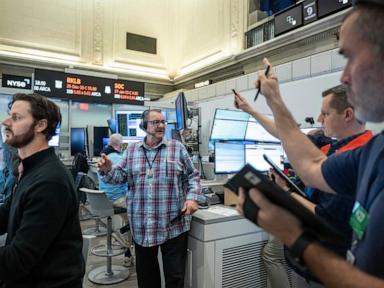
Wall Street trips over hot inflation numbers, and suddenly Asian and European indices pop on the back of semiconductor headlines. The financial press immediately wraps the day in a neat, comforting bow. They tell you artificial intelligence chip demand is so unstoppable that it can single-handedly decouple global equities from macroeconomic gravity.
That story is pure financial theater. Don't miss our recent article on this related article.
If you believe global markets are shrugging off sticky inflation because data centers need more silicon, you are misreading the tape. You are mistaking localized capital expenditure concentration for broad economic health. Worse, you are buying into the exact narrative that institutional desks use to offload risk onto retail momentum chasers right before the credit cycle bites.
I have sat on institutional trading desks through three major capex cycles, watching portfolio managers blow tens of millions of dollars chasing headline-driven decoupling myths. Every single time, the story sounds identical. Some miraculous new technology supposedly renders interest rates irrelevant. Every single time, the math eventually wins. If you want more about the context of this, The Motley Fool provides an in-depth breakdown.
The Decoupling Delusion
The lazy consensus goes like this: US Consumer Price Index (CPI) or Personal Consumption Expenditures (PCE) data comes in hot, the Federal Reserve signals higher-for-longer rates, Wall Street sells off, and then Taipei, Seoul, and Tokyo rally because foundry orders are full. Pundits call this resilience.
It is actually a massive structural distortion.
When a handful of mega-cap hyperscalers—Microsoft, Alphabet, Meta, Amazon—commit hundreds of billions of dollars to capital expenditures, that money has to go somewhere. It flows directly down the supply chain to Taiwan Semiconductor Manufacturing Company (TSMC), SK Hynix, ASML, and a select few component suppliers. Because these specific companies dominate the weighting of their respective regional indices—TSMC alone accounts for roughly a third of the Taiwan Capitalization Weighted Stock Index—a surge in their share prices creates the optical illusion of a broad market rally.
Look beneath the hood of those rising global indices. Equal-weighted metrics tell a completely different story. Domestic consumption across Europe and parts of Asia remains sluggish. Manufacturing Purchasing Managers' Indices (PMIs) outside of specialized electronics are hovering near contraction. Small-cap equities, which actually depend on local credit conditions and consumer spending rather than hyperscaler capex budgets, are bleeding out.
The market is not rising despite inflation. A tiny, hyper-concentrated slice of the global hardware supply chain is temporarily masking a widespread stagnation.
The Hardware Trap Nobody Wants to Price In
To understand why this rally is built on shaky ground, you have to look at the mechanics of semiconductor economics. Chipmakers are notoriously cyclical, yet Wall Street is currently pricing them like recurring-revenue software monopolies.
Let us define capital intensity properly, because commentators routinely butcher it. Capital intensity is the amount of fixed capital required to generate one dollar of revenue. Leading-edge semiconductor fabrication is among the most capital-intensive businesses in human history. Building a single 2-nanometer fab costs upwards of $20 billion, and those machines depreciate aggressively whether they run at 100% capacity or 60%.
Right now, foundry utilization for high-end AI accelerators and High Bandwidth Memory (HBM) is maxed out. Margins look glorious. Analysts extrapolate those peak margins out to 2030.
Here is what they are missing: the revenue-to-capex gap.
As Sequoia Capital partner David Cahn famously highlighted in his "AI's $600B Question" analysis, there is a staggering chasm between the money being spent on AI infrastructure and the actual end-user software revenue generated by that infrastructure. You cannot buy GPUs forever just to train models that lose money on every API call.
Imagine a scenario where hyperscalers realize their enterprise AI software adoption is growing at 15% per year instead of the 80% needed to justify their current server buildouts. They do not slowly taper their chip orders. They slam the brakes. Because chip lead times are long, customers double-order during shortages to guarantee allocation, creating a phantom backlog. The moment end-demand softens, those double orders vanish overnight. That is the classic semiconductor bullwhip effect, and no amount of AI hype repeals the laws of inventory cycles.
Why Inflation Actually Kills the AI Trade
The competitor narrative treats inflation as a localized Wall Street headache that Asian chipmakers can safely ignore. That reveals a fundamental ignorance of how global liquidity and discount rates operate.
First, the cost of capital is universal. When US inflation refuses to die, Treasury yields stay elevated. The 10-year Treasury yield is the baseline risk-free rate against which every asset on earth is priced. Higher yields compress valuation multiples for long-duration assets. AI stocks are the ultimate long-duration assets because their promised cash flows sit years in the future. If yields stay pinned at 4.5% or climb toward 5%, the math required to justify a 40x forward earnings multiple on a hardware supplier breaks down.
Second, currency dynamics create a silent squeeze. Hot US inflation keeps the US dollar strong. While a weak yen or won theoretically helps exporters like Tokyo Electron or Samsung on paper, it imports devastating energy and raw material inflation into those exact economies. Central banks like the Bank of Japan and the Bank of Korea are then forced into an impossible corner: defend their currencies by tightening monetary policy, or let their domestic consumers get crushed by import costs. Neither option supports a healthy, sustained bull market.
Third, inflation eats hyperscaler free cash flow. The tech giants funding this AI chip boom are not immune to the broader economy. Advertising budgets at Alphabet and Meta, e-commerce margins at Amazon, and enterprise IT budgets at Microsoft all depend on consumer and corporate health. If sticky inflation forces consumers to pull back on discretionary spending, corporate IT departments freeze non-essential software upgrades. When free cash flow growth slows at the top of the pyramid, the capex spigot at the bottom gets turned off.
Dismantling the Consensus Questions
If you are trying to position your portfolio right now, standard financial media search queries will lead you straight off a cliff. Let us dismantle the three questions investors keep asking—and replace them with the ones that actually matter.
Should you buy semiconductor ETFs when Wall Street sells off on inflation?
No. Buying broad semiconductor index funds during an inflation-driven dip is picking up pennies in front of a steamroller. Broad ETFs force you to own analog chipmakers, automotive silicon suppliers, and legacy industrial semiconductor firms that are currently drowning in excess inventory and high interest rates. Furthermore, you are buying the AI leaders at peak valuation multiples right when macro liquidity is tightening. If you want exposure to the infrastructure buildout, you look for bottlenecks with pricing power—like specialized packaging, power grid transformers, or cooling infrastructure—not crowded index funds.
Are global markets decoupling from the US Federal Reserve?
Stop asking if global markets are decoupling from the Fed. They never do. The US dollar accounts for the vast majority of global trade invoicing and cross-border debt. When the Fed keeps financial conditions tight, dollar liquidity drains from the global system. Regional rallies driven by sector-specific news are merely counter-trend bounces within a broader liquidity tightening regime. When a genuine margin call hits New York, institutional funds liquidate their winners in Tokyo, Seoul, and Frankfurt first to raise cash. Your "decoupled" international winners become liquidity ATMs during a real drawdown.
Does strong AI chip demand protect tech stocks from a recession?
Ask Cisco shareholders from the year 2000 how well "unstoppable internet infrastructure demand" protected them when corporate spending contracted. Demand for the underlying technology can be completely real—the internet did change the world—while the stock prices of the hardware providers still crash 80% because the market pulled five years of demand forward into twelve months. Technological inevitability does not equal investment safety. Valuation and cycle timing dictate returns, not the coolness of the product.
The Uncomfortable Downside of Fighting the Tape
Before you rush out to short the semiconductor index or dump every tech stock in your account, let us be brutally honest about the flaw in this contrarian stance.
Markets can remain irrational—and concentrated—far longer than a short seller can remain solvent.
I have seen disciplined value managers get carried out on stretchers because they shorted overvalued hardware cycles six months too early. Momentum is a violent force. As long as hyperscalers are locked in an existential prisoner's dilemma—where none of them dares to be the first to cut AI capex out of fear of falling behind—the orders will keep flowing. Nvidia, TSMC, and their immediate peers can easily beat quarterly earnings estimates for another two or three quarters even if the broader macroeconomy is rotting underneath them.
Furthermore, sovereign AI initiatives—governments buying domestic compute capacity for national security reasons—are introducing a price-insensitive buyer into the market. Unlike a CFO who demands a return on investment within eighteen months, a defense ministry or sovereign wealth fund will happily overpay for clusters just to own the hardware. That creates a temporary floor under demand that traditional cyclical models fail to capture.
How to Actually Play This Divergence
You do not need to short the bubble to avoid getting crushed by it, and you do not need to swallow the mainstream narrative that inflation no longer matters. Instead of trading the headline noise, position yourself around the structural realities that the financial press ignores.
- Audit your hidden concentration risk. Pull up the holdings of your global, emerging market, and tech funds. You will likely discover that you own the exact same five semiconductor and mega-cap tech stocks across four different tickers. Trim overlapping exposure so a single capex slowdown does not wipe out your entire equity sleeve.
- Follow the physical bottlenecks, not the silicon. Everyone is staring at GPU designers. Look at what happens when those chips actually get plugged in. They require massive amounts of electricity, grid interconnects, switchgear, and liquid cooling. Utilities, copper producers, and electrical equipment manufacturers trade at a fraction of semiconductor multiples while enjoying multi-year backlogs backed by regulated rate bases rather than volatile tech budgets.
- Respect the yield curve. When inflation prints hot and Treasury yields spike, treat rallies in high-multiple international tech stocks as liquidity events to rebalance, not confirmations of a new bull market. Keep dry powder in short-duration Treasuries yielding over 4.5% so you have the cash to buy quality assets when the inevitable inventory correction hits.
- Separate the technology from the ticker. AI is transforming enterprise workflows, drug discovery, and industrial automation. Acknowledge that reality while refusing to pay software-as-a-service multiples for cyclical manufacturing businesses.
Stop letting lazy headlines dictate your capital allocation. The next time Wall Street sells off on inflation and global chip stocks jump, recognize it for what it is: a crowded trade hiding behind a single supply chain, whistling past the graveyard of tight monetary policy. Protect your capital accordingly.