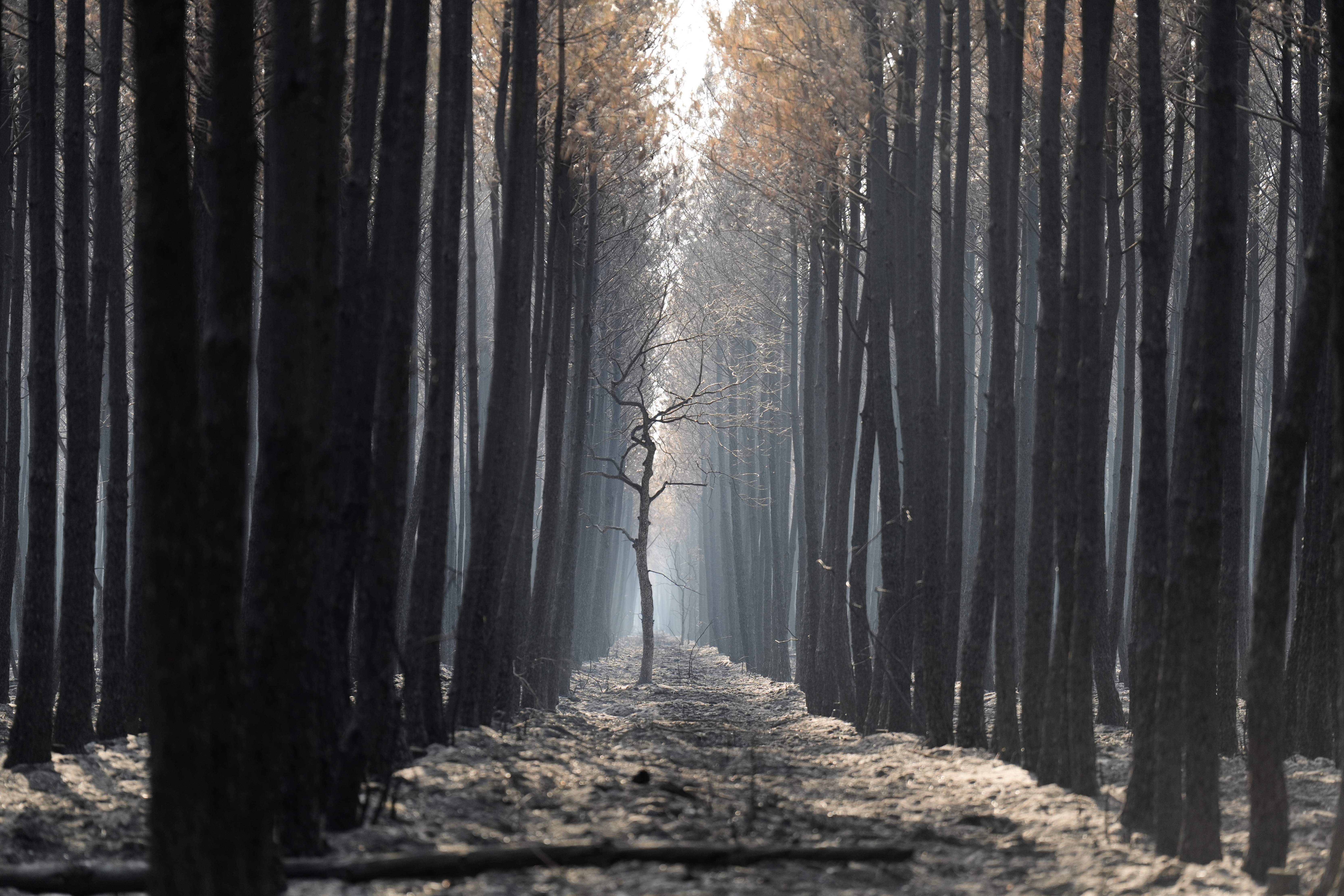
The headlines love a neat, comforting narrative. We are routinely told that global burning is sitting at record lows, with satellite imagery painting a picture of a planet that is somehow safer from fire than it used to be. Every wildfire season in North America or Europe triggers wall-to-wall panic, emergency declarations, and apocalyptic social media feeds. Then, months later, the technocrats step in with global data sets showing that total burned area worldwide has actually declined over the past two decades, largely thanks to shrinking African savannas.
It sounds like good news. It is also dangerously misleading.
I have spent years watching institutions hide behind macro-level spreadsheets while regional ecosystems burn to the ground. Relying on global aggregate burned area to judge fire safety is like measuring the health of a person by their average body temperature while their brain is on fire. It is a statistical sleight of hand that completely ignores ecological intensity, fuel load dynamics, and the catastrophic localized reality of high-severity fires.
The Fallacy of the Global Aggregate
Let us dismantle the lazy consensus first. When researchers tell you that global burned area has decreased, they are heavily weighting the African continent, where traditional pastoral burning and savanna management have historically accounted for the vast majority of burned hectares globally. As savannas fragment, convert to agriculture, or experience fire suppression, total global numbers drop.
Statistically, the spreadsheet looks cleaner. Ecologically, you are comparing apples to atomic bombs.
A low-intensity, fast-moving grass fire that sweeps across a savanna every few years is a natural, healthy component of that ecosystem. It recycles nutrients, clears dead material, and leaves root systems intact. Contrast that with a modern conifer forest fire in the Pacific Northwest or the boreal forests of Canada, where a century of fire suppression has turned the landscape into an absolute powder keg. When these forests catch, they do not merely burn; they sterilize the soil, melt rock, vaporize seed banks, and release thousands of tons of carbon per acre into the atmosphere.
Treating a hectare of savanna burn as equivalent to a hectare of old-growth temperate forest burn is statistical malpractice. Yet, this is the exact metric used to soothe the public into believing the fire crisis is overblown.
Why North America and Europe Are Not Statistical Outliers
The media frames North American and European infernos as localized anomalies against a backdrop of global decline. This is backwards. These regions are not anomalies; they are the leading edge of a structural failure in how industrial nations manage land.
We spent the twentieth century treating fire as an enemy to be exterminated at all costs. Smokey Bear was a brilliant PR campaign and an ecological disaster. By suppressing every natural, low-intensity lightning strike or indigenous cultural burn, we engineered an artificial environment. We stockpiled decades of dry timber, dense underbrush, and ladder fuels.
Imagine a warehouse where the owners decided to never throw away packaging material, cardboard boxes, or chemical waste for a hundred years, sweeping every small spark under the rug. When a fire finally starts in that warehouse, do you blame the match? Or do you blame the century of accumulated fuel?
Blaming climate change alone—though it undeniably stretches the fire season and dries out vegetation—absolves land managers of their primary failure: structural neglect. We built a system dependent on absolute suppression, and now nature is collecting the compound interest on a hundred years of deferred maintenance.
The Metrics That Actually Matter
If global burned area is a vanity metric, what should we be looking at?
- Carbon Emission Intensity: Total hectares burned matter far less than the carbon released per hectare. High-severity canopy fires torch carbon sinks that took five hundred years to build.
- Burn Severity Distribution: We need to track the percentage of fires that remain low-severity surface fires versus high-severity crown fires. A healthy forest needs the former; it cannot survive the latter.
- Wildland-Urban Interface (WUI) Expansion: We keep building million-dollar subdivisions directly into high-risk chaparral and timber zones without mandatory defensible space or fire-resistant architecture, then act shocked when the neighborhood becomes ash.
When you shift your focus from total area to actual ecological damage, the narrative flips entirely. We are not experiencing a minor blip in a safe global trend. We are witnessing the collapse of mismanaged regional ecosystems.
What Real Mitigation Looks Like
Stop treating every fire as a tragedy that demands an immediate, militarized suppression response. That mindset is precisely what got us into this mess.
We need a massive, aggressive return to prescribed burning. This means intentionally setting forests on fire during damp, controlled conditions to clear out the accumulated understory. It is smoky, it is politically risky for local politicians who fear losing votes over temporary air quality drops, and it occasionally escapes containment. But the alternative is catastrophic, uncontainable crown fires that destroy entire towns.
Furthermore, zoning laws need teeth. If you build a home in a high-risk fire zone, your insurance rates and building codes should reflect that reality. Stop subsidizing ecological hubris with federal disaster relief funds while refusing to enforce basic vegetation management.
The global fire numbers are a comfort blanket for bureaucrats who want to pretend everything is fine. Take off the blanket. The woods are still burning.