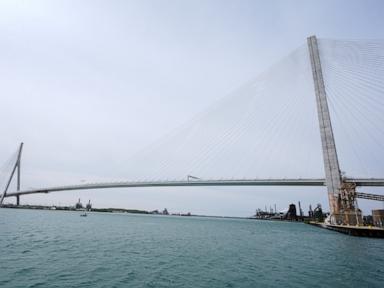
The Gordie Howe International Bridge was supposed to be a triumph. A massive, cable-stayed monument connecting Detroit, Michigan, and Windsor, Ontario. It promised to unclog one of North America's busiest trade arteries and replace the aging, privately owned Ambassador Bridge.
Instead, the political mood surrounding it feels sour.
If you've been reading recent headlines, you'd think trade spats and political posturing between Washington and Ottawa completely ruined the victory lap. Cross-border friction over tariffs, supply chain reshuffling, and border security debates have cast a long shadow over a project that spent years in planning and construction. But focusing strictly on political noise misses why this infrastructure project matters so much to the actual workers, truckers, and businesses relying on it daily.
The Real Problem With the Old Ambassador Bridge Setup
To understand why the new crossing is a necessity regardless of political friction, you have to look at what existed before.
For nearly a century, the Ambassador Bridge carried the bulk of commercial traffic between the United States and Canada. Roughly a quarter of all merchandise trade between the two nations passes across this single stretch of river. That's billions of dollars in auto parts, agricultural goods, and consumer products moving back and forth every month.
The issue? The Ambassador Bridge is privately owned, aging, and famously bottlenecked.
Truckers bound for Canada off Interstate 75 in Detroit used to face a grueling series of stoplights and local surface streets in Windsor before reaching a major highway. A single traffic accident or custom check delay didn't just delay a few commuters—it choked off assembly lines across Michigan and Ontario within hours.
Modern just-in-time manufacturing doesn't tolerate delays like that. Car manufacturers keep inventory minimal. If a truck full of engine components gets stuck at border control for three hours, a plant on the other side shuts down.
Political Friction Won't Stop Economic Reality
Tensions between neighbor nations aren't new. Trade disputes flare up over timber, dairy, steel, and automotive rules every few years depending on who holds office in Washington or Ottawa.
When national politicians clash over trade policies, regional infrastructure usually becomes an easy target for pundits. Critics point to high costs, delayed timelines, and diplomatic squabbles as evidence that the connection isn't worth the headache.
That perspective ignores raw numbers.
The Windsor-Detroit corridor remains the busiest commercial land border crossing in North America. The physical flow of goods doesn't simply stop because political rhetoric gets heated. Parts cross the Detroit River multiple times before a finished vehicle rolls off an assembly line. Supply chains between the Midwest and Southern Ontario aren't just connected—they're fully intertwined.
The Gordie Howe International Bridge delivers something the old setup never could: direct highway-to-highway connectivity. By linking Interstate 75 directly to Ontario's Highway 401, the bridge cuts out local street traffic entirely. That single improvement slashes transit times for freight haulers dramatically.
What Actually Changes for Logistics and Local Economies
Beyond macroeconomics, the practical improvements at the border level change how regional logistics operate daily.
- Modernized Inspection Plazas: Both sides of the crossing feature massive customs facilities built to process freight with minimal physical stops using advanced scanning systems.
- Dedicated Non-Motorized Paths: Unlike older structures, the new design includes dedicated lanes for pedestrians and cyclists, offering local communities a physical cross-border link for the first time in decades.
- Redundancy and Resilience: Relying on a single, privately held bridge created a massive single point of failure for two national economies. A second major span guarantees supply chain continuity even during emergency maintenance or severe weather shutdowns.
Local communities on both sides of the river—specifically Delray in Detroit and Sandwich in Windsor—endured years of heavy construction, altered truck routes, and environmental impacts. For residents, the focus isn't on high-level political posturing; it's on whether the project delivers promised neighborhood reinvestment, green spaces, and reduced diesel pollution on local residential streets.
Looking Beyond the Headlines
Political squabbles make headlines because drama sells. Infrastructure fixes don't get as much attention because logistics efficiency sounds dry on paper.
National political friction will inevitably ebb and flow over time. Administrations change, tariffs get negotiated, and border agreements adapt. But physical steel and concrete remain. The Gordie Howe International Bridge wasn't built for a single political cycle or a specific presidential term—it was built for the next fifty to one hundred years of trade.
If you manage logistics, run a business reliant on cross-border supply chains, or transport freight across the Midwest, ignore the diplomatic noise. Focus on optimizing your route strategies, taking advantage of modernized customs plazas, and prepping your supply chains to leverage direct highway access once operations hit full swing.