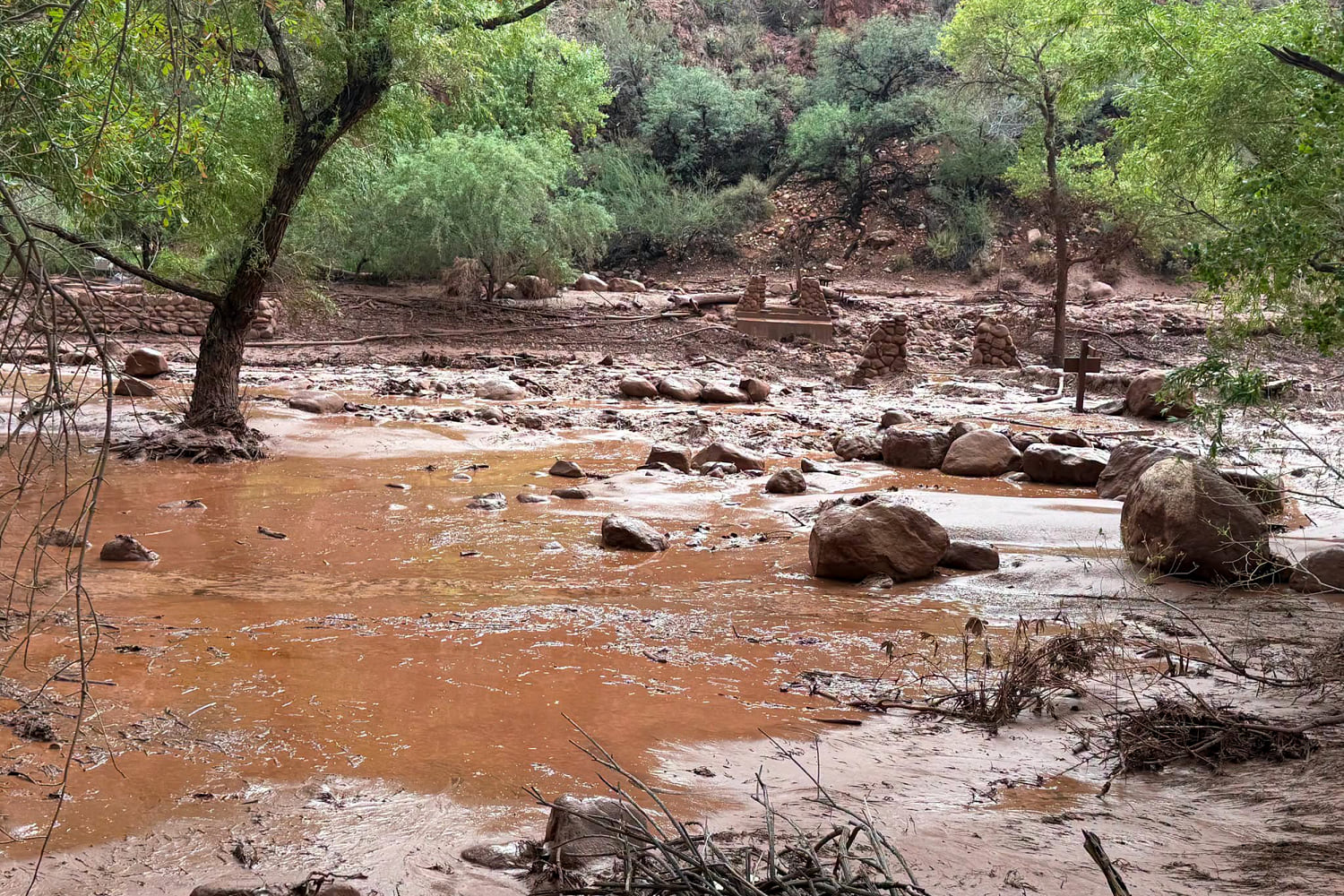
The desert sky can look completely innocent just minutes before a wall of water wipes out an entire trail. That brutal reality set in when a violent flash flood tore through Bright Angel Canyon, leaving two people dead, roughly 15 missing, and more than 60 visitors relying on emergency helicopter evacuations.
If you think clear weather overhead guarantees safety in the depths of the canyon, you are playing a dangerous game. Here is a breakdown of what happened during this disaster, why the canyon turns deadly so fast, and how to protect yourself when visiting remote terrain.
Inside the Bright Angel Canyon Disaster
The disaster struck on a Saturday afternoon when heavy monsoon downpours dumped roughly half an inch to an inch of rain in mere minutes over the steep Kaibab Plateau. That water had nowhere to absorb. It channeled straight into Bright Angel Creek, transforming a modest stream into a roaring, four-foot debris wall carrying massive boulders and mud.
Hikers caught in the corridor experienced absolute chaos. One group hiking with a park ranger watched waterfalls suddenly erupt from dry rock faces before a colleague screamed instructions to scramble up into nearby patches of cacti just as the torrent arrived.
The rushing water completely devastated local infrastructure. Essential footbridges were swept away, the historic Phantom Ranch area suffered heavy impacts, and the park's critical water pipeline sustained severe damage. The National Park Service recovered the body of a 46-year-old man near Crystal Rapids on the Colorado River, alongside a second confirmed fatality, while search and rescue teams raced against incoming weather to find the remaining unaccounted-for individuals.
The Illusion of Safety in Canyon Country
Most people assume that if it is not raining directly on top of them, they are out of harm's way. That is the single biggest misconception about hiking in the Grand Canyon.
Water can drop miles away on the North Rim, gather speed down 6,000 vertical feet of rocky drainage, and ambush hikers who are enjoying a sunny afternoon down below. The geography acts like a natural funnel. When a thunderstorm hits the plateau, narrow slots and creek beds transform into high-speed flumes almost instantly.
Footbridges vanish, trails disappear under thick mud, and escape routes get cut off before you even hear the roar of the approaching wave. Communication lines are notoriously weak deep inside the canyon, which means standard warning systems often fail to reach backpackers in time.
Critical Survival Rules for Monsoon Season
Visiting the Grand Canyon between July and September requires a completely different mindset than a casual spring walk. If you are planning a trip into the inner canyon during peak storm windows, keep these survival principles in mind:
- Never camp in washes or low-lying creek beds: Even if the ground is bone dry when you pitch your tent, look for high ground well above the high-water mark.
- Monitor regional weather, not just local skies: Check the forecast for the entire upper basin and plateau areas upstream from your route, not just the specific notch you plan to stand in.
- Heed park closures immediately: When the National Park Service shuts down trails like the North Kaibab or restricts access to Phantom Ranch, respect those boundaries. They are reacting to real-time hydrological data you cannot see from the bottom.
- Identify escape routes ahead of time: Always know which direction leads upward to steep rocky slopes rather than laterally along a trap-like canyon wall.
Search operations remain active, and authorities continue to ask anyone with details on missing backpackers in the Bright Angel corridor to contact the National Park Service tip line. Check current trail conditions directly with park rangers before lacing up your boots.


