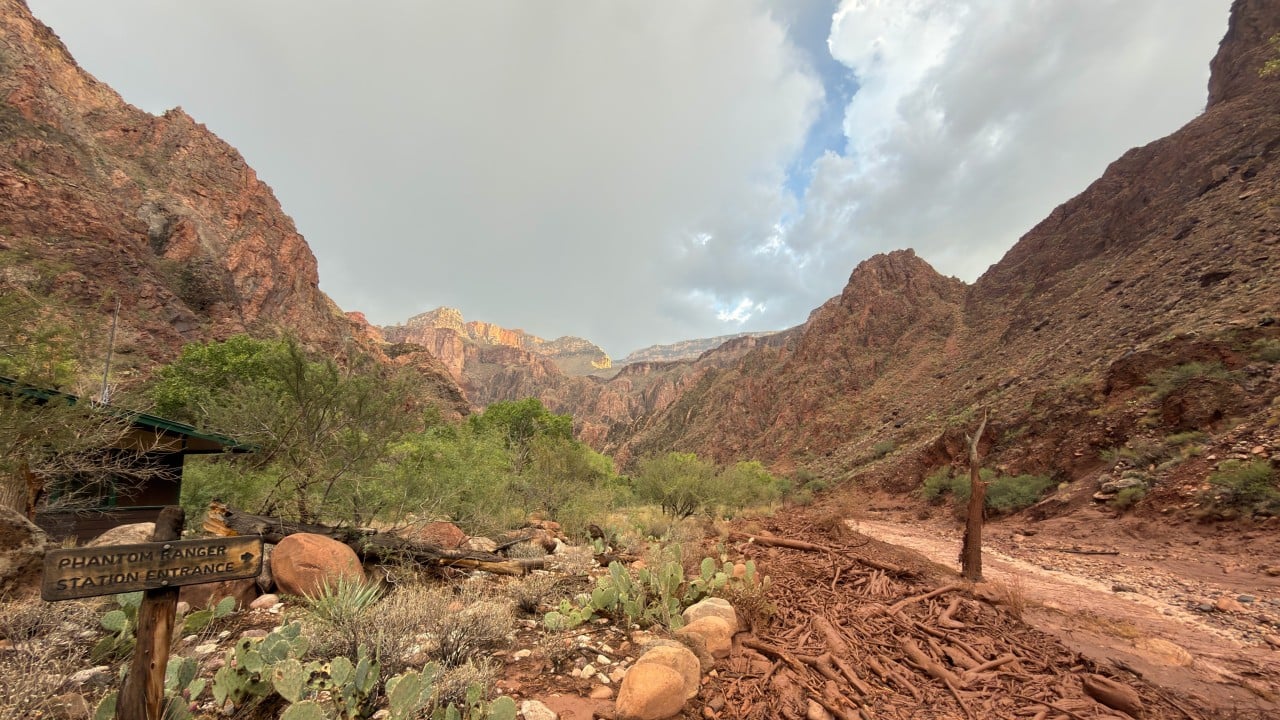
The water does not arrive with a polite warning. It comes down Bright Angel Creek as a moving wall of mud, timber, and displaced stone, turning a peaceful desert corridor into a high-velocity chute. Following a catastrophic flash flood that slammed the inner depths of Grand Canyon National Park, federal authorities scrambled to account for more than twenty hikers and backpackers. Sixty-two people were winched out by helicopter, plucked from rooftops and high banks while debris choked the Colorado River.
Every monsoon season, the public consumes breathless reports of missing hikers, dramatic helicopter rescues, and sudden walls of water. Yet these dispatches rarely capture the systemic underestimation of desert hydrology. People look at a dry wash, a bone-dry arroyo, or a gentle trickle of a creek and misread the entire environment. They see stability where only temporary pause exists.
The Mechanics of a Canyon Catastrophe
Understanding how a dry trail becomes a death trap requires looking miles away from the canyon floor. The flash flood that paralyzed Phantom Ranch and the North Kaibab Trail did not originate from localized rain over the hikers. Storms pounding the higher elevations miles away dumped torrential volumes onto baked, impermeable rock.
Desert soil acts like concrete during heavy downpours. Without organic matter or vegetation to slow the impact, water sheets off slickrock mesas and funnels directly into narrow tributaries. Gravity converts these drops into an unstoppable hydraulic battering ram. By the time the surge hits the inner gorge—often referred to by locals as "the Box"—it carries the weight of an entire plateau.
Hikers caught in these narrow corridors face vertical stone walls on either side. There is no escape route laterally. Vertical relief, usually celebrated as the primary aesthetic of the canyon, becomes a trap. When the water rises ten feet in sixty seconds, scrambling up a sheer cliff of Redwall Limestone is an impossibility.
The Fallacy of the Prepared Backpacker
National parks publish warnings, post notices at trailheads, and brief visitors on the dangers of the summer monsoon season. Yet experienced backpackers still find themselves outmaneuvered. Why? Because the human brain struggles to reconcile blue skies overhead with a wall of water approaching from upstream.
People rely on visual cues that fail entirely in desert canyons. A clear afternoon at Phantom Ranch means nothing if a convective thunderstorm dropped three inches of rain thirty miles north on the Walhalla Plateau. The lag time between a distant cloudburst and the arrival of the flood wave can be dangerously short.
Furthermore, backcountry permits foster a false sense of official sanction. Campers assume that if the park service issues a permit for Bright Angel Campground, the environment is manageable. This confuses administrative permission with environmental safety. The wilderness does not issue permits, and nature remains entirely indifferent to reservation numbers or itinerary dates.
Infrastructure Vulnerability and Rescue Realities
The aftermath of the recent flood revealed deep structural vulnerabilities in how we manage high-traffic backcountry zones. Bridges twisted like wire. Steel structures washed downstream. River traffic ground to a halt because floating debris made the Colorado River a navigation hazard.
When the system breaks, rescue operations become high-stakes gambles for emergency personnel. Helicopters cannot fly safely in active thunderstorm cells. Ground rescue teams cannot enter a raging wash without becoming victims themselves. This leaves a terrifying window where stranded travelers must rely entirely on their own wits, high ground, and whatever meager supplies they carried in their packs.
Rangers spend hours combing through register logs, matching vehicle license plates at trailheads, and fielding panicked calls from relatives. The transition from a recreational paradise to an active search-and-response zone happens in the span of a single afternoon thunderclap.
Shifting the Paradigm of Risk
Treating these events as unpredictable acts of God misses the point. Monsoon flash floods follow strict meteorological rules. They occur predictably between July and September, driven by shifts in regional atmospheric moisture. The exact hour and stream bed remain variable, but the seasonal threat is a constant.
Mitigating this risk requires a fundamental shift in how outdoor recreation is marketed and regulated. Warning systems in deep canyons remain rudimentary, often relying on cell service that does not exist thousands of feet below the rim. Until remote sensors provide real-time audio-visual alarms directly to inner-canyon travelers, hikers will continue to walk blindly into hydraulic traps.
The canyon remains an ancient, unyielding archive of geological force. Every flash flood rewrites the floor, sweeping away the hubris of anyone who believes they can outsmart the water.