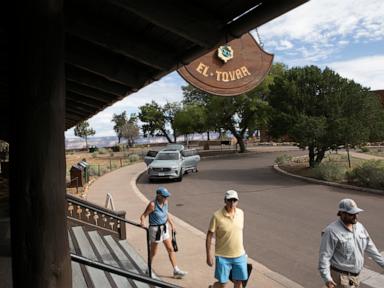
Everyone is celebrating the return of hot showers and flush toilets on the South Rim. They shouldn't be.
Travel outlets are churning out press-release journalism right now, cheering the National Park Service for easing water restrictions and unlocking the doors to El Tovar, Bright Angel Lodge, and Maswik Lodge. The lazy consensus says this is a massive win for tourists, a return to normalcy after pipeline breaks forced sudden closures and sent travelers scrambling for alternative lodging.
That narrative is completely backwards.
If you booked a room inside the park the second the reservation system flickered back to life, you just walked into a hospitality trap. Reopening historic lodges on the back of a fragile, patched-up water system doesn't mean the crisis is over. It means the park is turning paying guests into stress-testers for 60-year-old infrastructure while charging peak-season rates for a compromised experience.
I have spent fifteen years analyzing National Park concessionaire operations, infrastructure budgets, and gateway-town hospitality economics. I have watched travelers blow thousands of dollars on "bucket-list" lodge stays only to spend their vacations hauling jugs of potable water down historic hallways because a 1960s aluminum pipe gave out under the weight of sudden tourist demand.
The headline shouldn't be that the hotels are open. The headline should be that nothing fundamental has been fixed yet.
The Illusion of the Eased Restriction
To understand why this reopening is a mirage, you have to stop reading PR statements and start looking at civil engineering.
The South Rim does not get its water from a local aquifer or a massive municipal reservoir. Nearly every drop of water used by the six million annual visitors comes from Roaring Springs, located 3,000 feet below the North Rim. To get that water to the South Rim hotels, it has to travel through the Transcanyon Waterline—a 12.5-mile pipeline originally built in the 1960s.
Here is the reality the cheerful travel articles leave out: that pipeline is past its designed lifespan by decades. It has suffered more than 85 major breaks since 2010.
When the National Park Service "eases water restrictions," they are not announcing the completion of a brand-new, bulletproof delivery system. The massive, multi-hundred-million-dollar Transcanyon Waterline replacement project is an ongoing, multi-year construction slog. Easing restrictions simply means crews patched the latest rupture, refilled the South Rim storage tanks to an acceptable baseline, and crossed their fingers that flow rates hold steady.
Think about what happens the exact moment El Tovar, Kachina, Thunderbird, and Bright Angel reopen at full capacity.
Thousands of guests arrive simultaneously. Laundry facilities fire up to wash thousands of sheets and towels. Commercial kitchens run dishwashers non-stop. Tourists take 20-minute hot showers after hiking Bright Angel Trail. The sudden surge in demand puts immense hydraulic pressure on a system held together by temporary patches and strict flow monitoring.
We have seen this exact cycle repeat itself for a decade:
- A pipe ruptures in the inner canyon.
- Storage tank levels plummet to critical fire-suppression minimums.
- The park slams the brakes on overnight lodging, kicking out guests with zero notice.
- Crews execute an emergency repair in brutal terrain.
- Tanks refill, restrictions lift, hotels reopen, and the cycle resets.
By rushing back into a South Rim hotel right after a restriction lifts, you are gambling your entire vacation on the integrity of an aging pipe sitting under shifting canyon rock. If it breaks on day two of your trip, your reservation gets canceled on the spot, and you are dumped into a gateway market where every remaining motel room suddenly costs $450 a night.
Why Inside-the-Park Lodging Is Overrated Anyway
Even when the water flows without interruption, the obsession with staying inside the South Rim village is built on outdated travel advice.
Twenty years ago, staying at a historic rim lodge was the only way to beat the crowds and catch sunrise over Mather Point without waking up at 3:00 AM. Today, that advantage has largely evaporated, replaced by a steep "convenience tax" that delivers diminishing returns.
Let's break down what you actually get when you pay $350 to $600 a night for a standard room inside the park:
- Zero modern soundproofing: Historic lodges like Bright Angel and El Tovar were built in an era before suitcase wheels and hallways full of 5:00 AM hikers. You hear every footstep, every door slam, and every adjacent conversation.
- Subpar climate control: Many historic rooms lack modern, whisper-quiet HVAC systems. In the shoulder seasons, you are either roasting or freezing.
- Captive dining monopolies: Concessionaires like Xanterra Travel Collection operate under strict National Park Service contracts, which means zero local competition. You pay fine-dining prices for cafeteria-grade food because you have nowhere else to walk.
- Parking nightmares: Staying at a lodge does not guarantee a spot right outside your door. During peak hours, lodge guests circle the same congested lots as day-trippers.
Meanwhile, just seven miles south in Tusayan, or an hour down the road in Flagstaff and Williams, the hospitality math changes entirely.
In Tusayan, you are a 15-minute drive from the rim—often faster than taking the crowded village shuttle from Maswik Lodge to Yavapai Point. You get modern plumbing backed by independent groundwater wells and municipal hauling contracts that do not depend on a single fragile pipe crossing the Colorado River. You get actual restaurants, reliable Wi-Fi, and rooms that don't smell like 1930s varnish.
Admittedly, staying outside the park means you lose the romantic novelty of stepping out your front door onto the Rim Trail at midnight to look at the stars. That magic is real, and if star-gazing in your pajamas is your sole metric for a successful trip, pay the premium. For everyone else who actually wants to sleep, eat well, and shower without worrying about tank levels, inside-the-park hotels are a relic.
Dismantling the Top South Rim Travel Myths
When news breaks about park operations shifting, travelers flood search engines with the exact same predictable questions. Most of those questions are built on flawed assumptions about how National Parks actually operate.
Should I book a South Rim hotel immediately before they sell out?
No. Booking immediately after a water-restriction lift is the worst possible timing.
When a major park closure ends, pent-up demand collides with chaotic inventory management. Concessionaires are scrambling to re-accommodate displaced guests, rehire or reassign housekeeping staff who had their hours cut during the shutdown, and reboot kitchen supply chains. Operational service levels are at their absolute lowest during the first 30 days of a reopening.
Wait at least six weeks for the operational dust to settle—or better yet, book a refundable rate in Tusayan or Williams and treat an inside-the-park room as a last-minute bonus only if the weather and pipeline reports look rock-solid 72 hours before arrival.
Are water restrictions completely over at the Grand Canyon?
Never. Even when formal "Stage 3" or "Stage 4" emergency restrictions are lifted, the South Rim operates under permanent water conservation protocols.
The National Park Service actively manages water as a scarce industrial resource. Restaurants only serve water upon request. Low-flow fixtures are mandatory everywhere. Laundries often truck linens out of the park entirely to Flagstaff just to reduce the daily gallon draw on the South Rim tanks. Thinking the water issue is "solved" because the hotels reopened is like thinking a drought is over because it rained for twenty minutes.
Is the North Rim a better alternative right now?
This is the classic contrarian knee-jerk reaction, and it's dead wrong for 80% of travelers.
People hear about South Rim crowds and water headaches and immediately pivot to the North Rim. Here is what they miss: the North Rim sits at over 8,000 feet in elevation, is closed completely for half the year due to snow, has a fraction of the lodging capacity, and offers virtually zero infrastructure if something goes wrong. If you have a medical issue, a car breakdown, or a canceled reservation on the North Rim, the nearest real town is hours away. It is a magnificent destination for experienced, self-sufficient travelers, not a plug-and-play substitute for a South Rim family vacation.
The Infrastructure Reality Nobody Wants to Fund
Why does one of the wealthiest nations on earth rely on a failing 1960s water pipe to keep its crown-jewel National Park open?
Because deferred maintenance is the dirty secret of the American park system.
For decades, Congress and consecutive administrations starved the National Park Service of capital improvement funds while applauding record-breaking visitation numbers. Politicians love cutting ribbons on new visitor centers; nobody gets re-elected for appropriating $200 million to replace underground utility pipes in a canyon where no voter will ever see them.
The Great American Outdoors Act finally injected billions into the maintenance backlog, allowing crews to break ground on the massive Transcanyon Waterline overhaul—rerouting the intake to Havasupai Gardens to eliminate the most geologically unstable sections of the inner canyon.
That project is massive, complex, and far from finished. Until the new intake and pipeline are fully commissioned and tested under peak summer loads, every "reopening" headline is merely a temporary truce with gravity and geology.
Concessionaires have a massive financial incentive to push the "we are back to normal" narrative. Every day those lodge rooms sit empty costs millions in lost room revenue, food and beverage sales, and gift shop margins. Their marketing teams will never tell you that the water buffer is razor-thin. Their job is to fill beds. Your job is to protect your itinerary from their optimism.
How to Actually Plan a Bulletproof Grand Canyon Trip
If you want to experience the South Rim without becoming collateral damage in the next infrastructure failure, stop planning your trip like a 1990s tourist. Use an operational strategy that insulates you from park closures while giving you better access to the canyon itself.
- Anchor your stay in Flagstaff or Williams, not the Rim.
Flagstaff is 80 minutes from the South Rim via Highway 180—one of the most scenic drives in the Southwest. You get real hotels, craft breweries, independent restaurants, and zero water restrictions. Williams sits 60 minutes south on Highway 64 and gives you direct access to the Grand Canyon Railway if you want to skip driving altogether. - Use the "Two-Booking Hedge" if you insist on staying inside the park.
Never hold a single unhedged reservation at El Tovar or Bright Angel. Book your preferred dates inside the park, then immediately book a fully refundable backup room in Tusayan or Flagstaff for the exact same dates. Set a calendar reminder for 72 hours before your trip. Check the National Park Service alerts page for water status updates. If tank levels are dropping or construction delays hit, cancel the park lodge and slide effortlessly into your backup without paying surge pricing. - Flip your daily schedule to beat the shuttle bottleneck.
Day-trippers and lodge guests alike tend to hit the rim between 9:00 AM and 4:00 PM. Arrive at the South Entrance gate before 6:30 AM. You will breeze through the gates with zero line, snag front-row parking at Mather Point or the Village, watch the canyon walls ignite at sunrise, and finish your main hike before the tour buses even unload. Leave the park by 1:00 PM for a great lunch in Flagstaff, or come back at 5:30 PM when the day crowds flee. - Carry your own water reserve regardless of park status.
Even when the hotels are wide open, never rely on park filling stations as your sole source of hydration. Keep two gallons of potable water in your trunk at all times. If a sudden pipe break forces the park to shut down public spigots and restaurant beverage service mid-afternoon, you stay hydrated while everyone else stands in 45-minute lines at the general store fighting over warm bottled water.
The hotels on the South Rim are open today. Tomorrow, a boulder could shift in Bright Angel Canyon, sever a 60-year-old pipe, and shut them all down again before checkout time.
Book accordingly.