The Violence of Low Expectations
Every time a blade flashes in a New York City subway station, the media machine cranks out the same tired script. Headlines scream about "chaos" and "lawlessness." Pundits demand more cameras. Citizens refresh their apps in fear.
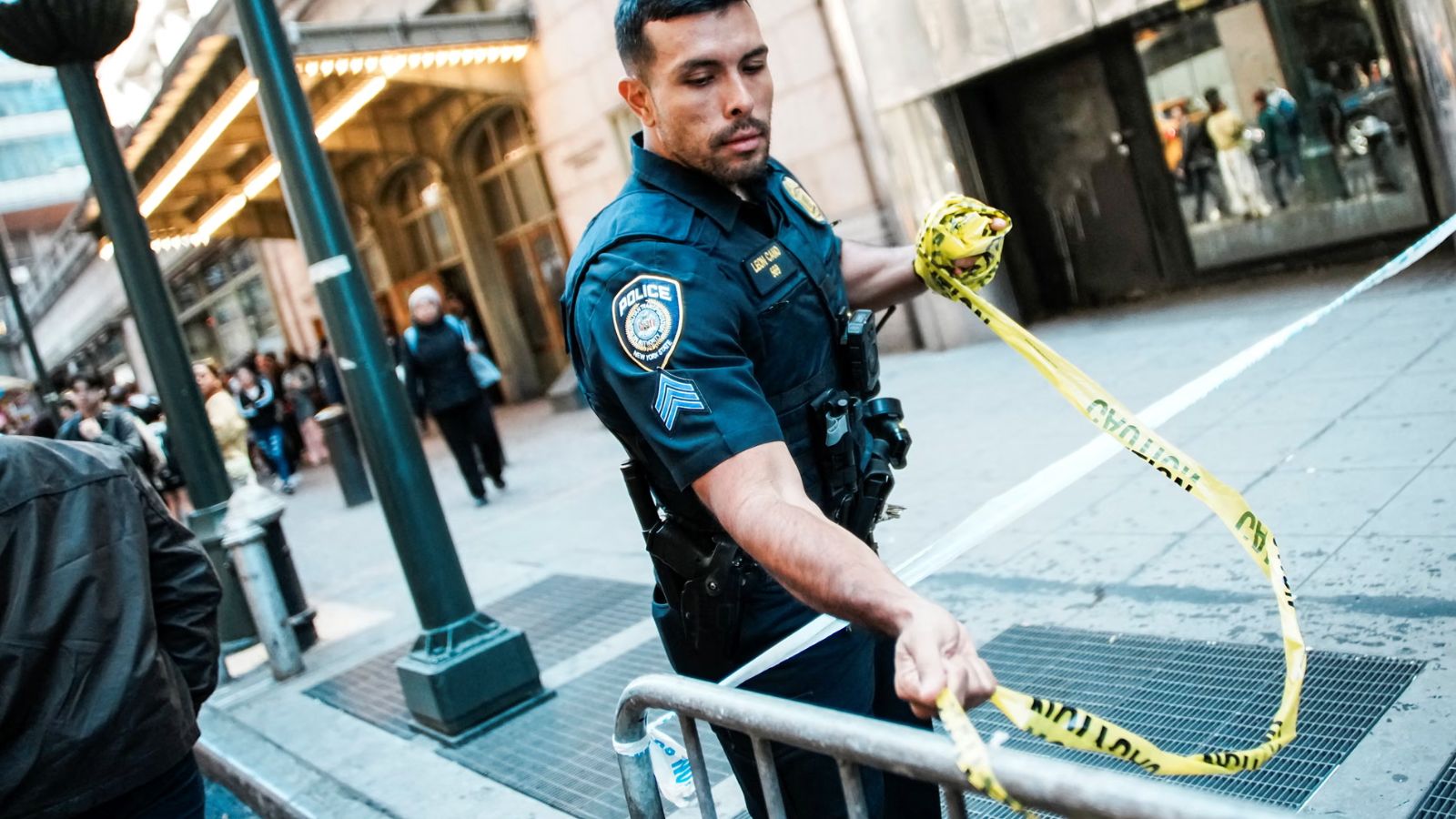
The recent incident at Grand Central where a suspect stabbed three people before being neutralized by police is being framed as another "failure" of public safety. That narrative is lazy. It is wrong. And it ignores the cold, hard mechanics of urban survival.
If you want to understand what actually happened at 42nd Street, you have to stop looking at the blood and start looking at the response time. This wasn't a breakdown of the system. It was the system working exactly as designed in a post-transit-safety-surge world.
The Myth of the Invisible Police Force
The lazy consensus suggests that because a crime happened, the police weren't there.
"Where were the cops?" is the rallying cry of the uninformed. In the Grand Central shooting, the cops were exactly where they were supposed to be. They were close enough to hear the screams and end the threat within seconds. In a city of 8 million people, you cannot prevent every individual act of madness. You can only shorten the duration of the event.
We have been conditioned to believe that "safety" means the total absence of conflict. That is a fantasy. Real safety in a high-density transit hub is defined by the speed of the kinetic response. When a man pulls a knife in one of the most heavily policed intersections on the planet, he isn't "slipping through the cracks." He is committing suicide by cop.
The fact that three people were injured is a tragedy. The fact that the threat was eliminated before it became a mass casualty event is a tactical win.
Why We Panic Over the Wrong Metrics
The public obsesses over crime volume. They should be obsessing over containment efficiency.
We see a headline about a stabbing and assume the subway is a "war zone." Statistically, you are safer on an MTA platform than you are in a car on the Long Island Expressway or walking through a residential neighborhood in half the cities in the Midwest.
The problem is psychological. The subway is a closed system. It is subterranean. It feels inescapable. When violence occurs there, it triggers a primal claustrophobia that the media exploits for clicks.
The Perception Gap
- The Media Narrative: The subway is spiraling into 1970s-style decay.
- The Reality: Transit crime represents a fraction of a percent of daily ridership interactions.
- The Contrarian Truth: We are actually over-policing the wrong things (fare beating) while expecting police to be precognitive psychics regarding mental health crises.
The Mental Health Red Herring
Politicians love to talk about "mental health" after these events because it’s a convenient shield. It allows them to avoid talking about the actual logistics of transit security.
Let's be brutally honest: most "mental health initiatives" in the subway are theater. They are designed to make commuters feel better, not to stop a person with a knife. You cannot "out-outreach" a psychotic break in progress.
I’ve watched the city pour millions into "engagement teams" that walk past the same agitated individuals every day. They offer a sandwich and a pamphlet to someone who needs a locked ward. By the time that person reaches for a weapon at Grand Central, the "health" conversation is over.
The incident at Grand Central proves that we don't need more "awareness." We need a hard-nosed admission that some individuals are incompatible with high-density public spaces. Until we stop treating the subway as a de facto shelter, these flashes of violence will remain a structural certainty.
Stop Asking for More Cameras
The cry for more surveillance is a classic "security theater" trap.
Grand Central is already one of the most surveilled patches of dirt on Earth. There are cameras on the beams, the walls, the turnstiles, and the trains. Did they stop the stabbing? No. They just provided high-definition footage for the evening news.
Cameras are forensic tools. They help catch people after the damage is done. They do almost nothing to deter someone who is willing to die in a hail of police gunfire.
If you want a safer subway, stop demanding more digital eyes and start demanding the removal of the conditions that allow these flashpoints to ignite.
The High Cost of the "Safe" Narrative
The downside of my perspective is that it’s uncomfortable. It admits that a certain level of risk is the "tax" we pay for living in a massive, open democracy.
When we pretend we can eliminate all risk, we create a brittle society. We overreact to every outlier event, pass knee-jerk legislation, and waste billions on tech that doesn't work.
The shooter at Grand Central was a violent actor met with superior force. That is the end of the story. Attempting to extract a deeper "lesson" about the "state of the city" is a fool's errand. The city is exactly what it has always been: a place where the proximity of millions of lives occasionally results in friction.
The Actionable Order
Stop reading the fear-mongering op-eds.
If you want to navigate the city effectively, you must separate frequency from severity.
- Acknowledge the win: The suspect was neutralized immediately. The response worked.
- Ignore the "Subway is Dying" trope: Ridership is up because the utility of the train outweighs the statistical anomaly of violence.
- Demand Policy Realism: Stop asking for more cameras and start asking for the legal authority to remove known violent offenders from the transit system permanently.
The Grand Central incident wasn't a warning sign of a collapsing New York. It was a demonstration of a city that has learned how to punch back.
Stop acting like a victim and look at the data. You aren't in danger; you're just witness to the messy, violent reality of a system that refuses to fail.