The red numbers on a digital ticker don’t bleed, but they do ache.
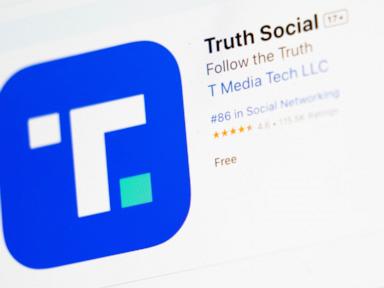
To the casual observer, Trump Media & Technology Group is a collection of ticker symbols and SEC filings. To the retail investor sitting at a kitchen table in Ohio or a retiree checking a smartphone in Florida, it represents something visceral. It is a proxy for loyalty. It is a financial bet on a personality that has defied the laws of political and social physics for decades. But even the most magnetic personalities eventually have to contend with the cold, unyielding math of the market.
Lately, that math has been brutal.
The company behind Truth Social has spent the last several months frantically shifting its weight. It is a pivot of dizzying proportions. One day, it is a social media alternative. The next, it is a budding crypto powerhouse. Suddenly, there are whispers of financial services and even the star-bound promise of nuclear fusion.
Investors are watching a shapeshifter. The problem is that the market usually prefers a specialist.
The Anchor of Truth
When Truth Social first arrived, it was sold as a digital Alamo—a final stand against the perceived overreach of Silicon Valley. The pitch was simple: a platform where the former president could speak without the threat of a ban. For a while, the scarcity of that connection drove the value. People didn't buy the stock because they liked the user interface or the ad-targeting algorithms. They bought it because they wanted a piece of the man.
But a social media platform is a hungry beast. It requires a constant influx of new blood, high engagement, and, most importantly, advertisers willing to put their brand next to the chaos of the daily news cycle.
The numbers started to tell a story that the press releases tried to hide. User growth plateaued. The "town square" felt more like a private club where everyone already agreed with each other. In the world of tech, if you aren't growing, you are dying. As the share price began to slide from its exuberant highs, the company did what many desperate entities do. It looked for a new miracle.
The Digital Gold Rush
Enter cryptocurrency.
There is a certain poetic logic to a Trump-backed entity diving into the world of Bitcoin and decentralized finance. Both movements share a common DNA: a profound distrust of centralized institutions. Crypto is the "Truth Social" of money—a way to bypass the gatekeepers of the Federal Reserve and the big banks.
The company began exploring the acquisition of Bakkt, a crypto-trading platform. On paper, it looks like a bold expansion into the future of finance. In reality, it feels like a passenger on a sinking ship trying to jump onto a passing speedboat. Crypto is a volatile world where fortunes vanish in the blink of an eye. For a company already struggling with stability, adding the wild swings of digital assets is like trying to balance a skyscraper on a toothpick.
Consider a hypothetical investor named Gary. Gary isn't a hedge fund manager. He’s a guy who put five thousand dollars into DJT stock because he believed the brand was untouchable. He watches the news and hears about "crypto integration" and "World Liberty Financial." He wants to be excited. He wants to believe this is the master plan. But then he looks at his brokerage account and sees another 5% dip.
Gary is learning a hard lesson: brand loyalty doesn't pay the mortgage when the underlying business is a moving target.
The Nuclear Option
If moving into crypto felt like a leap, the pivot toward nuclear fusion felt like a sprint into science fiction.
Nuclear fusion is the "holy grail" of energy—the process of powering the world by mimicking the sun. It is clean, it is infinite, and it is currently decades away from being commercially viable at scale. When a media company suggests it might have a hand in the most complex physics problem of the century, it raises more questions than it answers.
Why would a social media company care about plasma physics?
The cynical answer is "distraction." If the current product isn't working, sell the future. Sell the most ambitious, glittering future imaginable. If you can't fix the engagement metrics on a mobile app, tell the world you’re going to power the planet. It’s a classic move in the playbook of high-stakes speculation. You move the goalposts so far down the field that no one can even see them anymore.
But the market is a skeptical machine. It looks at a media company talking about nuclear energy and sees a lack of focus. It sees a management team throwing spaghetti at the wall to see what sticks.
The Invisible Stakes of Volatility
What is actually at stake here? It isn't just the net worth of a former president or the balance sheets of a few institutional short-sellers.
The real stakes are found in the trust of the "average" person. There is a specific kind of heartbreak that occurs when a cultural movement tries to monetize itself and fails. For many, DJT stock wasn't a trade; it was a badge of honor. When that badge loses 70% of its value, the disillusionment goes deeper than the pocketbook. It creates a sense of betrayal.
We are living in an era where the lines between celebrity, politics, and finance have blurred into a single, confusing smear. We see it in "meme stocks," in NFT drops, and in the way political figures now launch tokens like they used to launch books. It is a gamification of belief.
The danger of the "pivot" strategy is that it eventually runs out of room. You can move from social media to crypto. You can move from crypto to energy. You can move from energy to AI. But at some point, the bills come due. A company has to actually produce something. It has to generate revenue that isn't based on the hope of a future pivot.
The Sound of the Slide
The stock keeps falling because the market is finally asking for the one thing the company hasn't provided: a boring, predictable path to profit.
Traders use terms like "dilution" and "valuation metrics" to explain the decline. They point to the fact that the company is valued at billions of dollars despite having revenue that wouldn't support a chain of successful car washes. They talk about the expiration of lock-up periods and the potential for insiders to dump their shares.
But if you listen closely, the sound of the falling stock isn't just the sound of a ticker changing. It’s the sound of reality catching up to the narrative. It’s the sound of a thousand kitchen-table conversations where people are starting to wonder if the miracle is actually coming.
The pivot to crypto and fusion isn't a sign of strength. It’s a sign of a search. It is a company looking for an identity that the public will buy, now that the original identity is fraying at the edges.
The gravity of the market is a patient force. You can defy it for a year, or maybe two, if your story is good enough. You can wrap yourself in the flag, you can promise to disrupt the world, and you can point to the heavens. But eventually, the numbers have to make sense.
And right now, the numbers are shouting.
The screen flickers. Another red bar appears on the chart. Somewhere, an investor sighs and closes the app, hoping that tomorrow, the pivot finally finds its footing. But the sun is setting on the era of pure hype, leaving behind a cold, clear view of the mountain that still needs to be climbed.
The mountain doesn't care about the story you tell. It only cares about the climb.