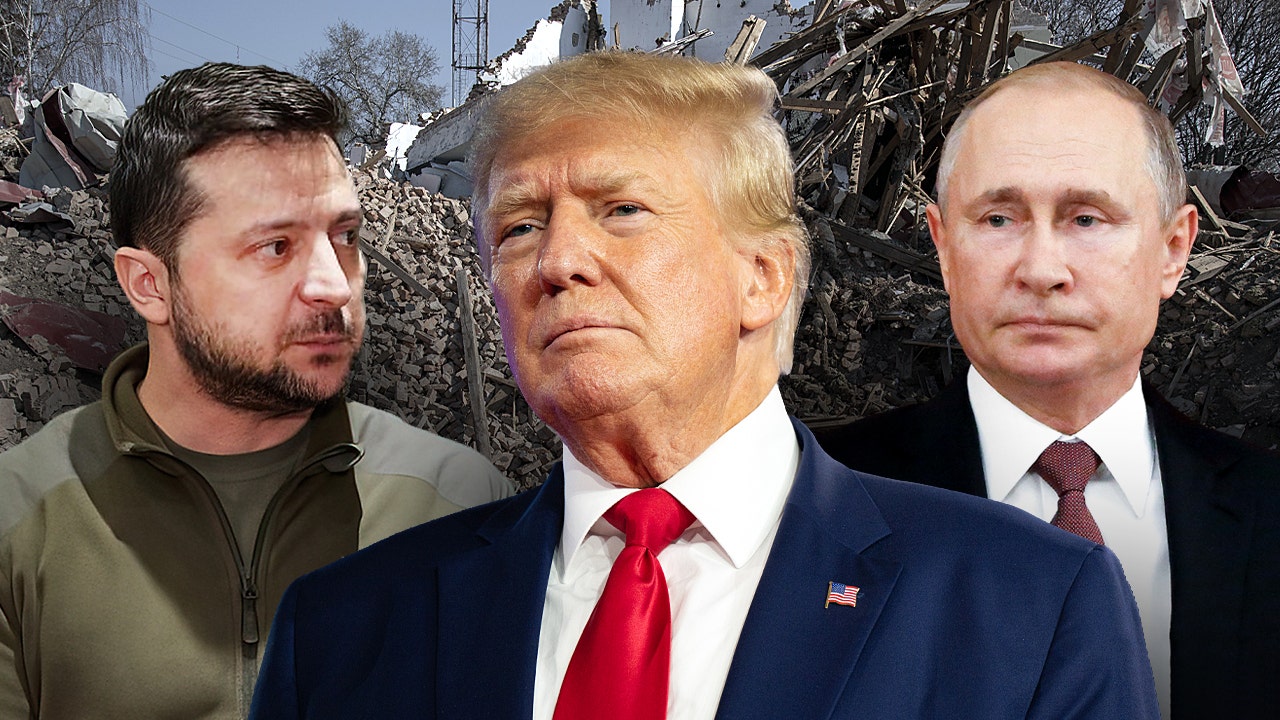
Vladimir Putin will land in Beijing on May 19 for a two-day summit with Xi Jinping, arriving less than twenty-four hours after U.S. President Donald Trump concluded his own high-stakes state visit to the Chinese capital. While the Kremlin frames the trip as a celebration of the 25th anniversary of the 2001 Sino-Russian Treaty of Friendship, the timing tells a different story. Putin is rushing to China to inspect the damage, secure his economic lifeline, and ensure that Trump's transactional diplomacy has not dented Beijing's commitment to Russia's war economy.
The back-to-back scheduling of these summits exposes the delicate balancing act currently occupying the Great Hall of the People. Xi Jinping is playing host to two deeply adversarial leaders with vastly different demands. Trump arrived looking for immediate bilateral wins, including agricultural purchases, guarantees on the Strait of Hormuz, and concessions on Taiwan. Putin is arriving to ensure those exact wins do not come at his expense. For Moscow, the stakes could not be higher.
The Master and the Dependent
The diplomatic optics of the upcoming meeting will feature the usual display of camaraderie. Xi will likely welcome Putin as an old friend, and the two will sign a joint declaration praising their comprehensive partnership.
Beneath the choreography lies a stark imbalance. The full-scale invasion of Ukraine in 2022 and subsequent Western sanctions have fundamentally altered the mechanics of Sino-Russian relations. Russia is no longer an equal partner. It is a junior dependent.
China has effectively become the primary guarantor of Russia's economic survival. Beijing acts as the dominant buyer of Russian fossil fuels, which are sold at a discount to keep the Kremlin's war chest filled. Concurrently, Chinese consumer goods, vehicles, and industrial machinery have flooded the Russian domestic market, filling the vacuum left by departing Western corporations.
Moscow has very little leverage left to command. Putin's rapid arrival suggests a degree of anxiety that Trump, known for seeking direct deals, might have offered Xi an arrangement that could marginalize Russian interests.
What Trump Left Behind
To understand Putin’s agenda, one must look at what occurred during Trump's three days in Beijing. The American president left China boasting about potential sales of Boeing aircraft and commitments for massive agricultural purchases. More critically, the conversations touched upon the most sensitive geopolitical friction points.
The Taiwan Calculation
During his meetings, Xi issued sharp warnings regarding Washington's approach to Taipei, noting that mishandling the situation could lead to direct conflict. In response, Trump broke with standard protocol by admitting aboard Air Force One that he was reconsidering a major U.S. arms package for Taiwan based on Xi’s objections.
This transactional approach to security is exactly what Putin wants to assess. If Trump is willing to negotiate on Taiwan, the Kremlin needs to know what Xi might have to offer in return. Moscow fears that a broader U.S.-China detente could result in Beijing quietly scaling back the economic and logistical support that keeps the Russian military operational.
The Iran Leverage
The ongoing conflict involving Iran and the blockade of the Strait of Hormuz also loomed large over the Trump-Xi summit. As the largest consumer of Iranian oil, China holds significant sway over Tehran.
During the summit, reports emerged that Beijing had contacted Iranian officials, resulting in certain Chinese vessels receiving safe passage through the strategic waterway. Trump and Xi subsequently issued a joint statement affirming that the strait must remain open and that Iran should not acquire nuclear weapons.
Putin views this development with caution. Russia has grown increasingly reliant on Iranian military hardware, specifically drones and ballistic technology, to sustain its campaigns in Ukraine. A U.S.-China understanding that pacifies Iran could disrupt Moscow's alternative defense supply chains. Putin needs to ensure that Xi’s interventions in the Middle East do not inadvertently choke off Russia’s access to Iranian military cooperation.
The Hidden Flow of Military Assets
While Beijing publicly maintains a stance of strict neutrality regarding the Ukraine conflict and denies supplying weapons, the reality on the ground is far more collaborative. Intelligence assessments indicate that Chinese support is vital to Russia's defense industrial base.
The modern Russian military machine relies heavily on dual-use technology sourced from Chinese firms. This includes:
- Semiconductors and microchips required for precision-guided missiles.
- Optical components and cameras utilized in reconnaissance drones.
- Electric motors and specialized software that power domestic assembly lines.
- Raw materials and critical minerals necessary for manufacturing armor and artillery shells.
In exchange for this industrial support, Beijing receives invaluable data. Russian engineers are sharing real-time battlefield intelligence regarding how Chinese components perform against Western air defense systems and electronic warfare counter-measures. This information is directly fed into China’s own military research programs and artificial intelligence development. Putin will look to expand this technical exchange, offering deeper military-technological cooperation that Beijing covets, in exchange for continued sanctions evasion.
Europe Pays the Price
The rapid succession of summits in Beijing highlights a broader geopolitical shift. Europe has been largely sidelined from the core negotiations determining global security.
Decisions regarding the security architecture of Eastern Europe, the energy markets of Asia, and the shipping lanes of the Middle East are being negotiated directly between Washington, Beijing, and Moscow. European capitals are left to manage the immediate fallout, dealing with a protracted war on their continent and shifting American priorities that demand Europe assume the financial burden of stabilizing Kyiv.
Putin’s visit is designed to lock in Chinese support before Europe can organize a coherent economic counter-strategy. By deepening ties with Beijing, Moscow ensures that European sanctions remain leaky and ineffective.
The Limit of the Friendship
For all the rhetoric concerning a partnership with no limits, Xi Jinping has consistently demonstrated that China's national interests come first. Beijing's primary goal is stabilizing its own economy, which remains deeply integrated with Western consumer markets. Xi cannot afford secondary sanctions that would target major Chinese banks or cripple its export-driven growth.
Therefore, China’s support for Russia will remain calculated. Xi will provide enough economic and dual-use assistance to prevent a total Russian collapse, using Moscow as a useful battering ram against Western hegemony. However, he will not cross the threshold into overt military alignment that would trigger a full-scale economic war with the West.
Putin knows this boundary exists. His mission in Beijing is not to build a grand alliance, but to constantly gauge where that boundary lies, ensuring that Trump's promises of commercial deals have not shifted the line further away from Moscow's grasp. The Kremlin leader is arriving to preserve a vital lifeline, fully aware that in the current global order, he is operating on Beijing's terms.