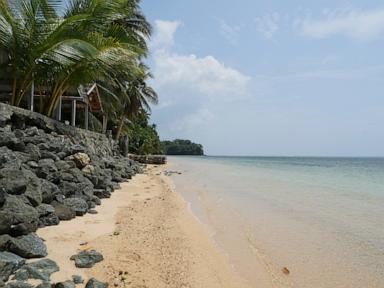
Pacific island nations are turning superpower competition into climate survival funds, weaponizing their own geographic isolation to extract millions from sparring global giants. This diplomatic balancing act represents a high-stakes effort to secure adaptation funding before rising seas swallow entire archipelagos. Traditional donors like Australia, New Zealand, and the United States are clashing directly with Beijing's growing regional footprint, transforming local infrastructure grants and resilience packages into instruments of modern statecraft.
For decades, diplomatic dispatches treated Oceania as a quiet periphery. Today, that periphery is the epicenter of a new contest for maritime dominance. For an alternative look, see: this related article.
The Mechanics of Strategic Leverage
Bargaining with superpowers requires absolute tactical discipline. Small island governments face structural economic deficits, heavy national debt loads, and extreme vulnerability to tropical cyclones and coastal erosion. Conventional international climate funds—such as the Green Climate Fund—impose labyrinthine administrative hurdles that take years to clear. For a nation watching saltwater infiltrate its freshwater tables today, multi-year bureaucratic wait times are fatal.
Enter great power rivalry. When Beijing offers swift, highly visible funding for sports stadiums, wharves, or digital networks, traditional partners suddenly discover new fiscal flexibility. Canberra, Washington, and Wellington respond with counter-offers disguised as climate resilience packages, infrastructure partnerships, and direct budgetary support. Similar reporting on this trend has been provided by NBC News.
Take the security and migration arrangements brokered across the region over recent cycles. Treaties linking Australian budgetary assistance or residency pathways to mutual security guarantees explicitly seek to block competitor military footprints. In exchange, island states secure millions earmarked for seawalls, renewable energy grids, and community relocation programs.
It is transactional diplomacy in its purest form. Pacific leaders routinely invoke the doctrine of being friends to all and enemies to none. By keeping multiple suitors in play, capitals from Honiara to Funafuti maximize capital inflow while attempting to retain domestic sovereignty.
The Hidden Costs of Geopolitical Aid
Yet, viewing this dynamic solely as a diplomatic triumph ignores severe structural hazards on the ground. Strategic financing rarely aligns neatly with long-term ecological needs.
Bilateral aid packages often bypass established local development ministries, flowing instead through elite political channels or prime ministerial offices. This top-down distribution model weakens domestic institutions and creates openings for patronage politics. When funding arrives tied to foreign security demands rather than grassroots vulnerability metrics, community priorities get sidelined.
Consider a hypothetical adaptation project in a low-lying atoll community. Under a localized needs-based assessment, funds would go toward relocating vulnerable food-growing plots and constructing community-managed rainwater catchments. Under a geopolitically driven grant, funds might prioritize a deep-water jetty or dual-use maritime facility designed to satisfy a foreign donor's strategic positioning requirements. The concrete gets poured, but the community's immediate survival needs remain unmet.
Furthermore, accountability standards frequently erode during competitive bidding wars. If a traditional partner demands rigorous environmental impact assessments and transparent procurement rules, recipient governments tempted by rapid, no-strings-attached alternatives from rival states may push back. The resulting race to the bottom compromises local governance.
Independent oversight bodies routinely warn that corruption risks scale alongside the influx of uncoordinated foreign capital. When foreign policy goals dictate the flow of money, tracking how every dollar impacts local climate adaptation becomes secondary to maintaining bilateral allegiance.
Institutional Pushback and Regional Pooling
Faced with the risk of fragmentation, regional bodies are attempting to claw back control over their own financial futures. The push for homegrown financing mechanisms—such as the Pacific Resilience Facility—stems from a collective exhaustion with foreign donor conditionality.
Designed as a Pacific-led, owned, and managed endowment, these regional instruments aim to bypass the humiliating ritual of door-knocking in foreign capitals for disaster recovery scraps. By pooling resources and setting indigenous criteria for project approval, island states hope to insulate themselves from the whims of shifting geopolitical tides.
Yet these regional funds face severe capitalization gaps. Pledges made at high-level maritime forums often fall short of the billions required to combat accelerating sea-level rise. Consequently, regional leaders find themselves trapped in a paradox. They denounce the politicization of aid by major powers, yet they rely on that exact competition to keep their treasuries afloat.
The underlying reality remains stark. Industrialized nations generated the emissions driving planetary warming, yet island states occupying the front lines must barter their sovereignty just to pay for the damage. Until major economies fulfill their binding obligations for loss and damage without demanding strategic loyalty in return, the Pacific will continue playing this high-stakes game, balancing geopolitical survival against the slow erasure of their homelands.