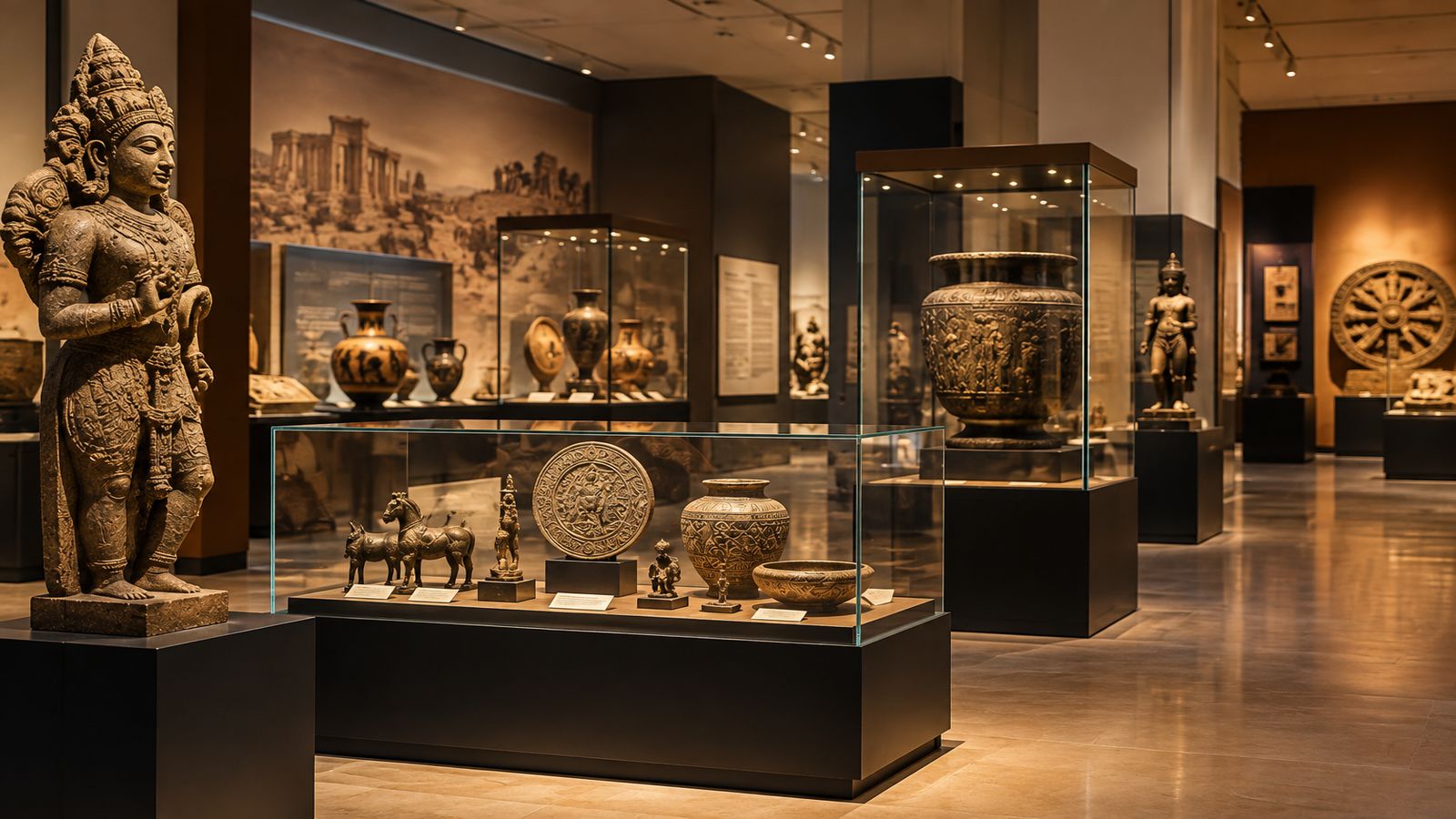
Twenty-two ancient objects don't look like much on a diplomatic ledger, especially when you're comparing a handful of painted vases and a tiny bronze figure against the massive marble sculptures sitting in London. Yet when Israel handed back those 22 antiquities in Athens on October 13, 2026, Greece got something bigger than a shelf of pottery. It got a precedent.
For the first time, Israel repatriated illegally removed antiquities to Greece, following an investigation by Israeli authorities into illicit antiquities trafficking. At a ceremony at the National Archaeological Museum in Athens, Greek Culture Minister Lina Mendoni and Israeli Ambassador to Greece Pninat Yanay stood beside objects provisionally dated between roughly 700 B.C. and 320 B.C.. The collection included 15 Attic vases, six Corinthian vases, and a small bronze female statuette—ranging from slender oil flasks and two-handled amphorae to drinking cups and a sixth-century B.C. Corinthian pyxis lid decorated with waterfowl and floral motifs. In related updates, we also covered: What Really Happens When an Inquest Unpacks a Falling Festival Arch.
If you only read the headline, you might think Athens just checked a minor box on its cultural wish list. Honestly, that misses the point. Greece isn't celebrating twenty-two pots in isolation; it's building momentum for a much harder fight to bring home the Parthenon Marbles from the British Museum.
What Was Actually Returned in Athens
Let's be clear about what landed in Athens. These aren't monumental temple friezes or world-famous statues. They're everyday and ceremonial vessels—Attic and Corinthian wares, drinking cups, oil flasks, amphorae—alongside a modest bronze statuette of a woman. Al Jazeera has provided coverage on this important subject in extensive detail.
Still, in archaeology, context and provenance matter enormously. When an object is torn out of the ground through illicit digging, you lose the stratigraphic story of where it was found and who used it. Getting these 22 pieces back into Greek custody—and into the hands of specialists at the National Archaeological Museum—at least restores them to a legitimate public collection where scholars can study them openly.
What officials didn't spell out at the ceremony was just as telling as what they did. Greek and Israeli representatives didn't publicly detail exactly how the items turned up in Israel or the specific chain of events behind their illegal removal from Greece. Ambassador Yanay noted that the objects were recovered during an investigation into the illegal antiquities trade, and reports indicated they were seized by the Israel Antiquities Authority. When looted antiquities surface in private collections or gray markets abroad, officials often keep operational details tight while ongoing enforcement or diplomatic work continues.
Why This Handover Matters for the Parthenon Marbles
You can't talk about Greek repatriations without talking about the Parthenon Marbles—often called the Elgin Marbles. Those roughly 2,500-year-old sculptures were stripped from the Acropolis and remain on display at the British Museum in London.
Athens has been pressing that claim for decades, and the diplomatic pressure hasn't let up. Prime Minister Kyriakos Mitsotakis recently argued that the marbles could factor into broader negotiations over closer ties between Britain and the European Union. Meanwhile, Culture Minister Mendoni has framed bilateral returns like the October handover as practical proof of heritage cooperation, with a heritage memorandum of understanding expected between Greece and Israel to formalize how both sides fight cultural trafficking.
Here's why a small return in Athens helps Greece in London, even though the scale isn't remotely comparable:
- It normalizes return as standard practice. Every time a country hands back disputed or illegally removed objects, the old "finders keepers" or "safe harbor" excuses sound a little thinner.
- It builds a network of cooperating states. When Greece trades best practices on anti-trafficking with partners like Israel, it shows international willingness to treat antiquities enforcement as a shared rule of law rather than a one-off favor.
- It keeps heritage front and center in diplomacy. High-profile ceremonies at major museums keep the spotlight on where ancient objects belong.
That said, let's not kid ourselves. A voluntary handover of 22 seized vessels from an active trafficking probe isn't the same thing as convincing a major museum to part with its marquee collection. London has held firm for a long time, and one diplomatic win in Athens won't magically unlock the Duveen Gallery overnight.
Cultural Diplomacy Meets Eastern Mediterranean Realities
One mistake people make when reading cultural news is treating museums and ministries like they exist in a quiet vacuum separate from geopolitics. They don't.
The repatriation ceremony happened against a backdrop of deepening ties between Athens and Jerusalem. Just months earlier, in August 2026, Israel signed a massive $3.5 billion defense agreement to build a multi-layered air defense system in Greece known as the Achilles Shield—the largest defense deal between the two nations.
Does a defense contract force a country to return ancient vases? No, of course not. Yet countries rarely separate goodwill gestures from wider strategic relationships. Mendoni called the return a gesture of "particular significance" and tied it to protecting cultural assets, while Yanay emphasized how archaeology shapes national identity in both countries and creates conditions for stronger cooperation.
At the same time, mixing ancient symbols and national pride into modern statecraft always carries a catch. Critics and regional observers frequently point out that ancient history doesn't belong to just one modern agenda, and tying heritage diplomacy to military or political alignments can spark pushback depending on who's watching. Even on the defense side, Greece's Achilles Shield deal has faced political scrutiny at home over control and supplier questions.
So while the ceremony in Athens looked warm and cooperative on camera, the real story is layered. Cultural restitution is both a moral and legal issue about stolen heritage and a calculated piece of soft power.
What People Usually Get Wrong About Antiquities Returns
Whenever a repatriation story hits the news, a few myths pop up right away. Clearing them up saves a lot of confusion.
First, people often assume every returned artifact was stolen in a dramatic heist from a museum vault. In reality, a huge share of illicit antiquities comes from unrecorded looting of burial sites, settlements, or shipwrecks—places where looters dig first and ask questions later. Once an object leaves its original ground context, proving where it came from takes serious archaeological detective work, which is one reason trafficking is so hard to stop.
Second, folks sometimes think repatriation means a country is trying to empty out the rest of the world's museums. Most heritage officials focus on objects removed illegally, taken under questionable circumstances, or tied to criminal smuggling networks—not every cultural loan or historical exchange ever made.
Third, people tend to treat "legal" and "ethical" as identical. Something might have passed through a market years ago with incomplete paperwork, or sat in a collection under older rules, long before modern heritage protections existed. That gap between past legality and present-day standards is exactly why repatriation fights get so messy.
Practical Next Steps If You Follow Heritage and Repatriation
If you want to track stories like this without getting fooled by surface-level headlines, a few habits make a big difference:
- Look for provenance details, not just object counts. Twenty-two items can matter more than two hundred if they close a smuggling loop or set a first-time precedent, while vague announcements often leave out how the objects entered the market.
- Watch the legal and diplomatic follow-through. Pay attention to whether governments sign formal agreements—like the heritage memorandum of understanding anticipated between Greece and Israel—or set up joint enforcement channels.
- Read primary statements from culture ministries and museums alongside independent reporting. Official releases tell you how governments frame the win; independent coverage helps you see what was left unsaid and what political pressures sit behind it.
- Separate small bilateral wins from big institutional standoffs. Celebrate milestones like the Athens handover for what they are—a real step in anti-trafficking and bilateral ties—without assuming they automatically solve disputes like the Parthenon Marbles.
Ancient pottery doesn't speak for itself, which is why modern governments are always ready to speak for it. Watching who returns what, and why right now, tells you far more about today's politics than you'd ever guess from a shelf of 2,500-year-old clay.



