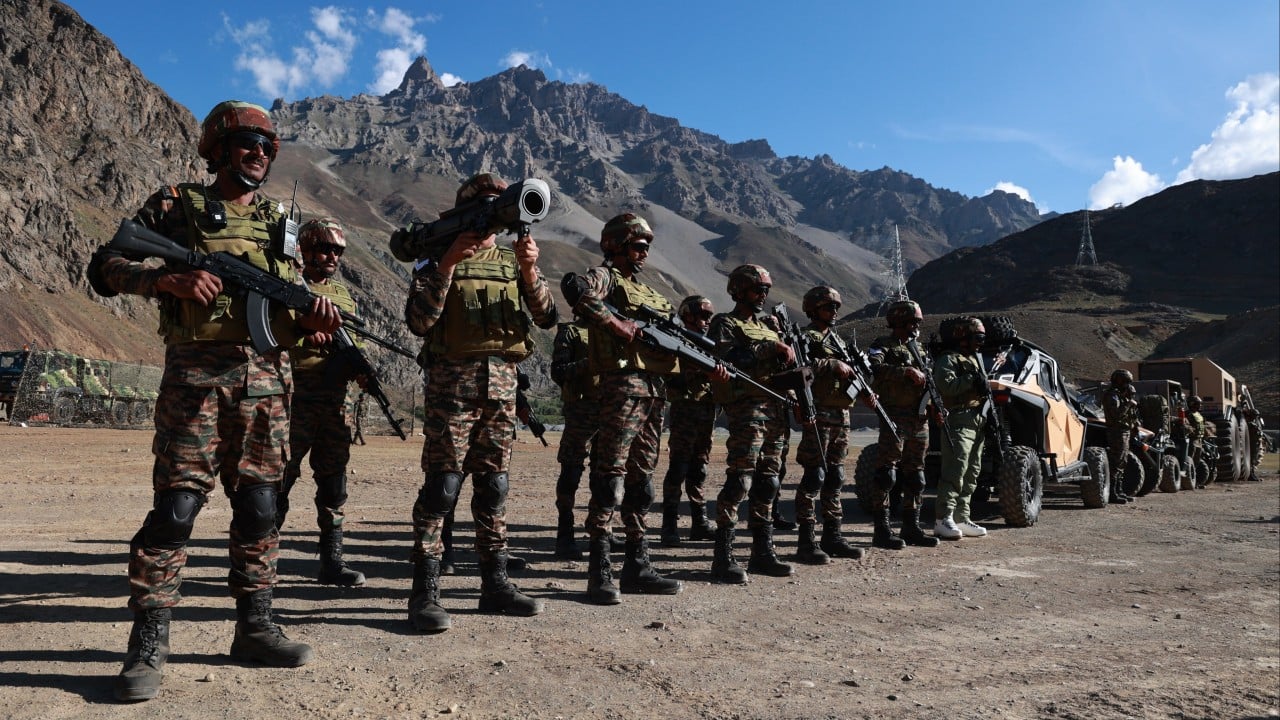
The narrative sounds cozy in a boardroom in New Delhi. Solar panels on the Siachen Glacier. Hydrogen-powered trucks humming through the Thar Desert. As geopolitical tensions in the Middle East threaten oil supplies, the push to "decarbonize the front line" is being sold as a strategic masterstroke.
It isn't. It is a logistical suicide note.
The current obsession with transitioning the Indian military to green energy isn't about tactical superiority. It is about checking ESG boxes while the bullets are flying. Proponents argue that shifting away from fossil fuels mitigates the risk of supply chain disruptions during an Iran-centric conflict. They are wrong. They are simply swapping one set of vulnerabilities for a far more fragile, unproven, and easily targeted infrastructure.
The Myth of the Independent Microgrid
The "lazy consensus" suggests that solar and wind make forward operating bases (FOBs) self-sufficient. This is a fundamental misunderstanding of energy density and combat survival.
To power a modern mechanized unit, you need a massive footprint. High-density energy is the lifeblood of war. Diesel has an energy density of roughly 45 MJ/kg. A lithium-ion battery? Barely 1 MJ/kg. To replace the energy provided by a single tanker of fuel, you would need a battery array the size of a small village and a solar farm that can be seen from low earth orbit.
In a conflict scenario, stealth is survival. A massive field of reflective silicon panels is a "hit me" sign for loitering munitions and thermal imaging. You can camouflage a fuel bladder. You cannot camouflage five acres of solar glass without rendering them useless.
I have seen planners ignore the "maintenance tail" of these systems. Military hardware survives because it is rugged and repairable with a wrench and some grit. Who is fixing the inverter on a modular microgrid when a mortar shell lands 50 meters away? Who is cleaning the dust off 4,000 panels in a sandstorm so the radar stays online?
Swapping Oil Pipelines for Mineral Chains
The argument that green energy provides "energy security" during an Iran-Western standoff is a half-truth that ignores the geography of the future.
If India pivots hard toward massive electrification of its fleet to avoid the Strait of Hormuz risk, it isn't becoming "independent." It is merely shifting its dependency from the Middle East to the Democratic Republic of Congo and China.
- Rare Earth Reality: 90% of the permanent magnets used in EV motors are processed in China.
- The Lithium Trap: While India has found deposits in Jammu and Kashmir, the refining capacity remains a decade behind.
Moving from a liquid fuel economy—where you can buy from a dozen different nations—to a mineral-based economy—where the supply chain is a vertical monopoly held by a strategic rival—is not a "new strategy." It is a surrender.
The Hydrogen Hype is Gaslighting the Infantry
There is a lot of chatter about green hydrogen for heavy transport. Let’s talk about the physics of "boom."
Hydrogen is a nightmare to store on a battlefield. It requires cryogenic cooling or extreme pressure (up to 700 bar). In a civilian setting, a leak is a hazard. In a combat zone, a pressurized hydrogen tank is a kinetic bomb waiting for a piece of shrapnel.
Furthermore, the "well-to-wheel" efficiency is atrocious. You use electricity to make hydrogen, compress it, transport it, and then turn it back into electricity in a fuel cell. You lose 60% of your energy before the wheels even turn. In war, efficiency equals reach. If you are wasting 60% of your power on the process alone, your logistics chain has to be twice as large to deliver the same punch.
The Brutal Reality of Energy Density
Let’s look at the $E = mc^2$ of the situation—not literally, but in terms of weight-to-power ratios.
An Arjun Mark 1A tank weighs 68 tons. To move that beast through mud and over dunes requires immense, instant torque. Electric motors can provide the torque, but the batteries required to give that tank a 400km range would weigh more than the tank itself.
Imagine a scenario where a division is bogged down because their "green" transport fleet is waiting for a 6-hour fast charge during a monsoon. In the 1940s, we learned that "logistics wins wars." In the 2020s, we are pretending that "sustainability wins wars." It doesn't. Speed, violence of action, and redundancy win wars.
Diesel is portable, stable, and energy-dense. It can be moved in a bucket, a jerry can, or a pipeline. It can be siphoned from a civilian gas station or a captured depot. You cannot "siphon" a 500kW charging station.
The Only Green Option That Actually Works
If the Indian military actually wants to de-risk its energy supply, there is only one "green" path that makes tactical sense: Small Modular Reactors (SMRs).
Nuclear is the only carbon-free source with the energy density required for high-intensity conflict. A single SMR could power a massive command center or a carrier group for years without a single "resupply" flight. But you won't see that in the competitor's fluff piece because "nuclear" doesn't have the same PR sheen as "solar."
Dismantling the People Also Ask Nonsense
Can green energy reduce the cost of military operations?
No. The CAPEX for renewable infrastructure in remote terrain is 4x higher than traditional setups. When you factor in the "combat attrition rate"—the fact that stuff gets blown up—the ROI is negative.
Is it possible to have a "net-zero" army?
Only if you intend to lose. An army's job is to apply maximum force. Net-zero is a constraint. War is about removing constraints. You cannot prioritize the planet while you are fighting for the soil.
Does green energy help with stealth?
Electric motors are quieter, yes. This is the only legitimate tactical advantage. Use it for small-scale recon drones and special ops bikes. But don't build a national defense strategy around it. A silent tank that can't move because it’s cloudy is just a very expensive coffin.
The Real Strategy India Needs
Stop trying to make the military "kind" to the environment. The environment is the first casualty of any real war.
If India wants to survive an Iran-driven oil shock, it shouldn't be buying solar panels. It should be:
- Massively expanding Strategic Petroleum Reserves (SPR).
- Hardening existing pipelines.
- Investing in synthetic fuel technology (Coal-to-Liquid).
India has massive coal reserves. In a total war scenario, turning that coal into liquid fuel is a far more reliable "sovereign" strategy than hoping the sun shines on a lithium-ion battery made in a factory that depends on a Chinese supply chain.
We are watching a dangerous convergence of "woke" corporate policy and national security. When the next major conflict breaks out, the side that wins won't be the one with the lowest carbon footprint. It will be the one that can keep its engines screaming the longest.
War is dirty. War is carbon-intensive. War is loud. Trying to pretend otherwise isn't just "greenwashing"—it’s a dereliction of duty.
Build for the mud, the blood, and the black smoke. Leave the solar panels for the rooftops in Bangalore.