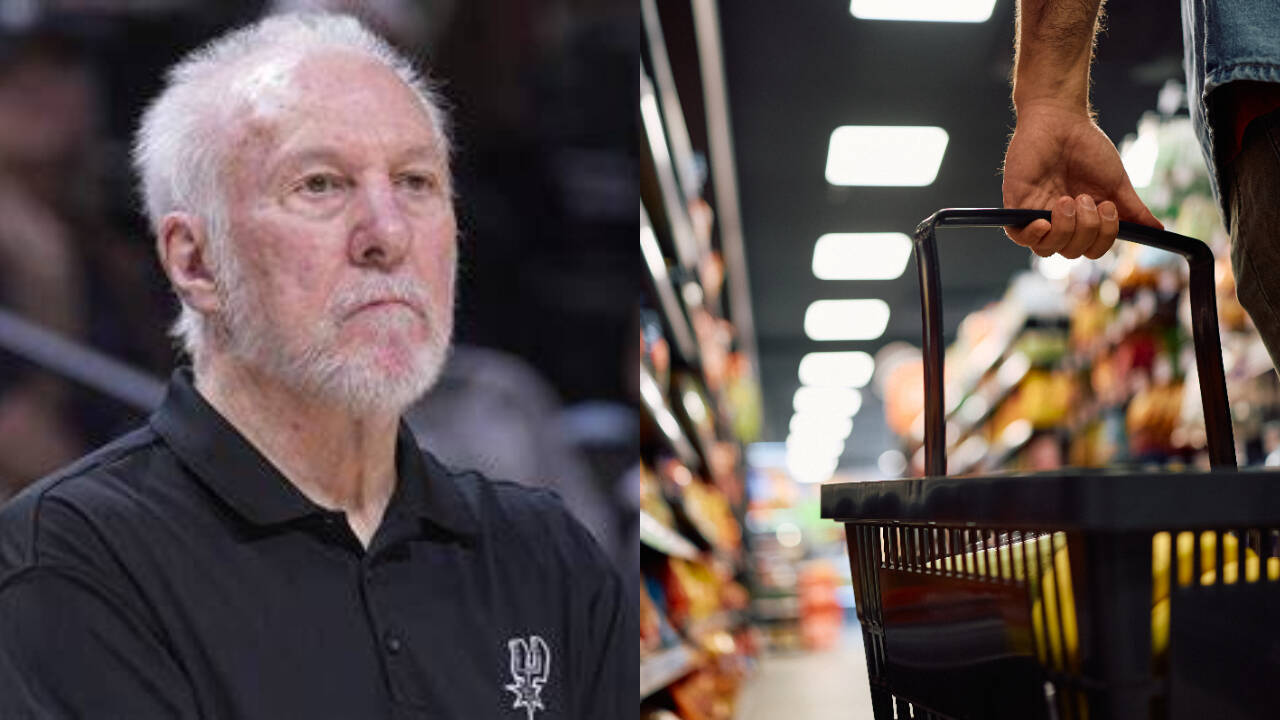
In late 2024, while sidelined from the San Antonio Spurs bench following a mild stroke in November, longtime head coach Gregg Popovich quietly stepped into local San Antonio grocery stores and paid for the food of unsuspecting shoppers. No press releases went out. No team cameras followed him down the aisles. Instead, the five-time NBA champion used his unexpected time away from professional basketball to absorb the grocery bills of everyday Texans, a gesture that initially surfaced through scattered local social media posts before capturing national attention.
To understand why a 75-year-old Hall of Fame coach recovering from a serious medical event would spend his rehabilitation energy at checkout counters, you have to look past the box scores and examine the intersection of quiet philanthropy, stroke recovery psychology, and the unique civic contract between a small-market sports franchise and its host city.
Most sports media coverage treats these moments as simple feel-good anomalies. That framing misses the mechanics of how elite sports figures operate when stripped of their daily routines, and it ignores the broader socioeconomic realities of the communities that sustain billion-dollar franchises.
The Anatomy of a Quiet Gesture
Modern sports charity is an industry unto itself. Athletes and coaches employ dedicated public relations firms, establish tax-advantaged foundations, and coordinate Thanksgiving turkey drives with local television affiliates to maximize brand equity. Every handshake is logged, photographed, and pushed through digital channels.
Popovich has spent three decades actively dismantling that playbook.
Throughout his tenure in San Antonio, which began in 1988 as an assistant coach before he took over the top job in 1996, Popovich has maintained a strict boundary between his public obligations and his private giving. When he tips restaurant servers thousands of dollars—a well-documented habit across NBA road cities—or funds local food banks, the news almost always leaks from the recipient, never the donor.
Paying for groceries in San Antonio during his post-stroke recovery followed that exact operational pattern. Eyewitness accounts described a low-profile presence. He did not announce himself over the store intercom. He simply stepped up to registers, covered the totals on the conveyor belts, and left before crowds could form.
The timing matters. The Spurs announced on November 13, 2024, that Popovich had suffered a mild stroke on November 2 at the Frost Bank Center prior to a game against the Minnesota Timberwolves. Assistant coach Mitch Johnson stepped in as interim head coach while Popovich began an intensive rehabilitation regimen.
For a man whose entire adult life has been governed by the rigid, 82-game cadence of the NBA calendar, sudden medical exile creates an immediate psychological vacuum.
The Psychological Reality of Post-Stroke Rehabilitation
A stroke does not merely test physical endurance; it disrupts identity and agency. Even when classified medically as "mild," a cerebrovascular event forces an immediate reckoning with mortality and loss of control.
In neurological rehabilitation, specialists emphasize community reintegration alongside physical and speech therapy. Patients recovering from strokes frequently experience isolation, frustration, and a sudden drop in self-efficacy. Moving from a high-command environment—where every timeout, substitution, and defensive rotation flows through your voice—to a quiet recovery schedule is a jarring transition.
Stepping into a neighborhood supermarket is a deliberate act of reclaiming agency.
Consider the mechanics of that environment. A grocery store is loud, brightly lit, unpredictable, and populated by people focused entirely on their own survival and household budgets. Navigating those aisles requires physical stamina, cognitive focus, and social engagement. By turning a routine errand into an act of direct financial relief for strangers, Popovich shifted his role from a recovering patient being cared for by doctors to an active provider helping his neighbors.
There is also an undeniable pragmatic angle. Unlike writing a check to a large nonprofit—where administrative overhead and bureaucratic distribution delay the impact—paying a grocery bill delivers zero-latency relief. The transaction clears in seconds. The recipient walks out to their car with tangible goods that will feed their family that night.
San Antonio Economics and the Grocery Store Reality
To grasp the weight of a free cart of groceries in South Texas, look at the local balance sheet.
San Antonio consistently ranks among the major U.S. cities with the highest poverty rates. According to U.S. Census Bureau data, roughly 17 to 18 percent of San Antonio residents live below the federal poverty line, well above the national average. At the same time, cumulative food inflation over the past several years has permanently altered household math. Even as the rate of inflation cooled in 2024, baseline prices for staples—eggs, meat, produce, dairy—remained roughly 20 to 25 percent higher than pre-pandemic levels.
In Bexar County, the checkout line is where macroeconomics becomes painfully personal. Families routinely calculate totals on their phones as items scan, quietly setting aside proteins or fresh produce when the register creeps past a hard budget ceiling.
When someone steps in and clears that balance, it does not solve systemic poverty. No single act of charity fixes wage stagnation or regional food insecurity. Critics of celebrity philanthropy rightly point out that spontaneous generosity can sometimes obscure the structural policy failures that leave working families vulnerable at the supermarket in the first place.
That counter-argument holds weight when charity is used as a smokescreen by corporations or politicians to avoid systemic reform. It applies far less to an individual citizen using his personal wealth to absorb immediate financial pain for his neighbors without seeking tax write-offs or applause.
Why Local Grocery Chains Matter in Texas
In San Antonio, grocery shopping is deeply intertwined with civic identity, largely due to the dominance of H-E-B, the privately held Texas supermarket giant headquartered in the city. H-E-B has long functioned as an informal disaster-relief agency across Texas, deploying mobile kitchens and supply trucks during hurricanes, freezes, and power grid failures faster than state or federal agencies.
The Spurs and H-E-B share a symbiotic commercial and cultural footprint in South Texas. For decades, Spurs players have starred in ubiquitous regional H-E-B commercials, embedding the franchise into the domestic routines of local households. When Popovich walks into a San Antonio grocery store, he is stepping onto terrain where basketball and daily survival already overlap.
The Contrast With Modern Sports Philanthropy
Look closely at how the sports industry normally handles crisis and recovery, and the anomaly of Popovich’s behavior becomes sharper.
When a high-profile coach or star athlete suffers a major health scare, the standard playbook involves:
- Controlled Media Rollouts: Exclusive sit-down interviews with major networks to frame the recovery narrative.
- Brand Partnerships: Tying the medical condition to a pharmaceutical sponsor or healthcare network campaign.
- Social Media Documentation: Carefully curated posts showing rehabilitation workouts to reassure fans and stakeholders.
Popovich rejected every single lever of modern image management. During his absence from the Spurs sideline, updates on his condition were sparse, clinical, and stripped of melodrama. When he finally issued a public statement in December 2024 thanking the medical staff and fans, it was brief, unsentimental, and immediately redirected praise toward the coaching staff holding down the fort.
His grocery store appearances operated on the same anti-celebrity frequency. There was no hashtag. There was no foundation banner hanging behind the cashier.
This approach carries real limitations. From a purely strategic standpoint, publicizing charitable acts creates a multiplier effect. When a famous figure attaches their name to a food bank or a medical research fund, it triggers matching donations from corporate sponsors and everyday fans. Quiet, anonymous giving sacrifices that fundraising leverage. You help the twenty families in line that afternoon, and the financial ripple stops at the exit doors.
Yet what quiet giving loses in scale, it gains in dignity.
Publicized charity often demands a subtle performance of gratitude from the recipient. Cameras capture the tears; microphones record the thank-yous. The transaction turns a struggling citizen into a prop for a wealthy donor’s public relations highlight reel. By keeping cameras out of the checkout lane, Popovich preserved the autonomy and privacy of the people he helped. They did not have to perform their financial hardship for an internet audience to earn a bag of groceries.
The Unspoken Civic Contract of Small-Market Sports
Professional sports franchises routinely extract hundreds of millions of dollars in public subsidies from taxpayers under the promise of civic pride and economic revitalization. In most cities, that promise evaporates the moment a team threatens to relocate or demands a new arena.
San Antonio operates differently because it is a one-team town. The Spurs are the sole major professional sports franchise in the market. There is no NFL team, no MLB club, and no NHL squad competing for civic oxygen. Consequently, the bond between the organization and the city’s working class is unusually direct.
Popovich’s career trajectory mirrors the city’s modern identity. Together with franchise cornerstones like David Robinson, Tim Duncan, Tony Parker, Manu Ginobili, and now Victor Wembanyama, he turned a modest market into a global basketball powerhouse without abandoning its blue-collar temperament.
Over the years, Popovich has frequently drawn criticism from segments of the sports media and fan base for speaking bluntly about racial injustice, gun violence, and economic inequality. Detractors routinely told him to "stick to sports," arguing that a wealthy basketball coach had no business lecturing the public on societal failures.
Stepping into a grocery store while recovering from a stroke and quietly paying off food bills answers that criticism without uttering a word. It demonstrates that his public rhetoric about community responsibility is backed by private, unglamorous action when nobody is keeping score.
What Happens When the Spotlight Moves On
The news cycle around Popovich’s grocery store visits lasted roughly forty-eight hours before the sports media machine rotated back to trade deadlines, injury reports, and playoff seedings. That brevity is predictable. Quiet competence and unadvertised generosity do not generate sustained algorithmic outrage or debate-show segments.
For the families whose carts were paid off in San Antonio, the impact was measured not in media impressions, but in breathing room—an extra hundred or two hundred dollars freed up to cover an electric bill, a car repair, or a medical copay at the end of the month.
In an era where almost every human interaction is monetized, recorded, or optimized for personal branding, the sight of an aging coach recovering from a neurological trauma by quietly clearing checkout balances stands as a stark rebuke to modern celebrity culture. He did not need a camera crew to validate his recovery, and he did not need a press release to prove he cared about the city that employs him. He simply paid the tab and walked out the door.