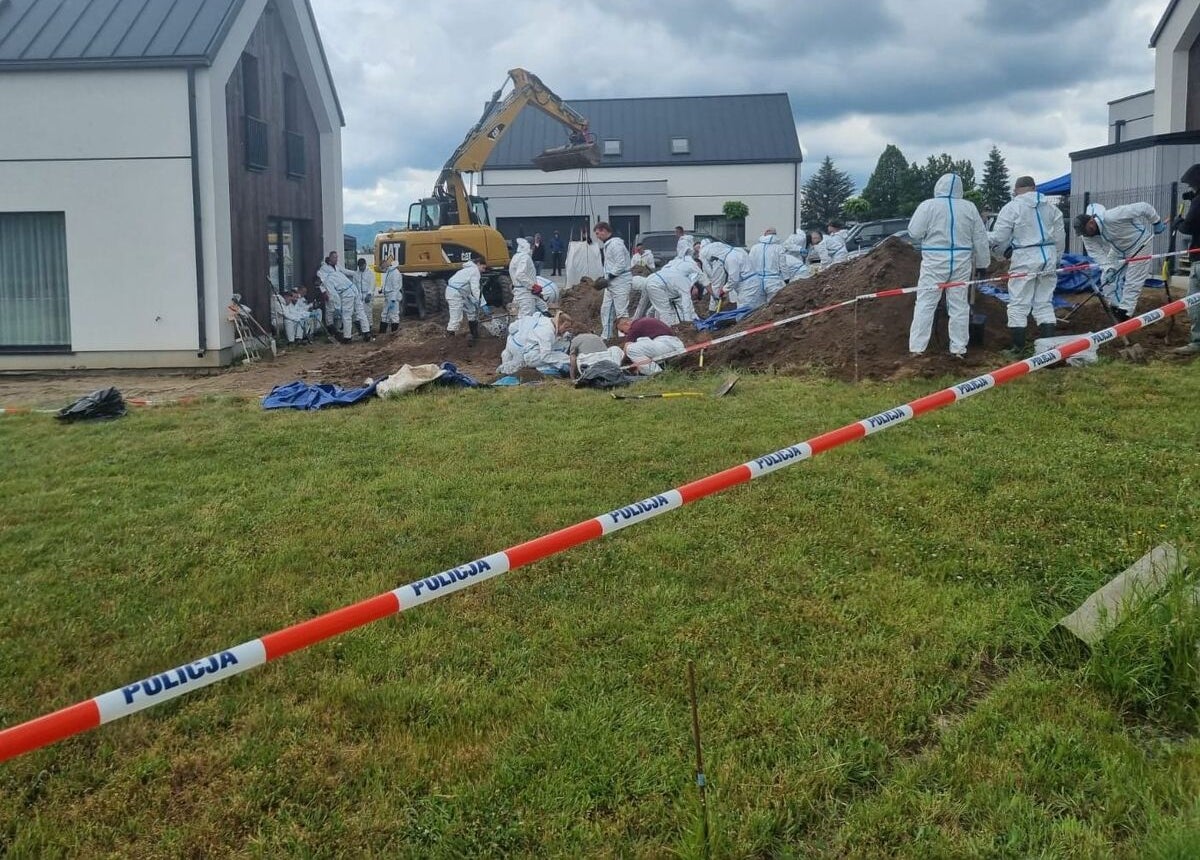
The discovery of dozens of human fetuses buried on private property in Germany has exposed deep systematic failures in European medical oversight. When police excavated the garden of a disgraced practitioner, they uncovered more than just tissue samples. They found a black market operating in the shadows of the European healthcare system, fueled by desperate patients and shielded by bureaucratic blind spots. This case is not an isolated incident of individual madness. It is the predictable result of an unregulated global trade in experimental therapies that targets vulnerable populations while regulatory bodies look the other way.
The Secret Garden of Dr. Gritsan
In the quiet suburb of Schöneiche, just outside Berlin, neighbors knew Elena Gritsan as a quiet, albeit eccentric, medical researcher. That illusion shattered when authorities, acting on an anonymous tip regarding unlicensed medical activities, excavated her backyard.
Investigators found 34 fetuses preserved in formaldehyde, buried in shallow containers. The shockwaves traveled quickly through the medical community, but the real horror lies in how long this operation ran without detection.
Gritsan was not a rogue actor operating in a vacuum. She was a licensed physician who leveraged her credentials to source biological material across international borders. The fetuses, tracking numbers revealed, originated from clinics in Eastern Europe. They were brought into Germany under the guise of legitimate academic research.
This reveals a massive vulnerability in how biological materials move across borders. Once a sample crosses a frontier with a stamp of approval from a registered laboratory, tracking stops. The assumption is that peer review and institutional ethics boards will police the material. When the researcher works from a private residence, that assumption collapses.
The Economics of Unregulated Stem Cell Therapy
To understand why someone buries human remains in a backyard, you have to follow the money. This was not a ritual. It was a manufacturing pipeline.
The global demand for anti-aging treatments and experimental stem cell therapies has created a highly lucrative underground market. Wealthy clients routinely pay upwards of $30,000 for injections promised to reverse degenerative diseases, cure neurological conditions, or halt the aging process.
- The Raw Material: Fetal tissue is highly prized in underground medical circles for its rapid cellular division and low risk of immune rejection.
- The Extraction: Cells are harvested and cultured in makeshift laboratories, often lacking basic sterilization protocols.
- The Distribution: Treatments are administered in private residences or boutique wellness clinics that operate just outside the legal definition of a hospital.
This is a classic regulatory arbitrage scheme. By operating as a "wellness consultant" rather than an oncologist or neurologist, a practitioner avoids the stringent oversight applied to formal clinical trials. The patients, often desperate individuals who have exhausted standard medical options, sign extensive waivers. They pay in cash or cryptocurrency. If the treatment fails or causes severe side effects, the patients rarely complain to the police because they were complicit in seeking unapproved therapies.
The Failure of the European Medical Border
The European Medicines Agency has strict protocols for advanced therapy medicinal products. Yet, these rules only apply to products entering the commercial market through standard pharmaceutical supply chains. The Gritsan case highlights a glaring loophole: the "hospital exemption" clause.
Originally designed to allow surgeons to create custom, one-off treatments for dying patients, the hospital exemption has been warped. Small laboratories use it to manufacture unproven cell therapies on a small scale, completely bypassing the phase-one and phase-two clinical trials required for standard drugs.
"The system operates on trust, and trust is a terrible enforcement mechanism when millions of dollars are involved."
When a private practitioner claims they are conducting personal, non-commercial research, local health departments lack the manpower to verify what is happening inside those private walls. In Germany, the responsibility for inspecting medical practices falls on regional authorities. These offices are chronically understaffed. They prioritize public hospitals and commercial pharmacies, leaving residential operations virtually unmonitored until a catastrophe occurs.
How the Tissue Supply Chain Operates in the Shadows
The journey of the biological material found in Schöneiche began thousands of miles away. It relies on a network of brokers who exploit loose regulations in developing nations or conflict zones.
Sourcing and Documentation
Brokers approach financially vulnerable women in private clinics, offering small sums for tissue donation under the guise of routine medical disposal. The paperwork is then falsified. A sample intended for incineration is logged as "transferred for academic study."
Transport and Logistical Blind Spots
The material is shipped using standard medical couriers. Because the paperwork originates from a licensed facility, customs officials rarely open the pressurized, temperature-controlled containers. They check the permits, verify the signatures, and wave the shipment through.
Processing and Domestic Misdirection
Once inside the destination country, the material vanishes into private labs. The practitioner cultures the cells, discards the bulk waste illegally to avoid leaving a paper trail with medical waste disposal companies, and prepares the final injections.
The burial of the 34 fetuses was a direct consequence of this logistics chain. Using a professional medical waste disposal service requires logging the origin and nature of the waste. For an illegal operation, that is a paper trail leading straight to a prison sentence. The backyard was not a choice; it was an operational necessity for maintaining anonymity.
The Patient Trajectory from Desperation to Exploitation
We must examine the consumers of these services without judgment to understand the market's resilience. The typical patient is not gullible. They are frequently highly educated, wealthy, and suffering from terminal or chronic illnesses that modern medicine cannot cure.
When conventional medicine offers only palliative care, the human instinct is to fight. Underground clinics exploit this instinct using sophisticated digital marketing. They do not advertise "backyard experiments." They use terms like "personalized bio-cellular restoration" and present fraudulent data from non-peer-reviewed journals.
The clinics create an environment of exclusive, cutting-edge science. Patients feel like pioneers rather than victims. By the time they realize the treatment has done nothing—or worse, introduced foreign pathogens into their bodies—the clinic has moved, changed its corporate identity, or the patient is too ill to pursue legal recourse.
The Illusion of International Enforcement
Interpol maintains task forces on human trafficking and illicit pharmaceutical trade, but the space between those two crimes is where this gray market thrives. Fetal tissue trafficking does not fit neatly into existing criminal definitions. It is not property theft, and it is not human trafficking in the traditional sense.
The legal frameworks of most Western nations are built on the assumption that medical professionals adhere to an ethical code. Penalties for violating medical waste laws or practicing without a specific license are often minor fines or a temporary suspension of a medical license. For an operation generating hundreds of thousands of dollars a month, a $10,000 fine is simply a cost of doing business.
The prosecution of Dr. Gritsan will likely hinge on technicalities—violating burial laws, illegal handling of medical waste, and tax evasion—rather than the fundamental horror of her experimentation. This is the ultimate indictment of our current legal infrastructure. We are fighting 21st-century bio-crimes with 19th-century public health ordinances.
Rebuilding the Wall of Bioethical Oversight
Stopping the next backyard laboratory requires a complete overhaul of how biological materials are tracked. We must eliminate the distinction between commercial pharmaceutical manufacturing and private medical research when it comes to human tissue.
Every sample must be assigned a unique, immutable digital identifier at the point of origin. This identifier must be tracked through a centralized database accessible by international customs and local law enforcement. If a shipment of human tissue is routed to a residential address or a private clinic lacking a certified level-three bio-containment facility, the system must automatically trigger an immediate physical audit by federal authorities.
Furthermore, the legal immunity enjoyed by practitioners under the guise of "experimental consultations" must end. If a doctor administers an unapproved biological substance to a patient outside a registered, audited clinical trial, it must be prosecuted as felony aggravated assault, regardless of any waivers signed by the patient. Only when the personal risk to the practitioner outweighs the financial reward will the underground pipeline dry up.
The shallow graves in Schöneiche are a warning. The technology to manipulate human biology is outpacing our willingness to police it, and the cost of our bureaucratic inertia is being buried in back gardens.