The air in Peshawar usually smells of dust, exhaust, and the sweet, sharp scent of cardamom tea boiling over charcoal. On this particular afternoon, however, the atmosphere carried a different weight. It tasted of metallic tension.
Thousands of students had gathered on the asphalt, their voices merging into a unified roar. They were not demanding weapons. They were not calling for destruction. They wanted books, they wanted structural reforms, they wanted a future that didn't feel like a locked door. Education is supposed to be the great equalizer, the slow-burning fuse of social mobility in a region that has seen more than its share of heartbreak. But when youth step forward to question the architecture of their stagnation, the response is rarely a dialogue.
It is a barrier.
Consider the young man standing near the front of the student mobilization. Let us call him Tariq. He is nineteen, wearing a faded polo shirt, clutching a notebook filled with scribbled equations he hopes will one day buy him a ticket out of economic paralysis. Tariq is not a revolutionary by trade. He is simply tired. When the chants grew louder, rhythmic and demanding accountability, the street did not simply remain a street. It transformed into a theater of confrontation.
Then came the flash.
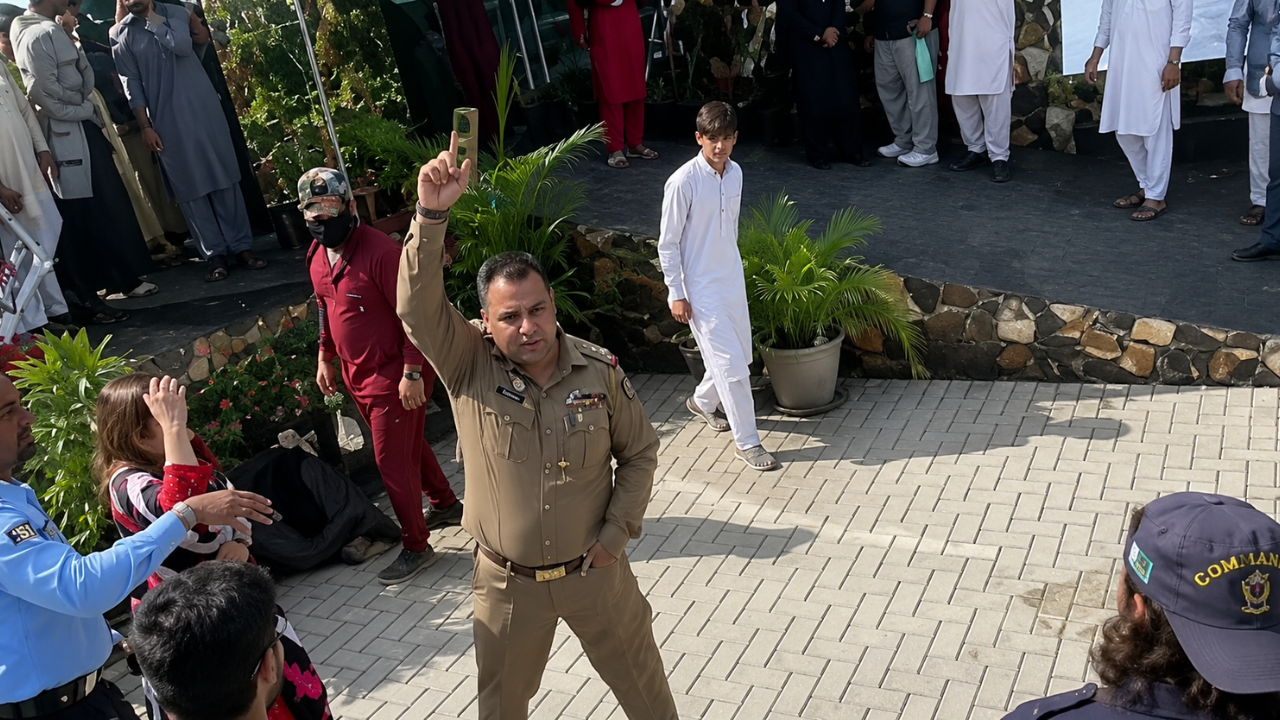
A Pakistan army officer stepped into the open. The brass on his uniform caught the afternoon glare. The crowd surged slightly, a wave of restless bodies pressing against the invisible line of authority. Instead of raised hands or a megaphone, the officer reached for his holster.
Metal cleared leather.
A sharp, deafening crack tore through the Peshawar sky. Smoke bloomed against the dust.
Silence followed. Not the quiet of peace, but the suffocating hush of absolute shock. Pigeons scattered from overhead wires. For a fraction of a second, Tariq forgot the equations in his notebook. He stared at the barrel of the gun, watching the thin wisps of cordite drift upward. The message was delivered with total clarity, bypassing the intricate nuances of civil policy and landing directly in the gut. Authority did not want to negotiate. Authority wanted compliance.
Firing a weapon into the air during a student protest is never an isolated act of impulsive frustration. It is a symptom of a deeper systemic decay. When institutions tasked with national defense turn their instruments of war inward upon the civilian population they swore to protect, the social contract fractures.
History shows us a recurring pattern in regions governed by heavy security apparatuses. When economic grievances mount and employment opportunities dwindle, the youth inevitably take to the public square. They look for answers from a state that prefers silence. The state, unequipped or unwilling to address the root causes of civil unrest, relies on intimidation. The gun in Peshawar is the same gun fired in countless squares across the globe when the powerful run out of justifications.
Think about the psychological toll etched onto the asphalt long after the smoke clears. Every student who watched that barrel rise into the sky returned home changed. The classroom no longer feels like a sanctuary of free thought. It feels like a temporary holding pen, watched over by an unseen sniper scope of institutional paranoia.
Why does this happen? The mechanics of suppression are surprisingly simple. Fear is cheaper than reform. Building universities, funding laboratories, and restructuring a sluggish economy requires patience, capital, and genuine political will. Pulling a trigger takes a fraction of a second. It is an immediate assertion of dominance in an environment where the authorities are rapidly losing the argument.
Yet, intimidation has a shelf life.
When you fire a gun over the heads of unarmed scholars, you do not extinguish dissent. You merely drive it underground, hardening it into something colder and more resolute. Tariq walked home that evening with his notebook tucked tightly against his ribs. The equations inside hadn't changed, but the context had. He no longer looked at the state as a protector. He looked at it as an adversary.
The dust of Peshawar eventually settled back onto the street. The tea stalls reopened. Traffic resumed its chaotic, horn-blaring dance. But the echo of that gunshot remains trapped in the masonry of the city, a quiet reminder that a nation pointing weapons at its own future is fighting a war it has already lost.