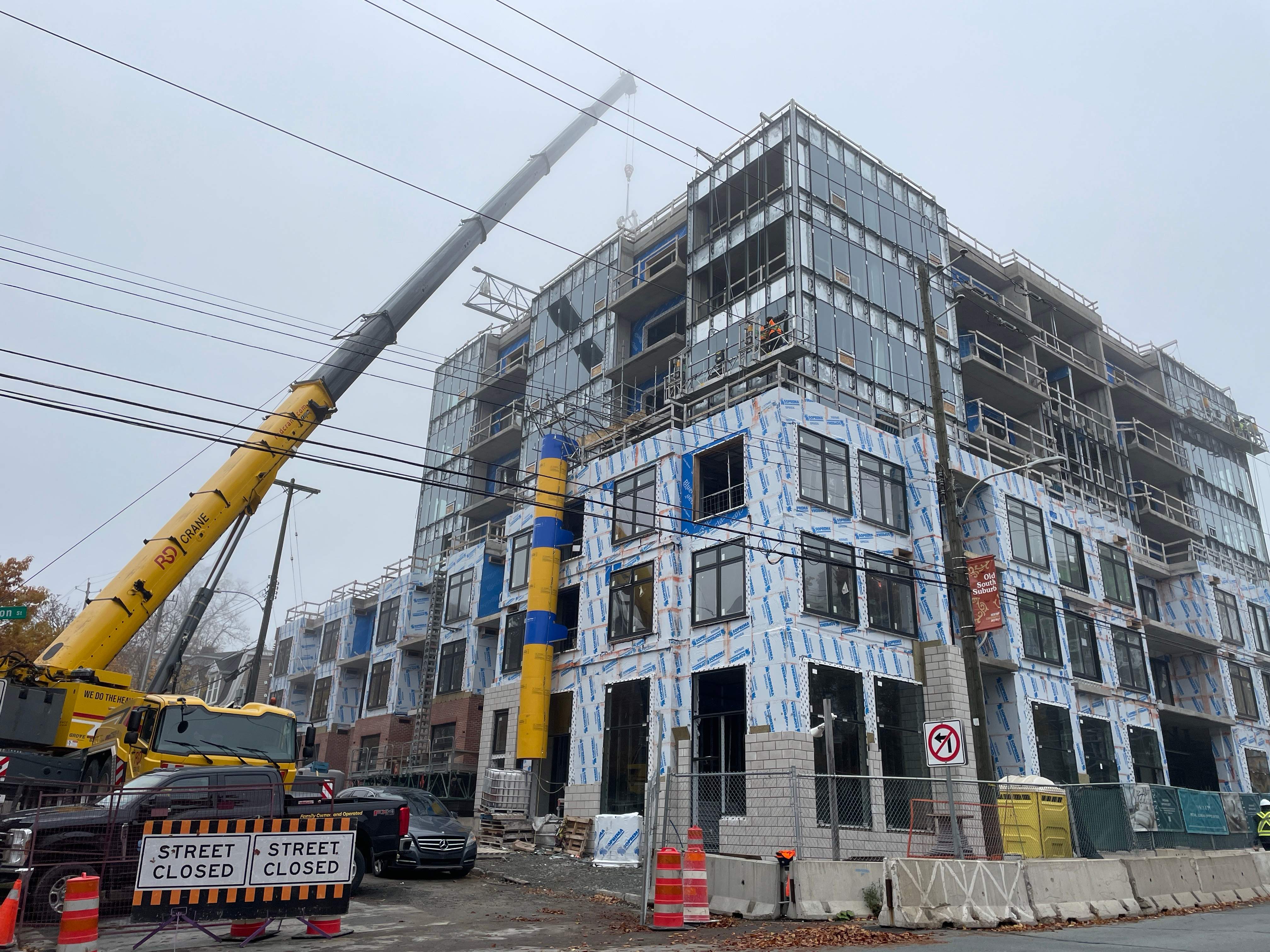
Freezing municipal development fees during periods of rapid urban expansion creates an immediate structural deficit between capital expenditure requirements and available revenue streams. When Halifax Regional Council extends a freeze on development charges, it artificially suppresses the cost of growth for private builders while transferring the compounding financial liability of supporting infrastructure directly onto the existing tax base. Understanding the resulting fiscal friction requires analyzing the mechanics of municipal capital budgets, the divergence between operational and growth-related costs, and the inelasticity of infrastructure delivery timelines.
The Structural Mechanics of Municipal Growth Funding
Municipalities operate under strict statutory constraints that prohibit deficit financing for operating budgets, forcing capital projects to rely on a delicate equilibrium of property taxes, debt issuance, intergovernmental transfers, and development charges. Development charges—often referred to as regional development charges (RDCs) or infrastructure charges—exist to enforce the economic principle of growth paying for growth.
When a municipality approves high-density residential or commercial zoning, it triggers downstream physical requirements:
- Linear Infrastructure Expansion: Trunk sewers, water mains, and stormwater management systems must be upsized to handle increased peak flow capacities.
- Transportation Network Capacity: Arterial road widening, transit priority corridors, and active transportation links must absorb higher daily trip volumes.
- Community Amenities: Fire stations, libraries, and recreational facilities require geographic distribution to maintain service-level standards per capita.
A fee freeze decouples the revenue collection mechanism from the physical trigger of demand. While construction costs, material inflation, and land acquisition expenses continue to escalate at market rates, the municipal revenue per square foot of new development remains static. This creates an expanding capital funding gap that cannot be bridged through efficiency gains alone.
The Three Failure Modes of Extended Fee Freezes
Extending a fee freeze beyond a short-term economic stabilization window introduces three distinct systemic distortions into municipal financial planning.
1. The Intergenerational and Cross-Subsidization Transfer
Under a balanced growth-funding model, the marginal cost of new infrastructure is capitalized into the price of new real estate via development charges. Freezing these fees removes that price signal. Because the physical pipes, roads, and transit vehicles must still be built to prevent system failure, the funding burden shifts entirely to the general property tax rate or utility rate base. Existing residents, many of whom generate zero marginal demand on new trunk infrastructure, end up subsidizing the capital costs of new developments. This violates horizontal equity in public finance and erodes political support for urban densification.
2. Capital Project Deferral and the Compounding Maintenance Trap
Municipalities facing a shortfall in dedicated growth reserves typically respond by re-prioritizing their multi-year capital plans. Non-essential community projects are delayed first, followed by preventative maintenance on existing assets to free up cash-from-operating contributions for urgent growth-enabling infrastructure.
Deferring preventative maintenance alters the lifecycle cost curve of municipal assets. An arterial road requiring minor resurfacing at year ten will require full-depth structural reconstruction by year sixteen if neglected, multiplying the capital outlay by a factor of three to five. By freezing development fees, a council inadvertently accelerates the accumulation of an unfunded infrastructure deficit across its legacy asset base.
3. Distortion of Developer Pro-Formas and Land Valuation
A common rationale for freezing municipal fees is to stimulate housing supply by improving the financial viability of construction projects. In practice, land economics dictates that predictable, long-term fee freezes are rapidly capitalized into the price of raw land.
When developers model a project pro-forma, they calculate residual land value by subtracting hard construction costs, soft costs, municipal fees, and target profit margins from the projected gross revenue of the completed building. If municipal fees are artificially held below the true cost of infrastructure delivery, developers compete for scarce parcels by bidding up land prices. The intended subsidy for housing affordability or construction velocity is captured by original landowners rather than translating into lower rents or accelerated unit completions.
Analyzing the Halifax Fiscal Bottleneck
Halifax faces a specific demographic and geographic reality that amplifies the risks of a prolonged fee freeze. High population growth rates concentrated within the regional center and key suburban nodes require massive upfront capital investments in transit corridors and wastewater treatment capacity. Unlike greenfield sprawl, where infrastructure can sometimes be phased incrementally by private developers, infill and densification require complex upgrades to deeply buried, aging municipal networks.
Councillors questioning the sustainability of the freeze are identifying a critical lag effect. The approvals granted during a fee freeze do not impact physical infrastructure on the day the building permit is issued; they impact the system two to four years later when occupancy occurs. By the time the physical strain on transit routes and water treatment plants becomes acute, the window to collect the corresponding capital fees from those specific projects has permanently closed.
The municipal balance sheet absorbs this shock in one of three ways:
- Debt Ceiling Compression: Issuing municipal debentures to cover the capital shortfall consumes borrowing capacity, increasing annual debt-servicing costs within the operating budget and pushing the municipality closer to provincially mandated debt-to-revenue limits.
- Utility Rate Spikes: Halifax Water, operating as a regulated utility, must recover its capital costs through user rates. If growth-related infrastructure charges are suppressed, base water and wastewater rates must rise across all customer classes to maintain bond ratings and regulatory compliance.
- Development Moratoriums: If capital funding cannot be secured through taxes, debt, or fees, the municipality eventually hits a hard engineering limit, forcing pauses on new development approvals in capacity-constrained sewersheds or transportation corridors.
Limitations of Alternative Funding Mechanisms
When councillors and administrators look for alternatives to reinstating full-cost development charges, they encounter rigid structural boundaries.
- Intergovernmental Grants: Federal and provincial infrastructure programs are episodic, politically driven, and frequently tied to specific policy mandates that may not align with a municipality’s core engineering priorities. Relying on upper-tier government transfers to fund routine growth infrastructure introduces unacceptable volatility into multi-year capital budgeting.
- Tax Increment Financing (TIF): While TIF districts allow a municipality to borrow against future property tax revenues generated by a specific redevelopment area, they do not create new net revenue. They simply ring-fence future tax growth that would otherwise flow into the general operating fund to pay for city-wide services like policing, snow clearing, and transit operations.
- Density Bonusing: Exchanging additional building height or floor-area ratio for cash-in-lieu contributions generates localized revenue, but the yields are highly dependent on market cycles and rarely scale sufficiently to fund regional-level trunk infrastructure.
Strategic Framework for Realigning Growth Costs
To resolve the tension between housing supply targets and fiscal solvency, Halifax Regional Council must abandon blunt, across-the-board fee freezes in favor of targeted, mathematically grounded cost-recovery mechanisms.
- Implement Indexed, Phased-In Rate Schedules: Rather than holding fees static and creating a massive fiscal cliff when the freeze inevitably expires, the municipality should establish a transparent, multi-year escalation schedule. Tying annual fee adjustments directly to a recognized non-residential construction price index prevents sudden market shocks while restoring the link between infrastructure costs and revenue.
- Transition from Flat Fees to Marginal Cost-of-Service Pricing: Development charges should reflect the actual geographic cost of servicing. High-density infill projects utilizing existing transit and trunk capacity should face significantly lower charges than fringe developments requiring new pumping stations, road extensions, and transit routes. This aligns fiscal policy with urban planning objectives without sacrificing total cost recovery.
- Shift Payment Timing Without Waiving Liability: If developer cash flow and high interest rates on construction financing are the primary barriers to housing starts, the municipality should defer fee collection from building permit issuance to occupancy permit issuance, rather than waiving the fee entirely. The municipality can utilize its superior credit rating to bridge the short-term financing gap, securing the unpaid fee as a priority lien on the property title until completion.
Municipalities cannot subsidize private development costs indefinitely using public infrastructure reserves without degrading service levels across the entire city. Halifax must immediately replace its blanket fee freeze with a deferred-collection, marginal-cost pricing model that preserves builder liquidity during construction while guaranteeing full capital recovery upon occupancy.