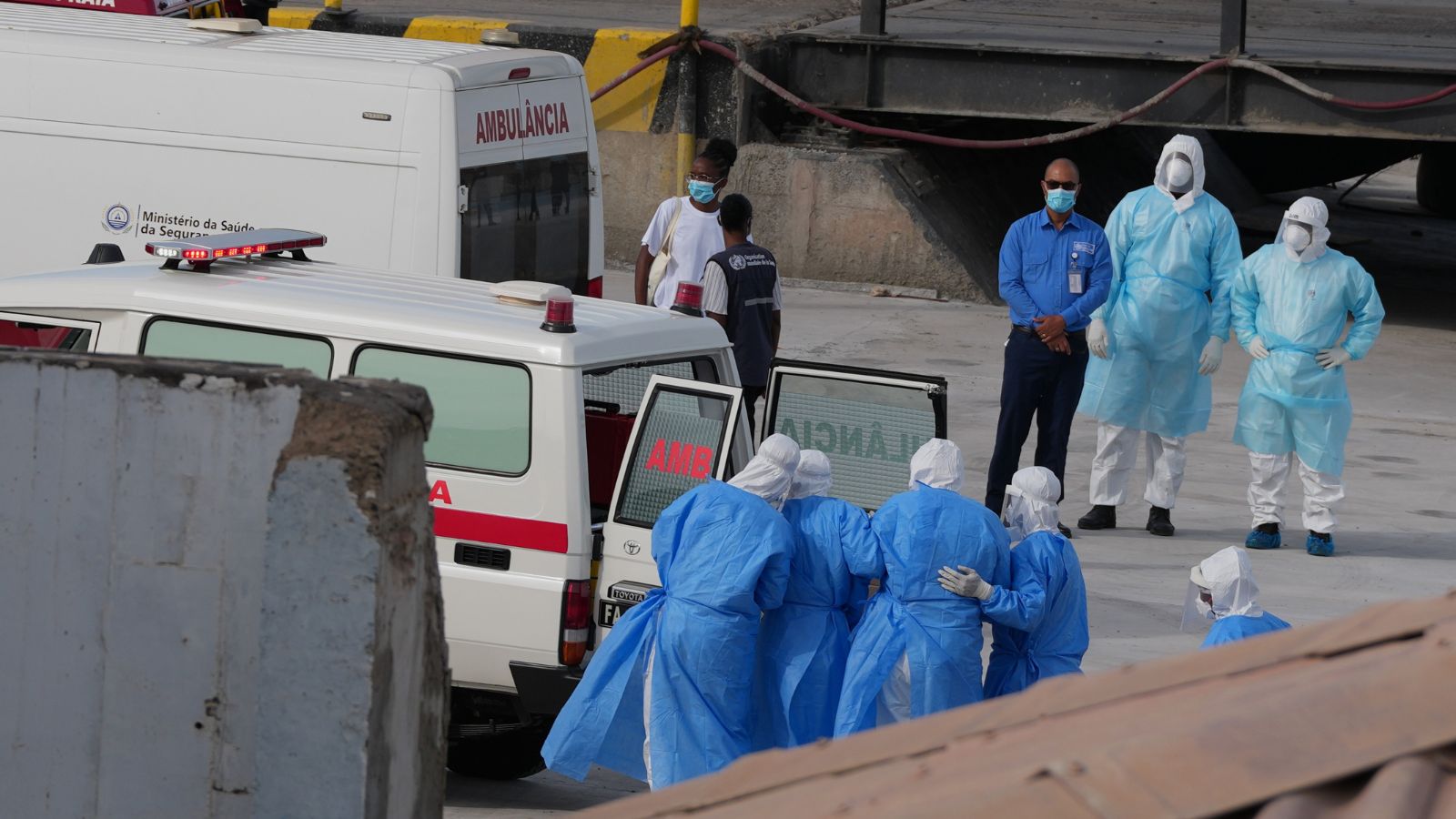
Public health officials are currently burning through taxpayer budgets to "trace" the contacts of Hantavirus victims with the same frantic energy they applied to respiratory pandemics. It is a waste of time. It is a waste of resources. Worse, it is a fundamental misunderstanding of the viral ecology that makes Hantavirus Pulmonary Syndrome (HPS) a threat.
The standard narrative—the one being pushed by every major health outlet right now—suggests that if a person dies from Hantavirus, we must find everyone they spoke to in the forty-eight hours prior to their hospitalization. This is a comforting ritual for the public, but for anyone who understands the Orthohantavirus genus, it is purely theatrical.
The Myth of Human-to-Human Transmission
Contact tracing exists to break chains of transmission. If a virus moves from Person A to Person B, you find Person B to stop them from infecting Person C.
Hantavirus, specifically the Sin Nombre strain prevalent in North America, does not work this way. With the exception of the Andes virus in South America—which has shown rare, localized instances of person-to-person spread—the Hantaviruses we deal with in the United States are dead-end infections in humans.
When a human breathes in aerosolized urine or droppings from a deer mouse (Peromyscus maniculatus), the virus enters the lungs. It doesn't then replicate in a way that allows it to be easily coughed back out to infect a neighbor. You are more likely to be struck by lightning twice than to catch Sin Nombre from your spouse.
Tracing "contacts" in this scenario is like investigating the passengers of a car crash to see if they’re going to cause more crashes. They aren't the drivers; they are the victims of the environment.
We are Hunting the Wrong Species
If you want to save lives, stop interviewing the grieving family about who visited the house. Start looking at the shed.
The obsession with human contact tracing distracts from the actual vector: the rodent population. Public health departments love the human element because it's easy to track via phone calls and spreadsheets. It’s much harder to conduct rigorous longitudinal studies on rodent seroprevalence or to enforce housing codes that prevent infestation in rural areas.
In my years analyzing epidemiological responses, I’ve seen departments ignore the "micro-environmental" factors—like a specific barn or a localized boom in the pinion nut crop that fuels mouse populations—because they are too busy checking boxes on a "Contact History" form designed for the flu.
We are using a map of the city to find a needle in the forest.
The False Security of the "Trace"
When officials announce they are "tracing contacts," it creates a false sense of what the danger actually is. It implies the danger is people.
The danger is actually a pile of dust in a cabin that hasn't been opened since October. By focusing on people, we fail to educate the public on the real risk: the stir-up.
If you spray a 10% bleach solution on rodent droppings, you neutralize the threat. If you sweep them up with a dry broom, you might die. That is the only piece of information that matters. Yet, we see press releases focusing on "potential exposures at a local diner." Unless that diner has a rodent problem in the kitchen, the exposure risk is zero.
The Math of Futility
Let's look at the numbers. HPS has a mortality rate of roughly 38%. It is terrifying. However, it is also exceedingly rare. We see maybe 20 to 50 cases a year across the entire United States.
Compare the cost-per-case of contact tracing Hantavirus to the cost-per-case of testing private wells for arsenic or radon in the same rural areas. We are spending thousands of dollars per "trace" to find zero secondary infections, while ignoring environmental toxins that kill thousands.
This is "Fear-Based Budgeting." It happens when an agency needs to look active during a headline-grabbing tragedy. They use the infrastructure built for COVID-19 because it’s there, not because it’s applicable. It is the definition of the "Law of the Instrument": when you have a contact-tracing hammer, every virus looks like a nail.
Why We Can't Let Go of the Ritual
Psychologically, contact tracing provides a sense of agency. It suggests that the "authorities" are in control of the spread. But Hantavirus is a disease of geography and ecology, not social interaction.
To actually fix the problem, we would need to:
- Abolish human-centric tracing for HPS in regions where person-to-person transmission has never been documented.
- Reallocate those funds to ecological surveillance—trapping and testing mice to identify "hot" zones before humans move back into seasonal properties.
- Mandate "Wet-Cleaning" education for all rural property owners.
The current strategy is a relic of 20th-century epidemiology being applied to a 21st-century ecological problem. We aren't fighting a contagion; we are fighting an encounter.
Imagine a scenario where we treated shark attacks like a virus. We wouldn't interview everyone who was on the beach to see if they were "exposed" to the shark. We would look at the water temperature, the seal population, and the proximity of the swimmers to the drop-off.
Hantavirus is the shark. The mouse is the water. The human contact is just a bystander.
Stop asking who the victim talked to. Start asking where they cleaned.
Every hour spent on a phone call with a "contact" is an hour not spent in the field identifying the next environmental cluster. We are literally letting people die so we can keep our spreadsheets looking busy.
Burn the tracing manuals. Buy some traps.