Silence.
In Los Angeles, real silence is the most expensive commodity on the market, far rarer than imported Italian marble or imported olive trees, and if you have spent your entire adolescence living inside the deafening roar of film sets, paparazzi lenses, and hotel corridors, you will pay millions just to hear the wind move through eucalyptus leaves without a microphone boom hovering two feet above your head.
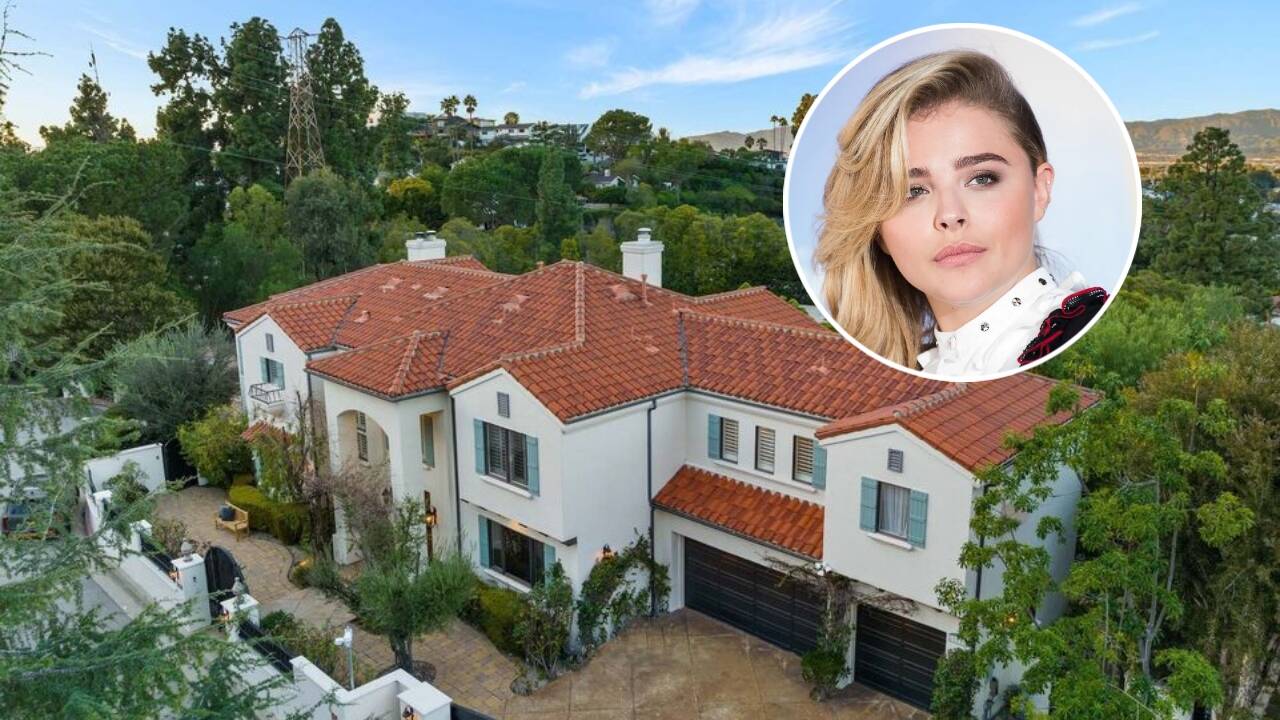
When Chloë Grace Moretz quietly offloaded her Studio City residence for $5.65 million—a 1930s Spanish-style compound tucked behind heavy gates in the Fryman Canyon neighborhood—the real estate blogs treated it like another routine transaction on the celebrity conveyor belt. Square footage. Bedroom counts. Price per square foot. A neat little ledger of luxury.
They missed the point entirely.
To understand what that house actually meant, you have to strip away the Zillow metrics and look at the geography of growing up famous. Most of us mark the transition into adulthood with a beat-up Honda Civic, a security deposit on a cramped walk-up with radiator pipes that hiss like angry cats, and a set of mismatched plates borrowed from a parent’s kitchen. We get to fail in private. We get to figure out who we are when nobody is watching, when the lighting is terrible, and when there isn't a publicist waiting in the driveway to spin our bad days into a relatable press cycle.
Child actors do not get that grace period. Their childhoods are liquid assets, traded on open markets before they are old enough to sign a lease. By the time Moretz purchased this particular property in 2016—she was nineteen, barely out of her teens, already a veteran of Kick-Ass, Hugo, Carrie, and dozens of high-stakes productions—she had spent more than a decade living inside spaces designed by someone else. Trailers. Soundstages. Rented penthouses. Temporary habitats built for temporary versions of herself.
Buying a house at nineteen when you have been working since age seven is not a flex. It is an act of self-preservation.
The Architecture of a Fortress
Drive up into the hills of Studio City, past the frantic energy of Ventura Boulevard where smoothie shops and boutique Pilates studios jostle for curb space, and the air changes. The streets narrow. The foliage thickens. Fryman Canyon has always been the preferred sanctuary for the kind of Hollywood money that prefers whispers to megaphones—an enclave where old-school character actors, showrunners, and young stars trying to outrun their own fame hide behind hedges tall enough to block out a telephoto lens.
Consider a hypothetical buyer walking through that front gate for the first time, someone who has spent ten years being told where to stand, how to tilt her chin, and what to say to a room full of strangers holding recorders. Let’s call her Maya, though her real name was on the deed. For Maya, a hallway isn't just a passage between rooms; it is the first corridor she has ever walked down where nobody is yelling "rolling" from behind a monitor.
Built in 1937, the Studio City estate Moretz called home sits on roughly a third of an acre, a generous footprint for the hills, offering roughly 5,700 square feet of living space across five bedrooms and six bathrooms. On paper, those numbers sound grand, almost intimidating. Step inside, however, and the scale tells a very different story.
This was never a cold, glass-and-steel monument to ego—the kind of cantilevered Beverly Hills box that looks like an airport terminal and echoes like a museum. Instead, the house leaned heavily into classic California warmth. Whitewashed brick. Terracotta tile that holds the afternoon heat long after the sun drops behind the ridge. Exposed dark wood ceiling beams that pull the eye upward while keeping the room anchored to the earth.
I have walked through enough historic Los Angeles properties to know the difference between a house renovated to be photographed and a house renovated to be lived in. Flippers love open-concept voids because they photograph well on a wide-angle lens; they tear down every wall until the living room feels like a hotel lobby. Moretz’s former home resisted that impulse. It kept its bones. Arched doorways framed the transitions between rooms, creating natural pauses—thresholds that force you to slow down before entering the next space.
Why 1930s Spanish Revival Still Wins the Hills
There is a reason Hollywood’s most guarded residents consistently gravitate toward pre-war Spanish and Mediterranean architecture rather than ultra-modern builds. It comes down to psychology, plain and simple.
Modern glass houses operate on a premise of total transparency. They announce themselves to the canyon below, glowing like lanterns at night, inviting the gaze of every hiker on the ridge and every drone operator with too much free time. For an ordinary tech executive, that openness feels liberating. For someone whose face has been plastered on bus shelters since she was eleven years old, living in a glass box feels like staying at the office twenty-four hours a day.
Spanish Revival architecture works in the exact opposite direction. It is inward-facing by design. Thick plaster walls absorb sound and buffer the interior from the outside world. Small, deeply set windows frame specific vignettes of greenery rather than exposing the entire interior to the street. Everything flows toward a central courtyard or backyard sanctuary, turning the property into a private universe where the perimeter belongs entirely to the people inside.
Inside Moretz’s former residence, that inward pull was everywhere. The main living room centered around a traditional fireplace, flanked by built-in shelving and French doors that opened directly onto the grounds. Wide-plank hardwood floors ran underfoot—forgiving, warm, the kind of wood that looks better with a few scuff marks from boots or dog claws rather than demanding constant policing.
In the kitchen, the design balanced serious culinary utility with casual comfort. Custom cabinetry, marble countertops, a massive central island built for gathering rather than just plating, and high-end stainless appliances sat beneath the same rustic beams that unified the main floor. You can picture what happens in a kitchen like that at two in the morning after a long flight back from London or New York: no caterers, no stylists, just bare feet on cool stone, making toast in complete anonymity.
The Invisible Stakes of Young Wealth
We love to judge how young celebrities spend their money. When a twenty-something athlete buys six sports cars or a pop star drops millions on diamond chains, the internet treats it as a morality play about excess and immaturity. Real estate gets lumped into the same bucket—another headline about out-of-touch twenty-somethings trading mansions like Pokémon cards.
That reading ignores the brutal math of early fame.
Think about the financial mechanics of a child star’s career. Unlike a doctor, a lawyer, or a software engineer whose earning curve climbs steadily into their forties and fifties, an actor who peaks early faces an inverted timeline. Their highest leverage often arrives before they have fully developed a sense of self, surrounded by an ecosystem of agents, managers, business managers, and family members whose livelihoods depend on keeping the machine running.
When Moretz bought this Studio City property in 2016 for around $3.4 million—before eventually listing and selling it for $5.65 million—she wasn't merely buying a place to sleep. She was converting volatile, unpredictable career momentum into something permanent.
Real estate in prime Los Angeles enclaves acts as an anchor against industry chaos. Scripts dry up. Franchises stall. Public tastes shift overnight without warning or apology. Yet a 1937 Spanish estate in Fryman Canyon, sitting on a flat, usable lot behind double gates, holds its value regardless of what happens at the Friday night box office. Over the years she owned it, the property appreciated by more than two million dollars—a quiet, disciplined return that outpaced the lifespan of most Hollywood production deals.
More importantly, the house functioned as a family compound. Anyone who has followed Moretz’s career knows how tightly knit her family unit has always been, with her brothers frequently stepping into professional and personal support roles alongside her. A five-bedroom layout isn't about showing off empty guest suites to magazine editors; it is about having enough room under one roof for the people you actually trust when the rest of the world feels transactional.
Stepping Outside the Frame
Walk through the French doors at the back of the house, and the real magic of the property reveals itself.
In Los Angeles, indoor-outdoor living has become such an overused real estate cliché that the phrase barely registers anymore. Every listing promises it, even when "outdoor living" amounts to a four-foot strip of artificial turf wedged between a stucco wall and a neighbor’s air conditioning unit.
Here, the lot actually delivered on the promise.
The backyard unfolded like a private Mediterranean garden, shielded by mature hedges, towering sycamores, and dense landscaping that swallowed the hum of the city below. A rectangular swimming pool anchored the lawn, bordered by stone decking and shaded lounging areas designed for long, unhurried afternoons. Nearby, an outdoor dining terrace and built-in barbecue setup created a second living room under the open sky.
Consider what that yard meant during the late 2010s and early 2020s—years when Moretz deliberately stepped back from the relentless pace of blockbuster filmmaking to recalibrate her career and her personal life. Between 2010 and 2018, she had appeared in well over twenty films, bouncing from studio tentpoles to indie dramas with barely a breath in between. Then, suddenly, she slowed down. She became selective. She started saying no.
It is much easier to say no to a seven-figure studio offer when you love the place you wake up in every morning.
That is the hidden variable nobody calculates when analyzing celebrity real estate. A great house doesn't just reflect a person’s success; it alters their decision-making. When your home is a sterile hotel room or a soulless rental, work becomes your default refuge because at least the set feels familiar. When your home has a sunlit primary suite with vaulted ceilings, a private balcony overlooking canyon treetops, and a spa-like bath where you can wash off sixteen hours of stage makeup in peace, staying home becomes a genuine alternative.
The Upstairs Sanctuary
Climb the staircase to the upper level, and the floor plan shifts decisively from entertaining to retreat.
The primary bedroom suite occupied its own wing, engineered to maximize light without sacrificing privacy. Vaulted wood-beamed ceilings gave the room an airy, chapel-like calm, while French doors opened onto a private terrace overlooking the pool and the surrounding canyon canopy. A fireplace anchored the sitting area, turning the bedroom into a self-contained apartment where you could spend an entire Sunday reading without ever needing to go downstairs.
The adjoining bathroom leaned into timeless restraint rather than flashy trends—dual vanities, a deep soaking tub positioned to catch natural light, and a generous glass-enclosed shower finished in classic stone. Alongside it sat a custom walk-in closet capable of housing red-carpet couture alongside everyday denim without feeling like a retail boutique.
The remaining bedrooms offered the kind of flexibility that makes older Los Angeles homes so coveted. One easily converted into a screening room or media lounge—essential infrastructure for any working actor reviewing dailies or scripts at home—while others served as quiet guest quarters or creative workspaces.
Nothing about the interiors screamed for attention. There were no neon art installations spelling out ironic slogans, no velvet ropes, no bizarre novelty rooms built purely to generate headlines when the property inevitably hit the market. The aesthetic was grounded, slightly bohemian, and deeply respectful of the house’s 1930s roots.
Why She Eventually Let It Go
Every house has a season.
The very qualities that make a gated compound feel like a lifeline at nineteen can start to feel like a cocoon by your mid-twenties. You grow up. Your circle shifts. Your relationship with fame evolves from something you need to hide from into something you finally know how to manage on your own terms.
When Moretz put the Studio City residence on the market and closed the sale at $5.65 million, she wasn't abandoning a failed experiment. She was graduating from it.
Think about the arc of those years. She walked through that front door as a teenager carrying the weight of an entire childhood spent in front of cameras, looking for a fortress thick enough to keep the noise out. She walked out of it as a woman in her mid-twenties who had reclaimed control over her career, her voice, and her time—leaving behind a restored 1937 architectural gem that had quietly doubled as both a sanctuary and a smart investment.
In a city obsessed with tearing down the past to build bigger, louder, shinier monuments to the present, there is something deeply satisfying about a house that simply stood its ground, did its job, and waited for its next chapter.
Late in the afternoon in Fryman Canyon, just before dusk settles over the San Fernando Valley, the sun drops low enough to turn whitewashed brick the color of warm honey, and for twenty quiet minutes, the gates stay shut and nobody outside knows who is inside.