Silence. That is the first thing you notice when a forest stops sounding like a forest. Usually, dry leaves crackle under boots, birds argue in the canopy, and wind hums through coastal brush. At Shakahola Forest, near the Kenyan town of Malindi, the quiet felt heavier, pressed down by red earth and unanswered prayers.
On November 6, 2026, a court in Mombasa handed down a 200-year prison sentence to Paul Mackenzie, leader of the Good News International Church, after convicting him over the murders of 190 children and an adult. Two hundred years. A number so large it stops measuring human time and begins measuring the sheer weight of what was stolen. For an alternative look, check out: this related article.
When news wires carry a headline like that, our eyes skim past the numeral and land on the shock. One hundred and ninety children. It is almost too big to hold in your chest at once, so the mind turns away, numbed by scale. Yet behind every single digit in that verdict was a pair of shoes that never wore out, a lunch that was never eaten, and a voice calling out for water in the heat until there was no breath left to call with.
The Quiet Creep of Absolute Certitude
How does a man convince parents to starve their own children? Further insight on the subject has been published by The Guardian.
That question haunted me long before I ever read a line of court testimony. Anyone who has spent time in places where fear and poverty walk side by side knows how easily desperation can be dressed up as holiness. When hospitals feel out of reach, when school fees pinch, when the world outside looks cruel and indifferent, a voice promising swift salvation can sound like cool water on cracked lips.
To understand the pull of that voice—and I should state clearly here that what follows is a hypothetical composite sketch built from documented survivor accounts and court findings, not a literal transcript of one family—picture a mother named Amina. She is not a monster. She is tired. Her youngest has a fever that will not break, her money is gone, and a charismatic preacher speaks with absolute certainty about meeting Jesus faster if you leave earthly hunger behind.
At first, the fast is framed as devotion. A test of purity. A shortcut out of suffering.
Then day three arrives. Then day five.
The human body does not care about theology. Stomachs knot, lips split, eyes sink inward, and small children—whose bodies store almost no reserve—begin to fade first. In court, Justice Diana Kavedza spoke of children watching their siblings die after days of hunger, and of people who tried to reach for food or water being beaten, bound, and locked inside rooms turned into what the court described as fasting bays.
Think about that contrast for a second. A room meant for shelter turned into a cage where thirst is treated as sin. Once a group crosses that line from voluntary belief into enforced obedience, persuasion has already given way to control.
Why Warning Signs Get Missed in Plain Sight
If you want a sobering metaphor for how tragedies like Shakahola grow, think of dry grass beside a railway track. Sparks fly past for years without catching, until one hot afternoon the wind shifts and the whole hillside goes up.
Authorities had seen sparks long before shallow graves were uncovered in April 2023. Police had searched Mackenzie's premises back in 2017. He faced an arrest over radicalization allegations that year and was acquitted, then was arrested again in 2019 in connection with two child deaths at Shakahola before being released on bail, after which his church in Malindi was shut down and operations shifted deeper into the forest.
Every time a warning is brushed aside, the cost compounds.
It is easy to sit at a desk thousands of miles away and ask why nobody stepped in sooner. Honest reflection requires admitting that drawing legal lines around faith is genuinely hard, and scary to get wrong. No healthy society wants heavy-handed state control policing private conscience or punishing ordinary believers for how they pray. Fear of trampling religious freedom often makes officials hesitate.
Hesitation has its own body count.
When warning signs stack up—children kept out of school, sick relatives denied medical care, isolated compounds cutting families off from neighbors—waiting for a catastrophic explosion before acting leaves the most defenseless people exposed. In Kenya, the tragedy echoed dark chapters from elsewhere in history, including the 1978 Jonestown massacre in Guyana and the 2000 doomsday cult tragedy in Uganda. The details differ across borders and decades, yet the playbook is painfully familiar: isolate followers, strip away outside voices, turn suffering into proof of righteousness, and punish anyone who doubts.
Grief Without a Final Chapter
A courtroom verdict closes a legal file. It does not hand a parent back a child.
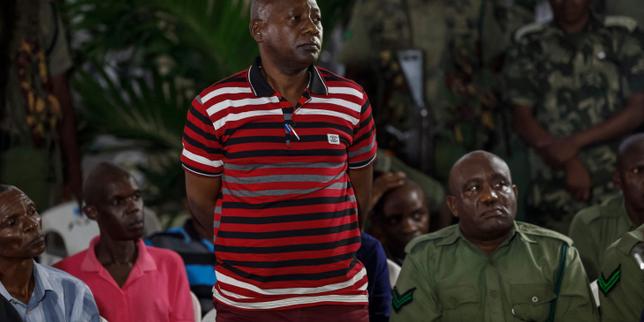
Outside the Mombasa court after sentencing, the pain of what remained unfinished hung in the air. Stephen Mwiti, who lost six children, put the ache into plain words: no punishment against Mackenzie or his 28 convicted accomplices—who received sentences ranging from 10 to 160 years—could bring his children back. Dan Mackenzie, one of the cult leader's own sons who left in his early teens after losing faith in the promises of heaven, spoke of losing friends and a younger brother in Shakahola, calling the ruling justice for those who died while noting his father had not spared his own family.
And then there was Suleiman Zero, weeping outside court because his wife and six children were still missing. "I am happy, but where is my family?" he asked. "The one thing that I request from the government is that they help find my family. If they are dead, then let me have the bodies to bury."
Read that plea again. Just a grave with a name. Just a place to kneel and mourn.
Across Shakahola and nearby areas—with prosecutors also alleging that Mackenzie directed dozens more deaths from detention in Kwa Binzaro village, a charge to which he pleaded not guilty—hundreds of suspected victims were linked to the wider nightmare, leaving families suspended between hope and dread. Even when the law speaks with maximum force, missing loved ones keep survivors trapped in purgatory.
The Hard Work After the Verdict
Justice Diana Kavedza acknowledged that Kenyan institutions had failed and called on Parliament to take steps so this horror cannot repeat. President William Ruto had previously taken responsibility for state shortcomings after the graves came to light, appointing a task force in May 2023 that led to legislative proposals in 2024, though tightening oversight of religious groups has run into fierce debate and slow movement.
Laws alone cannot solve everything, of course. Bad actors find loopholes in rules written on paper. Real protection requires something messier and more durable:
- Earlier intervention on child welfare: When children vanish from classrooms and clinics inside closed communities, authorities need clear, fast tools to check on their safety without waiting for bodies to turn up.
- Accountability for enablers: Conviction of dozens of accomplices alongside the ringleader signals that blind obedience does not erase harm done to children.
- Support for families and survivors: People pulled out of coercive groups—or left searching for missing relatives—need trauma care, legal help, and community support so they are not pushed back into isolation.
None of those steps is glamorous. None makes a punchy headline the way a two-hundred-year sentence does. Yet prevention always lives in the quiet, unglamorous work done before the crisis peaks.
A breeze still moves through the trees around Malindi, rustling dry leaves that have seen too much sorrow. Somewhere, a father still waits for word of six children, holding onto the smallest possible wish: to bring them home and lay them to rest properly.