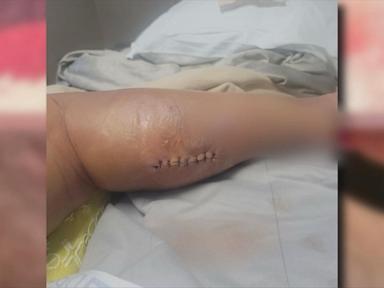
Most people brush off bug bites as a minor summer annoyance. You slap at your leg, scratch an itch, and move on with your day. But for Kansas mother-of-four Britagne Miller, a routine family campfire trip turned into a terrifying medical nightmare that left her facing a literal death sentence.
When multiple spiders crawled across her legs at Cheney Lake in late May, she didn't realize the severity of what was happening. Within days, a simple bite on her calf transformed into a massive, agonizing hematoma. The pain felt like a hot metal fire poker shooting down into her foot.
She checked into Wesley Medical Center in Wichita on June 4, expecting standard treatment. Instead, she began a 44-day hospital ordeal that tested the absolute limits of human endurance.
When Underlying Health Conditions Amplify a Crisis
Why do some insect bites turn fatal while others barely leave a mark? The answer usually lies in what is already happening inside the body.
In Britagne's case, surgeons at the hospital had to extract close to 300 milliliters of blood clots from her wounded leg. The procedure was exceptionally dangerous because she was already managing end-stage liver disease and pre-existing blood clotting disorders. Doctors warned her husband, Jake Miller, that routine care and surgery carried a massive risk of uncontrolled bleeding.
Complications multiplied rapidly. A drain placed in her surgical wound invited secondary infections, specifically Staphylococcus and gram-negative bacteria. These pathogens triggered sepsis, a systemic, life-threatening reaction that causes the body to attack its own organs. Tissue necrosis set in around her stitches, forcing medical staff to perform painful bedside procedures just to remove dead skin.
With her body failing and critical markers plummeting, physicians delivered a devastating prognosis. They told her family she had anywhere from three days to a month left to live and recommended moving her to hospice care.
The Reality of Dangerous Spiders in the Midwest
While doctors could not definitively pinpoint the exact species responsible for Britagne's bites, regional experts point a finger at likely culprits. Dr. Raymond Cloyd, a horticultural entomologist at Kansas State University, notes that venomous arachnids like the Brown Recluse are common around Kansas campsites.
Brown Recluse venom contains proteins that can destroy cell membranes and cause severe local tissue destruction, known as necrotic arachnidism. When combined with open wounds, camp dirt, and compromised immune systems, the risk profile changes entirely.
Most healthy individuals bounce back from spider encounters with mild localized irritation or a small blister. But if you have pre-existing organ strain, poor circulation, or chronic illness, your body lacks the metabolic reserve to fight off secondary bacterial invasions. Sepsis does not care what bit you; it exploits whatever weakness it finds.
Refusing to Give Up
Faced with a timeline measured in days, Britagne made a choice. She refused hospice. Thinking of her husband and children, she told her medical team she would fight as hard as humanly possible.
That sheer willpower shifted the momentum. After enduring 10 days in the intensive care unit and multiple grueling procedures, her body slowly began responding to heavy rounds of antibiotics and targeted care. She was finally discharged on July 11, returning home to begin the long process of rebuilding her strength and learning how to walk normally on her injured leg again.
Her husband organized a community fundraiser to help manage the overwhelming medical bills piling up during the crisis. Yet even back home, the ordeal isn't entirely over. Britagne requires ongoing home health care and weekly specialist visits to monitor her liver function and blood clotting levels.
Protecting Yourself Outdoors
You don't need to live in fear of every bug you see outdoors, but ignoring strange, rapidly worsening symptoms is a massive mistake. If you spend time camping or hiking in areas known for venomous pests, take practical precautions seriously.
- Wear tall socks and long pants tucked into your boots when walking through brush or wooded areas near lakes.
- Inspect camping gear, sleeping bags, and shoes that have been sitting idle on the ground before putting them on.
- Monitor any bite that starts expanding, turning purple, or radiating intense, shooting pain down your limbs.
If a bite begins feeling like a hot poker or fails to improve within 48 hours, skip the wait-and-see approach. Go straight to urgent care before a minor puncture turns into a battle for your life.