The fluorescent lights of a rural high school gymnasium do not forgive. They bounce off scuffed linoleum floors, illuminate the frayed edges of folding chairs, and catch every crease in a cheap polyester graduation gown. For most people in the bleachers, graduation night is a blur of camera flashes, air horns, and humid May air.
For the kid sitting in the front row—the one with the gold cord draped over their shoulders—it is something else entirely.
It is the finish line of a four-year sprint run entirely uphill.
Think about what it actually takes to become a high school valedictorian in a place like Mississippi. Forget the Hollywood version of the prep school prodigy with a private tutor and an immaculate bedroom desk. Consider a hypothetical student—let’s call her Maya—growing up in a county where the nearest bookstore is forty-five minutes away by highway, and the Wi-Fi drops every time it rains. Maya didn't get to the top of her class by accident. She got there by doing calculus homework at 11:30 p.m. on the breakroom table of a fast-food restaurant while waiting for her mother’s shift to end. She got there by rationing notebook paper, ignoring the quiet hum of an unpaid electric bill, and treating every single test like a lifeboat.
And then comes graduation night.
Everyone looks at the cap. Everyone looks at the tassel. Nobody looks down.
Until you are the one standing at the podium, feeling the cardboard-thin sole of a two-year-old sneaker pressing against the wooden risers, acutely aware that the toe box is starting to peel away from the rubber.
The Invisible Economy of High School Pride
We like to pretend that academic achievement is purely a contest of the mind. It isn't. School is a physical, deeply social ecosystem where status is broadcast in thread count, logo placement, and the crisp, uncreased leather of a brand-new pair of shoes.
If you have never had to walk down a hallway while actively curling your toes inward so the hole in the side of your shoe doesn't gape open, it is easy to dismiss footwear as vanity. It is easy to say that books matter more than boxes, and grades matter more than gear.
That is a comfortable lie told by people who have never had to choose between paying a water bill and buying a pair of sneakers that don't pinch.
In the quiet hierarchy of American adolescence, shoes are currency. They are armor. When a teenager walks into a room wearing clean, iconic footwear, their posture changes before they even speak a word. Their shoulders drop. Their chin lifts. They occupy space without apologizing for it. Conversely, when a brilliant student spends four years outscoring every peer in the building while wearing hand-me-downs with worn treads, a subtle psychological friction sets in. They know they are smart. They just don't always feel seen.
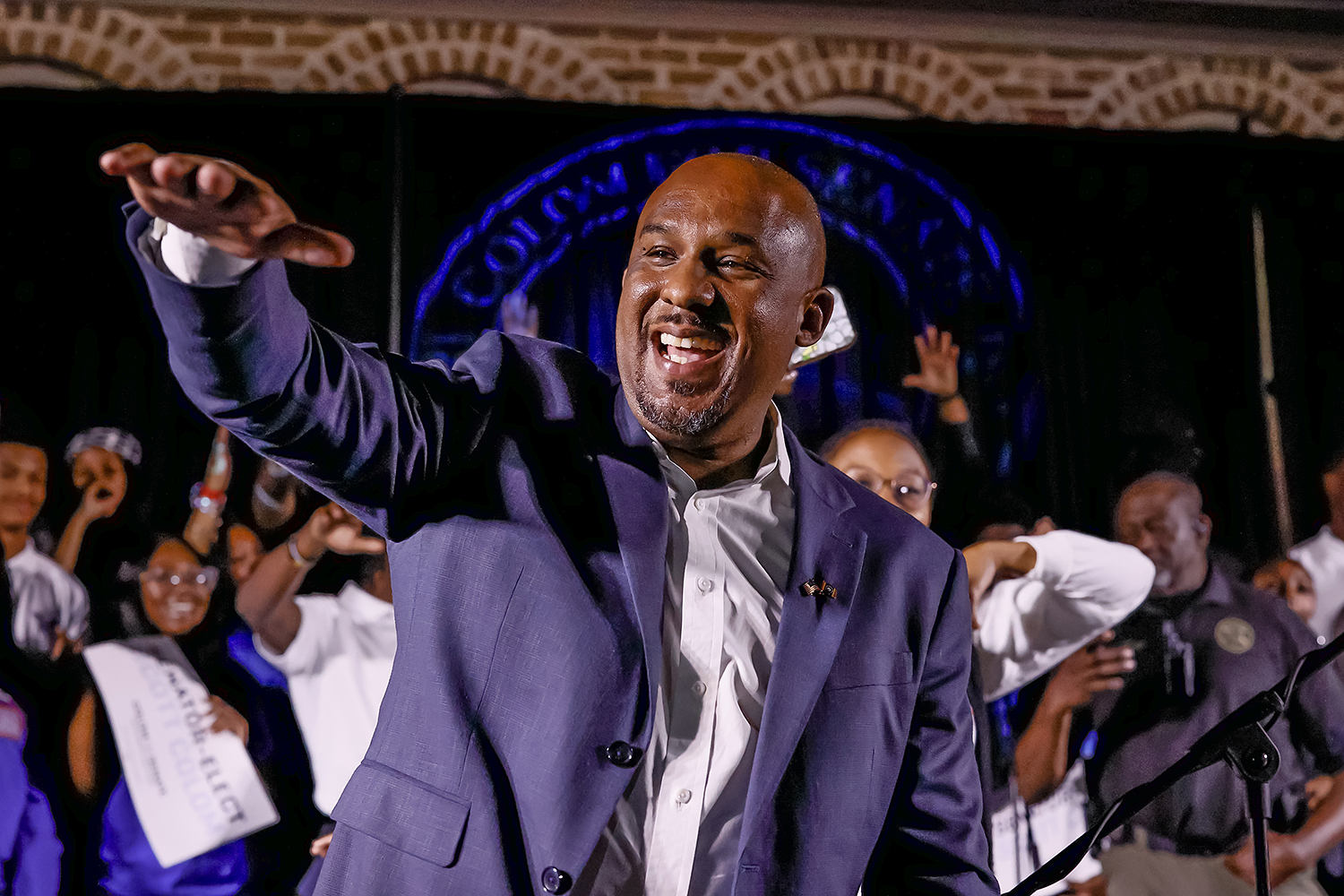
This is the exact fault line that U.S. Senator-elect Scott Colom stepped onto when he made a surprisingly simple, remarkably human request: get every high school valedictorian in Mississippi a brand-new pair of Nike shoes.
On paper, it sounds like a quirky local headline. A feel-good footnote buried between budget debates and infrastructure bills. You read the title, nod once, and scroll past.
Stop scrolling. Look closer at what actually happened here.
Why a Box With a Swoosh Changes the Room
When Scott Colom—a prosecutor, a father, and a man who built his career watching how small interventions alter the trajectory of young lives in Mississippi—reached out to secure Nike shoes for the state's top graduating seniors, he wasn't trying to solve systemic poverty with a sneaker drop. He isn't naive. Nobody thinks a pair of athletic shoes pays college tuition or fixes an underfunded school district.
He was attacking a much quieter, much more insidious problem: the normalization of overlooking academic grit.
Think about the rituals we reserve for teenage athletes in the American South. When a quarterback throws for three thousand yards or a point guard leads a team to the state tournament, the town shuts down. There are pep rallies. There are letterman jackets. Local businesses chip in for championship rings, custom warm-ups, and banners that hang from the gymnasium rafters for decades. We celebrate physical excellence loudly, publicly, and materially.
Now compare that to the valedictorian.
The valedictorian gets a handshake from the superintendent, a printed certificate on slightly heavier paper, and maybe a thirty-second mention in the county newspaper. Then they go home, take off the rented gown, and pack their bags in silence.
By partnering to put fresh Nike shoes on the feet of these valedictorians, Colom flipped the script on how we reward intellectual hustle. He took the universal status symbol of teenage culture—a symbol usually reserved for the fastest, tallest, or wealthiest kids in the building—and handed it directly to the kid who spent Friday nights studying organic chemistry.
Let’s pause and trace the ripple effect of that single gesture.
First, there is the immediate, visceral relief for families operating on razor-thin margins. In Mississippi, where child poverty rates consistently rank among the highest in the nation, graduation season is an expensive gauntlet. Caps and gowns cost money. Senior portraits cost money. Gas to drive relatives to the ceremony costs money. For a single parent juggling two jobs just to keep the lights on, dropping $120 or $150 on a pair of name-brand shoes so their child can walk across the stage with dignity isn't just a stretch—it is an impossibility.
When that Nike box arrives, a weight lifts off a kitchen table somewhere in the Delta or the Pine Belt. A mother doesn't have to apologize for what she couldn't afford. A father gets to watch his kid unlace something brand new, smelling of fresh glue and clean canvas, untouched by anyone else.
The Anatomy of a Signal
To understand why this resonates so deeply, you have to understand how teenagers read the world. Adolescents have radar finely tuned to hypocrisy. They know instantly when adults are offering empty praise versus real investment.
If a politician stands at a podium and gives a speech telling high schoolers to "value education," the room goes numb. Words are cheap. Every kid in those bleachers has heard a thousand speeches about working hard and staying in school.
But when an elected leader picks up the phone, advocates directly with a global brand, and delivers tangible, culturally relevant recognition right to their doorstep? That isn't a speech. That is a signal.
It tells a sixteen-year-old sophomore sitting in the back of an algebra class—a kid who might be debating whether to drop out and pick up full-time hours at the local processing plant—that excellence actually pays off in the real world. It shows them that the adults in power are paying attention not just to the scoreboard on Friday night, but to the gradebook on Monday morning.
Consider the mechanics of motivation. Behavioral psychology has long established that distant rewards—like the promise of a better salary ten years after college—struggle to compete with immediate social pressures. Telling a seventeen-year-old to sacrifice their social life today for a theoretical career in 2034 is a tough sell when they are embarrassed by their clothes right now.
Immediate, visible dignity bridges that gap. It validates the grind in real time.
The Skeptics Will Miss the Point
Of course, whenever an initiative like this makes the news, the predictable chorus of cynics chimes in from the sidelines.
Why shoes? they ask. Why not laptops? Why not scholarships? Why not books?
It is a fair question on the surface, and a completely blind one underneath.
Most high-achieving seniors heading to college already receive Pell Grants, institutional aid, or community scholarships that cover basic academic supplies. Many school districts already issue Chromebooks. What those financial aid packages almost never cover—and what bureaucrats rarely think about—is the human being inside the student.
Financial aid pays for the tuition. It doesn't pay for the confidence to walk into a college orientation room full of affluent peers from private academies without feeling like an imposter.
I remember my own transition from a small-town public school to a massive state university. I had the test scores to be there. I had the grades. On paper, I belonged in every single lecture hall I walked into. Yet for the first six months, I walked with my head down, hyper-aware of every outward marker that screamed where I came from. When you grow up watching every penny, you carry a quiet, persistent anxiety that you are somehow out of place in rooms built for people with money.
It takes years to unlearn that feeling. Sometimes, all it takes to crack it open is one small moment where the world treats you like a champion instead of a charity case.
That is the crucial distinction here. A voucher for a discount store feels like charity. A pair of Nikes earned by finishing number one in your graduating class feels like a trophy.
You don't pity someone wearing a trophy. You respect them.
The Ripple Down the Hallway
Think about the younger siblings watching this unfold in living rooms across Mississippi.
Imagine an eight-year-old boy sitting on the floor, watching his older sister open a crisp orange or black Nike box because she had the highest GPA in her high school. He doesn't understand the nuances of state politics. He doesn't know what a Senator-elect does all day in committee hearings.
He knows one thing with absolute, crystal clarity: My sister got those because she is the smartest kid in school.
Try buying that kind of advertising with a public service announcement. You can't. A billboard on the interstate will never convince a third-grader to love reading, but watching his big sister get celebrated like a pro athlete because she mastered AP Literature? That rewires what he thinks is cool. That shifts the center of gravity inside the house.
And look at what it says about leadership itself.
We live in an era where politics often feels like an endless, exhausting performance of outrage. Elected officials spend millions of dollars screaming into cable news cameras about problems they have no intention of fixing, using ordinary citizens as props in ideological turf wars. Against that noisy backdrop, there is something profoundly refreshing about a leader noticing a specific, human-sized need and quietly solving it.
Scott Colom didn't need a massive federal appropriation to make this happen. He didn't need a three-year feasibility study or a blue-ribbon commission. He saw an opportunity to honor young scholars, used his platform to ask a major corporation to step up, and got it done.
It is a masterclass in practical empathy. It proves that public service doesn't always have to be grand, sweeping, or combative to leave a mark. Sometimes, leadership is simply noticing who is doing the hardest work in the room without applause, and making sure they walk out the door standing a little taller.
The Walk Across the Stage
Let’s go back to that high school gymnasium in May.
The air is still thick with heat. The folding chairs still squeak when people shift their weight. The principal is still mispronouncing at least three middle names at the microphone.
Nothing about the building has changed. The challenges waiting outside those double doors—the tight job market, the rising cost of living, the long road through college or trade school—haven't magically disappeared.
Then the principal calls the valedictorian to the podium.
Maya stands up. She smooths down the front of her gown. She steps out of the row and walks toward the center of the floor, under the harsh glare of the gym lights, in front of hundreds of neighbors, teachers, and family members.
This time, she doesn't curl her toes inward.
She doesn't look down at the floor to hide frayed laces or scuffed rubber. Her stride is long, unhurried, and steady. With every step across the hardwood, crisp white soles grip the floor cleanly. She reaches the podium, grips the edges, looks out over the sea of faces, and begins to speak—standing squarely on solid ground, walking toward her future in shoes built to go the distance.