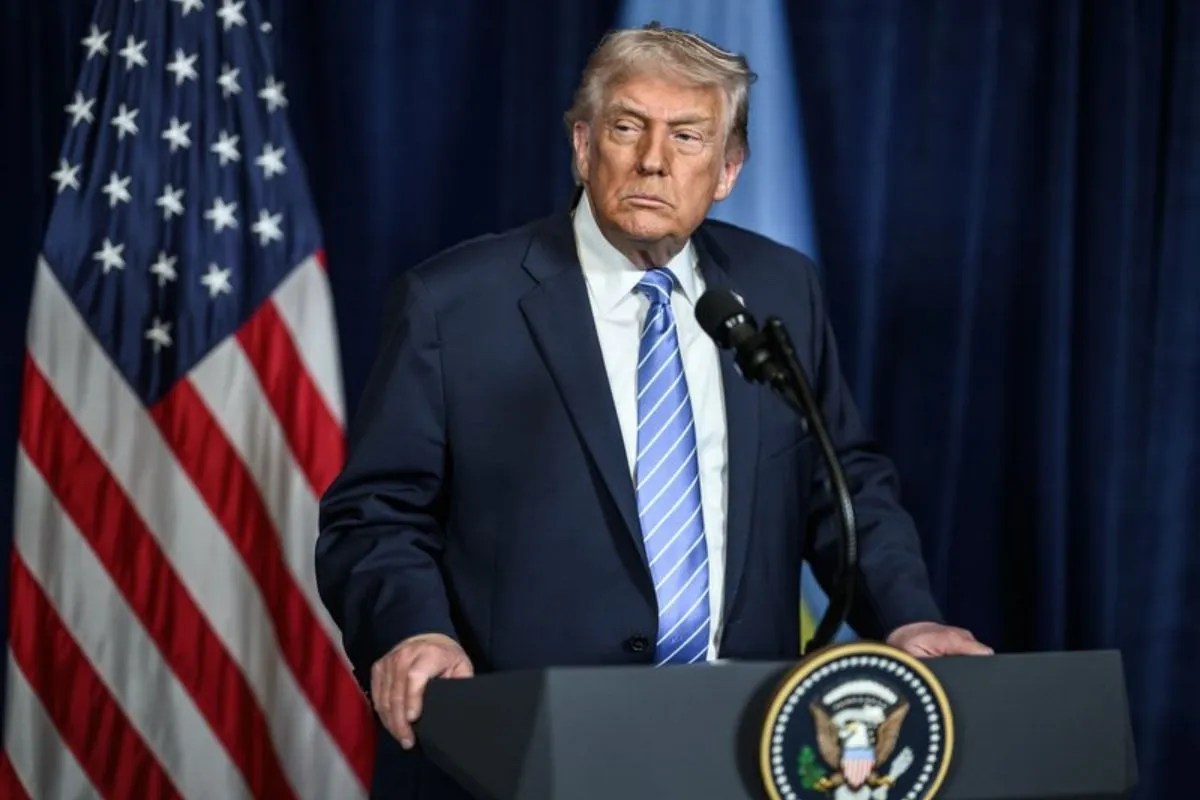
United States Trade Representative Jamieson Greer recently brought an uncomfortable reality back to the surface. American manufacturers are still not getting the volume of critical minerals they need from China. Despite high-profile diplomatic pauses and temporary trade agreements, Western supply chains remain on a short leash. As President Donald Trump prepares for a high-stakes bilateral summit with Chinese President Xi Jinping, Washington faces a hard truth. China controls approximately 90 percent of global rare earth refining and 94 percent of permanent magnet manufacturing, and temporary truces have done little to change the balance of power on the factory floor.
While political leaders project confidence, corporate buyers in North America tell a very different story. Chinese export approvals for processed dysprosium, terbium, and refined gallium are arriving at a trickle. Administrative delays in Beijing have effectively turned general export licenses into an exercise in bureaucratic frustration. Washington can threaten tariffs and negotiate plurilateral trade frameworks all day. Yet when an assembly line in Ohio or Texas needs heavy rare earths for high-performance defense systems or industrial motors, the physical material still has to clear customs in Shanghai or Ningbo.
The Mirage of the Bilateral Truce
The current friction comes on the heels of the trade truce struck between Washington and Beijing. That agreement suspended retaliatory tariffs and put a temporary freeze on Beijing’s sweeping export controls regarding rare earths and strategic inputs. On paper, China agreed to issue general licenses to keep trade flowing. In practice, the mechanism is grinding to a halt under the weight of selective enforcement and intentional administrative slowdowns.
Chinese regulators haven't flatly denied every export application. Instead, they have mastered the art of targeted friction. Permits that once took two weeks to clear now sit in bureaucratic limbo for months. Licensing officers routinely demand granular details about Western end-users, requiring American companies to submit proprietary technical documentation to prove their products will not serve military purposes.
For high-tech manufacturers, this presents an impossible dilemma. Disclosing supply chain blueprints to foreign regulators risks compromising trade secrets. Refusing to supply the data means watching production lines stall for lack of essential inputs.
The strategy allows Beijing to comply with the letter of diplomatic commitments while keeping Western industry in a constant state of operational anxiety. By controlling the valve rather than shutting the pipe entirely, China maintains maximum diplomatic leverage ahead of major summits without triggering outright retaliation.
Why Domestic Refining Facilities Cannot Close the Gap
The instinct in Washington is always to answer Chinese supply restrictions with domestic production mandates. Capitol Hill has poured billions into direct government grants, tax credits, and Department of War contracts aimed at building out domestic processing facilities. The Pentagon has even resorted to establishing minimum price floors for domestic producers like MP Materials to protect them from price swings.
Yet money alone cannot bypass chemistry and engineering timelines.
Mining the raw ore is only the first, and least complex, step in the supply chain. The real bottleneck lies in chemical processing, separation, and metallurgy. Refining heavy rare earths requires vast chemical processing plants, specialized equipment, precise environmental management, and decades of operational experience.
America spent thirty years outsourcing the dirtiest and most capital-intensive portions of the industrial process to Chinese state-backed monopolies. Rebuilding that industrial capacity from scratch cannot happen in a single election cycle. Even with accelerated federal permitting, heavy industrial chemical plants in North America take anywhere from five to seven years to build, qualify, and scale to commercial volumes.
Furthermore, Western capital markets are structurally ill-suited for the boom-and-bust cycles engineered by Chinese state enterprises. Whenever a Western competitor threatens to bring significant refining capacity online, Chinese producers can simply flood the global market, driving spot prices below the Western break-even point. Unhedged private investors flee, projects go bankrupt or stall, and Beijing’s dominance remains unbroken.
The Vulnerability Across Defense and Technology
The consequences of this imbalance extend far beyond clean energy transition goals. They strike directly at core industrial and national security capabilities.
Consider permanent magnets. These specialized components, made primarily from neodymium, iron, and boron, are necessary for the electric motors inside advanced fighter jets, naval propulsion systems, guided missile guidance packages, and industrial robotics.
Global Processing & Refining Market Share
--------------------------------------------------
China:                    [####################] 90%
Rest of the World:        [##                  ] 10%

Sintered Permanent Magnet Manufacturing
--------------------------------------------------
China:                    [################### ] 94%
Rest of the World:        [#                   ] 6%
When Beijing tightens export oversight on raw materials or processed magnet alloys, every tier of the defense supply chain feels the shockwave. Defense contractors are already pushing Washington for expanded waivers because finding non-Chinese sources for compliant military hardware remains virtually impossible in the short term. Strict domestic-content requirements sound patriotic in congressional hearings, but on the factory floor, they threaten to delay major weapons platforms.
Commercial technology companies face an equally bleak landscape. From data centers powering advanced artificial intelligence clusters to everyday automotive components, modern hardware depends on tiny amounts of highly refined elements like gallium, germanium, and graphite. A ten percent drop in Chinese shipments across those categories triggers immediate cost spikes and supply bottlenecks across global tech hubs.
The Plurilateral Trade Experiment and the Price Floor Dilemma
Recognizing that unilateral action cannot solve a structural monopoly, Trade Representative Greer has been pushing a new trade playbook. Washington is actively negotiating with a select coalition of allies, including the European Union, Japan, Australia, and regional partners across Asia and Latin America, to establish a preferential trading block for critical minerals.
The cornerstone of this proposal is an international price floor system. Under the proposed agreement, member nations would trade minerals among themselves at market rates but impose border-adjusted tariffs or minimum import price thresholds on non-member countries. The goal is straightforward. Shield allied mining and refining companies from Chinese predatory pricing and guarantee a stable, profitable market for Western capital.
+-----------------------------------------------------------------------+
|                 PROPOSED PLURILATERAL TRADE MODEL                     |
+-----------------------------------------------------------------------+
|                                                                       |
|   [ MEMBER NATIONS ] <---> Preferential Market-Based Trade            |
|   (US, EU, Japan, Australia)                                          |
|                                                                       |
|         ^                                                             |
|         |  Border-Adjusted Tariffs & Price Floor Restrictions          |
|         v                                                             |
|                                                                       |
|   [ NON-MEMBER PRODUCERS ] (e.g., China)                              |
|   - Subject to import duties if dumping under cut floor price         |
|                                                                       |
+-----------------------------------------------------------------------+
While the theory is clean, the geopolitics are messy.
Many of the nation states that produce raw minerals, from South America to Southeast Asia, maintain deep economic relationships with Beijing. China is not just their biggest buyer of raw ore; it is also their primary funder for local infrastructure and industrial development.
Asking a mineral-rich nation in Africa or Southeast Asia to join an explicitly anti-China trade block means asking them to risk immediate economic retaliation from their largest trading partner. If Washington's proposed price floors result in higher prices for consumers without offering substantial capital guarantees to developing nations, many will choose neutrality over allegiance.
Even close Western allies express private reservations. European manufacturers, already struggling with high energy costs, worry that establishing artificial price floors on critical inputs will permanently inflate their production costs relative to Chinese competitors who enjoy subsidized access to domestic minerals.
Strategic Stockpiles and the Illusion of Short Term Security
In an attempt to buy time, Washington has turned to strategic stockpiling initiatives like Project Vault. Backed by billions in government loan guarantees and private capital, the initiative aims to build domestic reserves of cobalt, lithium, and other vital inputs.
Stockpiles provide a temporary cushion against sudden embargoes or military blockades. They do not solve the fundamental problem of ongoing industrial demand. A warehouse filled with raw cobalt ore does nothing for a factory that needs battery-grade cathode material, nor does a reserve of unrefined rare earths help an enterprise that lacks the specialized facilities to turn that rock into high-purity oxides.
By focusing heavily on stockpiling raw materials while refining capacity remains concentrated in East Asia, Washington risks creating a false sense of security. Strategic reserves can delay a crisis for a few months. They cannot sustain an economy through a protracted industrial standoff.
What Washington Must Face Ahead of the Summit
When President Trump sits down with President Xi, critical minerals will be an elephant in the room. Washington enters the room with significant tariff leverage, but Beijing holds the physical keys to the industrial supply chain.
If the United States wants to break its vulnerability, it must move past short-term trade fixes and rhetoric. Building supply chain independence requires an uncomfortable, decade-long commitment to industrial policy that Western political systems rarely sustain.
First, Washington must streamline domestic environmental permitting for processing plants without abandoning fundamental oversight. It makes no sense to fund refining technology with taxpayer dollars only to let the permits sit in federal review for six years.
Second, the United States must offer its allies real economic incentives rather than trade ultimatums. If Washington expects partner nations to join a tariff-protected critical minerals bloc, it must provide guaranteed off-take contracts and direct co-investment in foreign processing facilities, ensuring that non-aligned nations see clear financial benefits in bypassing Chinese processors.
Finally, policy makers need to accept that total decoupling in critical minerals is an illusion in the short to medium term. For the next decade, American industry will remain dependent on Chinese supply to some degree. The objective cannot be immediate independence; it must be managed risk reduction, strategic stockpiling of actual refined components, and relentless execution on alternative refining capacity.
Until those hard realities are addressed, diplomatic summitry will remain a exercise in symptom management. The industrial balance of power will not be decided by photo opportunities or joint press statements, but by who controls the high-purity chemical processing facilities that power modern technology.