Twenty minutes. That’s all it took for a routine Friday night Bundesliga fixture to turn into a crisis in both Munich and London.
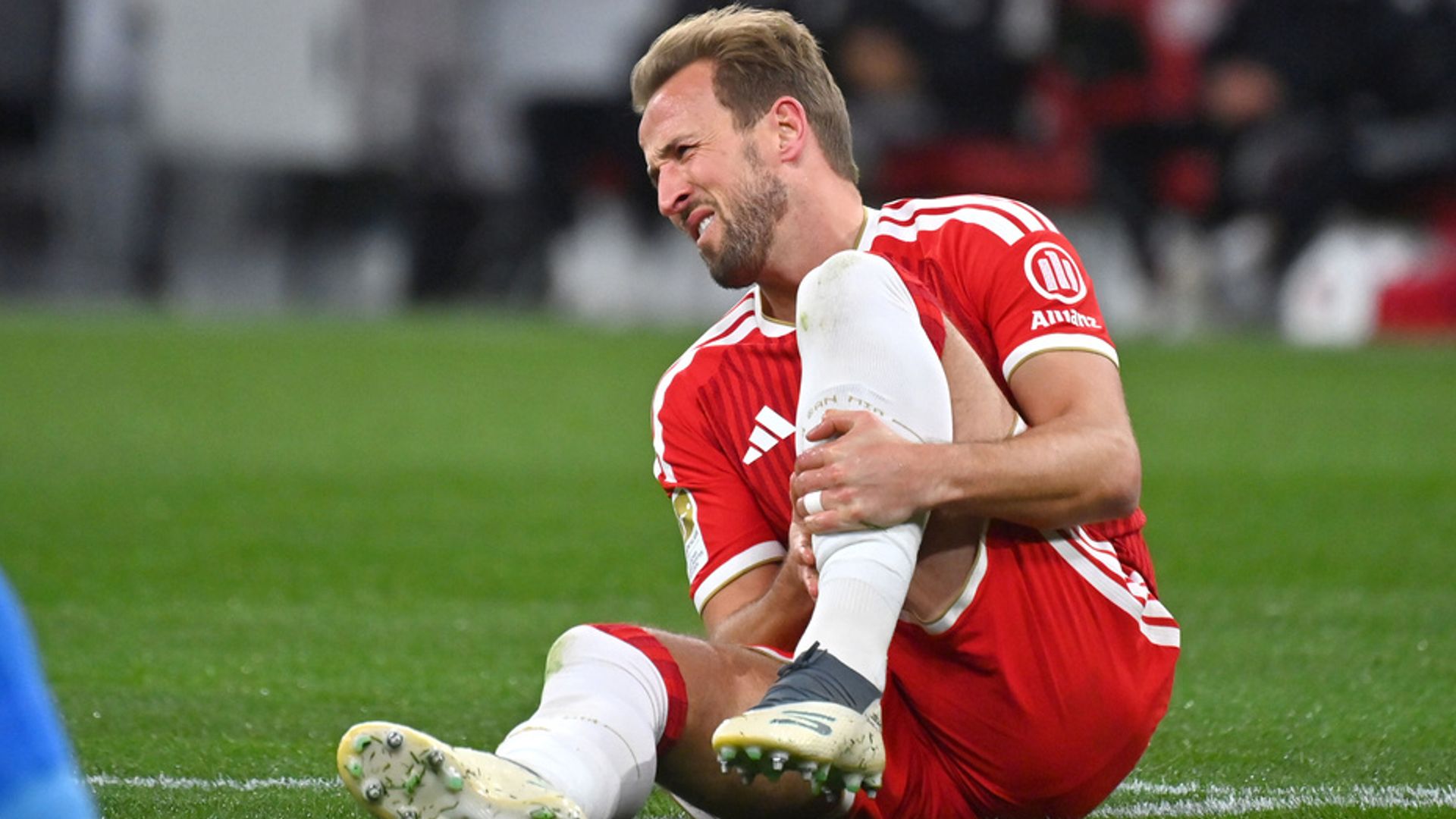
When England captain Harry Kane hobbled off the Allianz Arena pitch during Bayern Munich’s 1-1 draw with 1. FC Köln on November 20, 2026, the immediate reaction was shock. Less than a month after lifting the Ballon d’Or as the best footballer on the planet—and just days after signing a massive contract extension keeping him in Bavaria until June 2029—Kane is facing the longest layoff of his career. Bayern confirmed he ruptured the
Most early reports treat this as a simple injury update. They give you the medical diagnosis, quote his social media post, and call it a day. That misses the actual story. At 33 years old, with a documented history of left ankle problems, a three-to-four-month absence isn't just an inconvenience. It completely upends Bayern Munich’s domestic and European ambitions while leaving England scrambling ahead of a brutal Nations League quarter-final tie.
The Exact Timeline of Harry Kane’s Injury and Surgery
Let’s cut through the vague "few months" phrasing from the club’s official statement. Here is what actually happened on the pitch and in the operating room.
During the first half against Köln, Michael Olise whipped a low cross toward the back post. Kane attacked the space, only for Köln defender Joël Schmied to arrive a split-second earlier and catch Kane’s left leg on the follow-through. Kane appealed for a penalty, got back on his feet, and tried to walk it off. Anyone who has watched him over the past decade knows that stubbornness well. He hates coming off. Moments later, though, he went back down and needed two physios to help him off the grass while Tom Bischof took his place.
Bayern’s medical staff didn't waste time with conservative rest. Kane underwent surgery overnight in Munich to repair the torn ligament. High ankle sprains involving syndesmosis tears are notoriously tricky for strikers because every sharp cut, plant-and-shoot motion, and aerial landing puts direct torque on that exact joint.
By Saturday morning, Kane addressed fans directly on social media. "Obviously very disappointed to get this injury but as always it's an opportunity to show resilience and improvement going into 2027," he wrote, promising he would be back fresh for the business end of the season.
Medical estimates for surgical syndesmosis repairs typically sit right around the three-to-four-month mark. To put that in perspective, Kane has never missed more than 10 weeks of football in his entire senior career—a record previously set when he tore a thigh muscle at Tottenham Hotspur back in 2020. Assuming his rehab goes without a hitch, the earliest realistic window for his return to full match fitness is late February 2027.
Why His Left Ankle History Makes This Scarier
If this were a clean, isolated injury to a 24-year-old, you wouldn't worry much. You’d expect him to bounce back at 100 percent.
With Kane, context matters. This isn't the first time that specific left ankle has given way under pressure. Back in the 2018-19 season with Tottenham, he missed seven matches with damaged ligaments in his left ankle, returned, and promptly missed another nine games with a lateral ligament issue on the exact same side. He tweaked that left ankle again at Bayern in March 2024, forcing him out of England’s high-profile friendlies against Brazil and Belgium.
Repeat trauma to the same joint changes how a player moves, even subconsciously. Kane has never relied on blistering pace—his game is built on elite spatial awareness, dropping deep into pockets, and striking the ball cleanly off either foot. Still, planting that left foot to whip a right-footed volley or hold off a center-back requires total trust in your ankle stability.
He has stayed remarkably durable since moving to Germany in 2023, racking up an absurd 156 goals in just over 160 competitive appearances. That ironman run just hit a brick wall. Rushing him back in mid-February to save a Champions League tie would be a massive gamble with a player Bayern just committed to through 2029 on reported wages of £400,000 a week.
Bayern Munich’s Sudden Attacking Crisis
Vincent Kompany barely had time to celebrate returning to the Bayern dugout—having recovered from collapsing during a reserve training session a month prior—before watching his entire forward line evaporate.
Kane’s injury didn't happen in a vacuum. It landed right on top of a full-blown medical emergency in Munich. Michael Olise went down. Then Jamal Musiala suffered another muscle setback ahead of Bayern's trip to Hamburger SV. Kompany summed up the sheer scale of the problem bluntly to reporters, noting his squad is suddenly missing around 130 goals worth of attacking production.
Against Lille in the Champions League just days after Kane’s surgery, Kompany got desperate. He deployed Konrad Laimer—a high-energy, ball-winning central midfielder—as Bayern’s makeshift center-forward. Unsurprisingly, it didn't click. Laimer presses like a maniac, which Kompany loves, yet he lacks the instinctive box movement and hold-up craft to pin two center-backs for 90 minutes.
The Crucial Matches Kane Will Miss
The Bundesliga winter break from December 20 to January 8 offers Bayern a small mercy, eating up nearly three weeks of Kane’s rehab without costing him club fixtures. Even with that buffer, the list of games he’ll watch from the stands is brutal:
- 11 Bundesliga fixtures: Bayern sits locked in a tight title race with Borussia Dortmund, trailing their rivals by two points after 10 matches. Losing their focal point through the heart of winter tests their squad depth to the limit.
- DFB-Pokal last-16: The knockout clash against Hertha Berlin becomes a genuine banana skin without a recognized clinical finisher.
- Four Champions League league-phase games: Kane already missed the trip to Lille. He will also miss the home match against Slavia Prague on December 8, the blockbuster trip to Old Trafford to face Manchester United on January 20, and the home tie against Real Betis on January 27.
Manchester United’s defenders probably breathed a massive sigh of relief when the surgical report dropped. Avoiding a Ballon d’Or-winning striker in January completely alters the tactical setup for that Old Trafford showdown.
For Bayern, the immediate tactical fix isn't forcing a midfielder into the number-nine role again. Kompany has to lean on young talent like Tom Bischof—who immediately sparked the equalizer against Köln after replacing Kane—while adjusting his system to rely on wide overloads and late midfield runs rather than direct central target play.
What This Means for England and the March Norway Showdown
If you're an England supporter, your calendar should already have two dates circled in bright red ink: March 27 and March 30, 2027.
Those are the dates for England’s UEFA Nations League quarter-final double-header against Norway. First leg in Oslo. Second leg at Wembley. Fresh off winning the Ballon d'Or, becoming England’s all-time most-capped men’s player, and leading the Three Lions to a statement win in Spain, Kane was riding the highest wave of his international career.
Now, he’s in a race against the clock just to board the plane to Oslo.
If his recovery takes the expected three months, he returns to club action around February 20. That leaves roughly five weeks to shake off the rust, rebuild match sharpness, and survive Bayern’s spring schedule before international duty calls. If recovery stretches closer to four months due to ankle stiffness or cautious load management, he misses the Norway ties completely.
Honestly, England shouldn't panic—they should treat this as a necessary stress test. For years, the Three Lions have operated with an unspoken dependency on Kane dropping deep to stitch play together while still somehow arriving in the six-yard box to finish crosses. Nobody else in the squad replicates both jobs simultaneously.
Without him, or with a half-fit version of him in March, England’s coaching staff has to pick a clear identity:
- Stretch the pitch vertically: Playing a pure runner up front forces opposing center-backs to drop five yards deeper, opening massive pockets of space for Jude Bellingham, Cole Palmer, and Phil Foden to operate between the lines.
- Share the penalty-box burden: Instead of funneling every attack toward one focal point, England’s wide forwards have to attack the back post aggressively rather than waiting at the edge of the box for a cutback.
- Lock down set-piece delivery and penalties: Kane doesn't just score England's spot-kicks; he defends the near post on almost every opposing corner. Losing his aerial presence in their own box hurts just as much as losing his finishing in the opponent's.
How to Follow the Recovery Without Falling for Rumor Mill Noise
Over the next twelve weeks, you’re going to see dozens of breathless headlines claiming Kane is "ahead of schedule" or "suffering a major setback" every time he posts a gym photo. Ignore most of it. Rehabbing a syndesmosis repair follows a strict, predictable biological timeline regardless of how hard a player works in the pool.
Watch for three real milestones instead of social media hype:
- Late December 2026: Ditching the protective walking boot and transitioning to anti-gravity treadmill work. If he isn't weight-bearing comfortably by the time the Bundesliga winter break ends in early January, a February return is off the table.
- Early February 2027: Returning to individual grass work with Bayern’s rehab coaches—specifically sharp lateral cutting drills and striking a dead ball with his left foot.
- Mid-February 2027: Joining full team contact training. A player of Kane's experience needs at least two weeks of unrestricted squad sessions and two or three substitute appearances before starting a high-intensity Champions League knockout match or an international quarter-final.
Keep an eye on how Bayern navigates the January transfer window, too. If the club’s board refuses to sign a short-term veteran striker on loan despite trailing Dortmund, it tells you everything you need to know—their medical team is genuinely confident Kane will be back on the pitch before February ends.