Imagine standing in a quiet gymnasium on a rainy Tuesday in November. The air smells of wet coats and floor wax. An elderly volunteer anchors a plastic table, sliding a paper ballot across the wood. It is the most mundane ritual of American democracy, built on a fragile, sacred assumption: when you mark that box, it belongs to you.
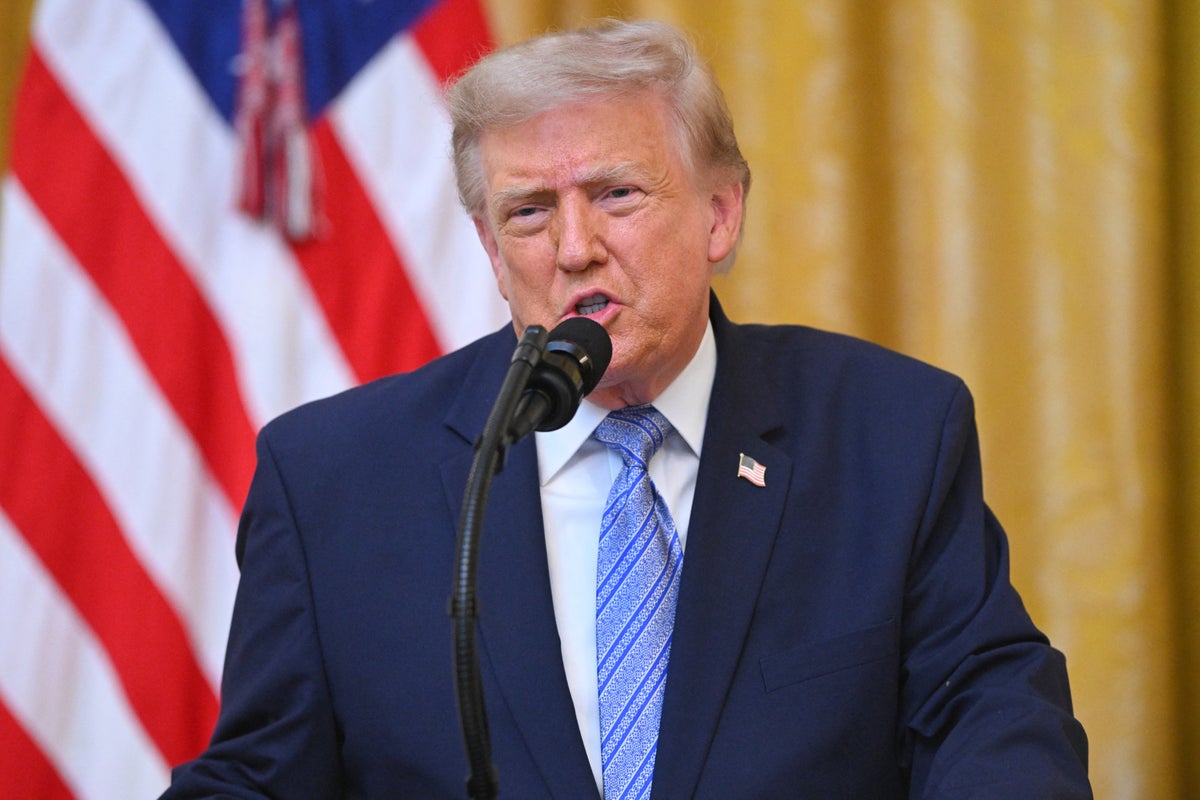
But when the lights of the East Room of the White House flared to life for a prime-time address on Thursday, that quiet gymnasium felt very far away.
President Donald Trump took to the podium to unfurl a narrative of invisible ghosts haunting the American electoral system. He claimed that the People's Republic of China orchestrated the "largest compromise of election data in history," harvesting 220 million voter files during the 2020 cycle. Names, phone numbers, political preferences—all allegedly scooped up by a dedicated data exploitation unit in Beijing. Worse still, he alleged that a shadowy cabal of domestic intelligence bureaucrats, the "Deep State," intentionally buried the evidence to keep him in the dark.
It was a speech designed to make the chest tighten. It painted a picture of a nation violated from without and betrayed from within.
But beneath the cinematic theater of declassified dossiers and late-night warnings lies a much stranger, more complicated reality. When you strip away the high-stakes rhetoric, the true battle isn't over hacked machines or stolen hard drives. It is a battle for the American psyche.
The Mirage of the Stolen Scroll
To understand why this narrative is so potent, consider a hypothetical local campaign manager named Sarah. Sarah spends fourteen hours a day in a cramped office, drinking lukewarm coffee, trying to figure out how to get voters to the polls. To do her job, she buys a digital spreadsheet containing the names, addresses, and party affiliations of nearly every registered voter in her county.
She doesn’t need a top-secret clearance to get this information. She just needs a credit card.
This is the great paradox at the heart of the White House's latest bombshell. While the phrase "220 million voter files compromised" sounds like a cyber-warfare apocalypse, the vast majority of voter registration data in the United States is already matters of public record. Political parties use it. Telemarketers use it. If a foreign intelligence agency wanted to know that John Doe from Ohio is a registered independent who lives on Elm Street, they wouldn’t need a sophisticated digital heist. They could simply download it under standard public records access laws, just like anyone else.
David Becker, a leading election law expert, noted the gap between the terrifying presentation and the mundane reality. "It sounds bad when you hear about it," he observed, but there is very little a foreign adversary can actually do with a phone list to alter an election outcome.
Beijing, for its part, issued a swift, icy denial from its embassy in Washington, reiterating its long-standing policy of non-interference in foreign elections. But the geopolitical friction is only half the story. The deeper friction is home-grown.
The Architecture of Trust
Trust is a heavy thing to build, but it evaporates like mist.
During his address, the president suggested that America's voting machines and ballot-counting networks are fundamentally exposed to manipulation. To back this up, the administration declassified intelligence documents stating that foreign adversaries possess the capability to target election infrastructure.
But capability is not history. It is a theoretical weather forecast, not a storm that has already hit.
Consider how an actual voting machine works. It is not connected to the internet. It doesn't sit on a cloud server waiting to be intercepted by a hacker in Shanghai. It is a physical object, locked in a secure room, verified by bipartisan observers, and—crucially—backed up by a physical piece of paper.
Elections experts and security officials have spent years building a multi-layered defense system. They know the technology has vulnerabilities, because all technology does. That is exactly why they don't rely on technology alone. The paper ballot you slide into the tabulator remains there, a physical anchor to reality that can be counted, audited, and verified by human hands.
When intelligence agencies assessed the 2020 election, a report overseen by John Ratcliffe—Trump's own former Director of National Intelligence and current CIA chief—concluded there was no evidence that any foreign actor altered a single technical aspect of the vote. The system held.
Why, then, rewrite the history of that night?
Because a story about an invisible enemy is far more useful than a story about a complex, well-defended bureaucratic machine. If the system is broken, then the rules must be rewritten. The true target of the primetime address wasn't Beijing; it was Capitol Hill, where the administration is pushing for the passage of the SAVE America Act to radically tighten voter registration and ID laws.
The Weight of the Final Page
It is deeply unsettling to realize that the institutions we rely on to anchor our society are only as strong as our collective belief in them. When that belief is chipped away, evening by evening, speech by speech, the floor beneath us begins to feel unstable.
We want answers. We want clarity. We want to believe that someone is guarding the door.
But true security doesn't come from fear, nor does it come from a belief that our neighbors and civil servants are working in the shadows against us. It comes from the rigorous, unglamorous work of local officials who check the locks, audit the paper trails, and stand guard over those plastic tables in gymnasiums across the country.
The danger we face isn't that a foreign superpower will successfully rewrite our votes from thousands of miles away. The danger is that we will look at our own ballot box, decide the ghost in the machine has already won, and walk away without ever marking the page.