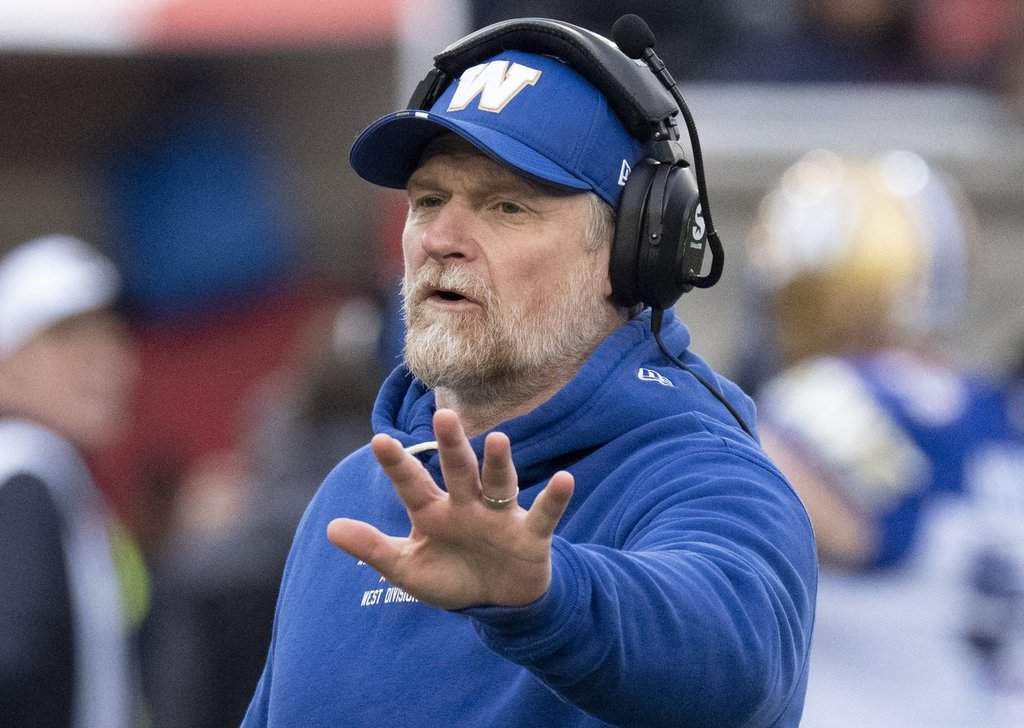
November in Winnipeg does not ask for your permission. It arrives with a low, gray ceiling that presses down on the Red River Valley, turning the mud along Chancellor Matheson Road into iron before the first real snow even sticks. For twelve years, one man stood on the sidelines of Princess Auto Stadium in shorts while the rest of the prairie wrapped itself in parkas, staring out at the frozen turf with the unblinking focus of a stone gargoyle.
Mike O’Shea is gone.
The Winnipeg Blue Bombers fired their head coach after twelve seasons, ending an era that pulled a proud, starving franchise out of a twenty-nine-year championship drought and turned it into the undisputed standard of the Canadian Football League. When the front office announced the decision, they offered the sanitized, corporate benediction that always accompanies the execution of a legend. They said it was the right time.
It is never the right time to bury a statue while the concrete is still warm.
To understand what actually happened in that press conference—and why the air in Manitoba feels suddenly thinner—you have to look past the press releases and step into the boots of someone who has lived through the slow, grinding erosion of a football dynasty. Let us invent a composite character to hold the weight of this city. Call him Arthur. Arthur is sixty-two, a retired pipefitter from Transcona who has held season tickets in the upper deck since the days when the old Winnipeg Stadium shook so violently in the wind you could feel the rivets groaning beneath your heels.
For nearly three decades, Arthur watched his team find new, agonizing ways to lose. He watched them choke in the fourth quarter. He watched general managers treat the head coaching chair like a revolving door at a downtown hotel, burning through eight different men between 1990 and 2013. Arthur knew the specific, bitter taste of prairie resignation—the quiet walk back to the car in the dark, listening to the post-game radio hosts dissect another wasted autumn.
Then came 2014. Then came O’Shea.
He arrived not as a savior with a glossy playbook, but as a former middle linebacker from North Bay, Ontario, whose neck looked thick enough to stop a tractor and whose loyalty to his players bordered on religious fanaticism. His first two seasons were brutal. Winnipeg went 7–11, then 5–13. The wolves on the local sports talk shows howled for his head before his third training camp even opened. Most franchises would have folded, fired him, and started the cycle of misery all over again.
Instead, general manager Kyle Walters held the line, and O’Shea quietly built something that professional sports rarely permits anymore. He built a brotherhood rooted in radical accountability.
The Architecture of Loyalty
To grasp why O’Shea’s firing cuts so deeply, you have to understand how he coached. Modern professional football is largely run like a hedge fund. Players are treated as depreciating assets, schemes are adjusted weekly to appease analytics departments, and coaches speak in the sanitized jargon of middle management. O’Shea rejected almost all of it. He operated like the foreman of a dangerous, high-stakes construction crew where the only currency that mattered was whether the person standing next to you could trust you with their life.
He famously refused to throw players under the bus to the media, absorbing every ounce of public criticism onto his own broad shoulders while handling discipline behind closed doors. When a kicker missed a game-winning field goal, O’Shea stood at the podium and blamed his own clock management. When a veteran receiver dropped a crucial third-down pass in the pouring rain, O’Shea praised the man’s blocking on the previous drive.
Over twelve seasons, that stubborn, almost archaic loyalty forged a juggernaut. Beginning in 2016, the Blue Bombers rattled off a run of consistency that defied the salary-cap parity of the Canadian game. Double-digit win totals became an annual expectation rather than a miracle. Then came the eruption: five consecutive Grey Cup appearances from 2019 through 2024, punctuated by back-to-back championships in 2019 and 2021 that finally shattered the twenty-nine-year curse.
For Arthur, sitting in his seat in Transcona-blue face paint, those years were pure oxygen. For the first time in his adult life, the rest of the country had to look toward Manitoba with envy instead of pity. Winnipeg was no longer the cold, isolated outpost players tried to avoid in free agency; it was the destination where careers were resurrected and rings were won.
Yet dynasties do not usually collapse from a single catastrophic explosion. They erode from the inside, worn down by the very loyalty that built them.
When Strength Becomes a Blind Spot
Think of a master carpenter who builds a magnificent oak table using only hand tools. For years, that refusal to touch a power saw is the very thing that makes his work extraordinary—every joint is tight, every curve earned through sweat and patience. But eventually, the orders pile up, the wood gets harder, and the carpenter’s wrists begin to swell. When someone suggests a modern lathe to keep the shop alive, the carpenter refuses, because the hand tools are who he is.
That is the tragedy of Mike O’Shea’s final chapters in Winnipeg.
In professional sports, the hardest thing for a great coach to do is fire the people who helped him climb the mountain. As the core of those championship rosters aged—quarterback Zach Collaros, running back Brady Oliveira, the towering offensive linemen who had bruised defenses across the league for half a decade—the margins grew razor-thin. A step lost in coverage here. A half-second slower off the snap there. A coordinator whose predictable tendencies were finally solved by younger, hungrier defensive minds across the West Division.
Consider what happened next. While rival teams in Saskatchewan, British Columbia, and Montreal refreshed their coaching staffs and injected raw, inexpensive speed into their lineups, Winnipeg doubled down on familiarity. O’Shea trusted his guys. He always trusted his guys. Even when the offense stalled in the red zone for weeks at a time, even when special teams—O’Shea’s personal domain and lifelong obsession—began surrendering back-breaking return touchdowns at the worst possible moments, the message from the head coach remained unchanged. Stay the course. Work harder. Trust the room.
I have sat in enough cold bleachers and watched enough aging champions limp off the field to recognize the exact moment when faith curdles into stubbornness. It is terrifying to watch because it comes from a noble place. You do not want to be the person who tells a warrior his shield is too heavy. You want to give him one more series, one more quarter, one more season to prove the clock wrong.
By the end of his twelfth year, the league had caught up to the Blue Bombers, and the franchise was trapped in an impossible bind. Keep O’Shea, and you risk watching a slow, painful slide into mediocrity while the organization’s brightest young assistants get poached by rivals. Fire him, and you sever the soul of the building.
The Numbers Behind the Curtains
Strip away the emotion for a second and look at the cold ledger that forced the front office’s hand. Twelve seasons in one city is an eternity in modern North American sports. When O’Shea took the job in December 2013, the landscape of the CFL was unrecognizable. Over the ensuing decade, he outlasted every single head coach in the league, compiling more than a hundred regular-season victories and cementing himself as the winningest coach in Winnipeg Blue Bombers history, surpassing even the mythic shadow of Bud Grant.
Statistically, his tenure sits in rarefied air:
- Over a decade of continuous leadership without a single mid-season panic firing.
- A stretch of dominance that saw Winnipeg win more than seventy percent of its regular-season games across a five-year peak.
- Multiple Coach of the Year honors that validated what everyone in the locker room already knew.
Yet sports executives are not paid to curate museums. They are paid to project the next three years, and the projections in Winnipeg had turned ominous. Ticket renewals, while still strong, were beginning to show the first hairline fractures of fatigue. Younger fans who had grown up knowing only dominance were growing restless with conservative play-calling, while older fans like Arthur quietly worried that the franchise was sleepwalking toward another rebuild without the architects required to execute it.
When a front office says it was the right time, they are speaking a very specific language. They are admitting that the voice in the locker room—no matter how respected, no matter how legendary—had become background noise. Players knew every story before O’Shea finished telling it. Opponents knew every tendency before the ball was snapped. The friction required to generate heat had smoothed out into comfortable routine.
What Remains in the Cold
There is a strange, hollow silence that settles over a stadium the day after a long-tenured coach is let go. The equipment managers still wash the practice jerseys. The turf crew still paints the hash marks. The weight room still clanks with iron at six in the morning. Everything looks identical, yet the gravity that held the entire building in orbit has vanished overnight.
For the players who bled for O’Shea, the firing feels less like a business transaction and more like a death in the family. Many of them came to Winnipeg as castoffs—undrafted free agents, injured veterans written off by American scouts, quiet kids from small Canadian towns who simply needed someone to look them in the eye and tell them they belonged. O’Shea gave them that. In return, they gave him their cartilage, their concussions, and their winters.
And what about the next man who walks through those double doors?
Whoever takes the whistle in Winnipeg will inherit one of the most unforgiving ghosts in Canadian sports. Every time the new coach wears a jacket in October, someone in section 204 will mutter about O’Shea standing on the sideline in shorts during a blizzard. Every time a player gets publicly criticized after a blown coverage, the veterans in the locker room will glance at each other and remember the man who would have taken the bullet himself. Every loss will be measured not against the league average, but against the golden standard of five straight Grey Cup trips.
I admit I do not know if the Blue Bombers made the right choice. Nobody does. Firing a Hall of Fame-caliber coach while he can still command a room is the ultimate high-wire act without a net. Get the next hire right, and the front office looks like a collection of ruthless visionaries who extended a championship window by another five years. Get it wrong, and Winnipeg risks sliding right back into the dark, twenty-nine-year wilderness that Arthur remembers all too well.
The Gargoyle Steps Down
Outside Princess Auto Stadium, the prairie wind sweeps unobstructed across the open parking lots, carrying the sharp, metallic scent of coming snow. By mid-afternoon on the day of the announcement, the news had already settled into the bones of the city—discussed over lukewarm coffee at Tim Hortons counters on Portage Avenue, debated in the cabs of idling pickup trucks along the Perimeter Highway, murmured softly in the kitchens of people who treat Blue Bombers football less like entertainment and more like a civic pulse.
Arthur sat at his kitchen table, his season-ticket renewal invoice resting beside a mug that had gone cold an hour earlier. He thought about 2019 in Calgary, when the confetti finally fell and grown men wept openly in the stands. He thought about 2021 in Hamilton, watching the overtime interception that sealed a second straight title. And he thought about the man on the sideline—arms crossed, jaw set, bare knees red from the frost, refusing to flinch while the wind howled around him.
Twelve years is a lifetime in a game built on collisions. Eventually, even stone wears down.
Somewhere in the bowels of the stadium, a box of personal belongings was taped shut and carried out to a waiting truck, leaving behind an empty office, a wall of championship photographs, and a pair of shorts hanging neatly in a locker that no longer has a name above the door.