The graphite pencil feels heavy when you are eight years old. It is an oversized yellow cylinder of cedar and lead, smelling faintly of wood shavings and cheap rubber.
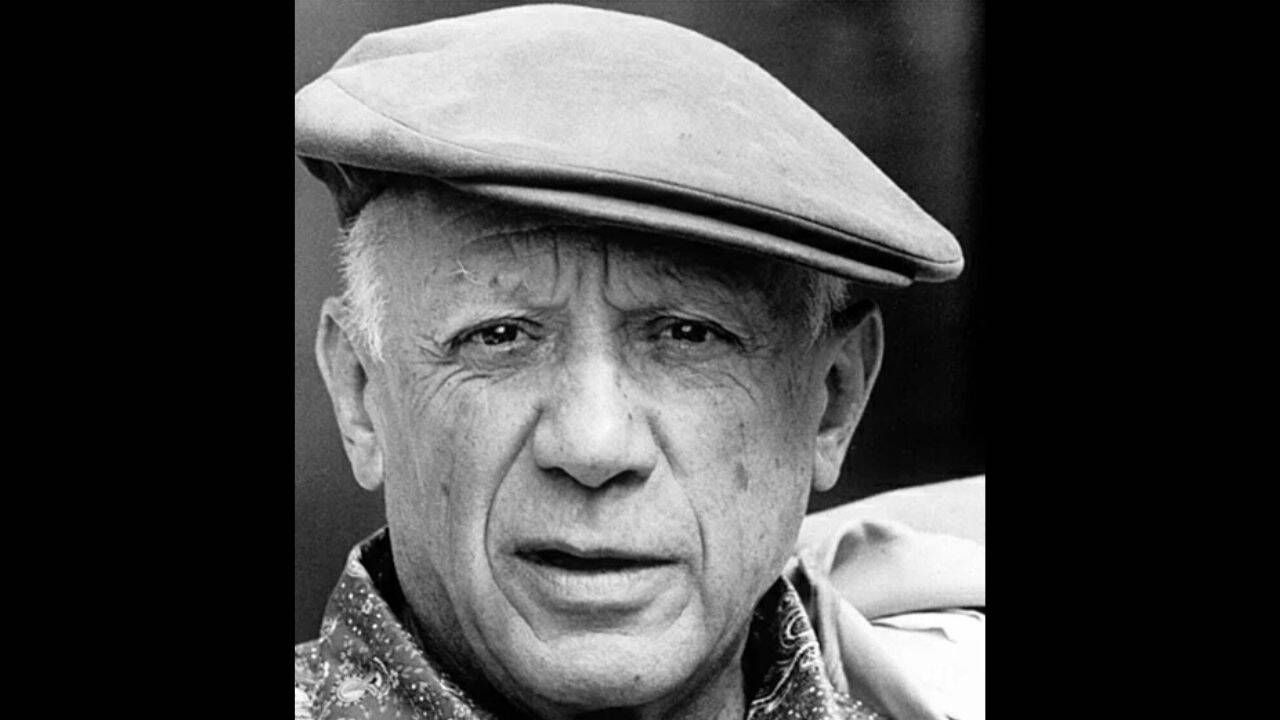
When Pablo Picasso stood before the student exhibitions in Madrid, staring at the uncanny precision of children rendering drapery and perspective with terrifying accuracy, he did not see genius. He saw a trap. He saw children who had already mastered the dead language of the academic past. Meanwhile, you can read related stories here: Property Guardianship Economics A Structural Analysis of Alternative Housing Models.
"When I was as old as these children, I could draw like Raphael," he would later reflect, his voice carrying the weary weight of a man who spent decades trying to climb out of his own technical perfection. "But it took me a lifetime to learn to draw like them."
We misunderstand this quote entirely. To see the full picture, we recommend the excellent report by The Spruce.
We read it as a flex. We think the twentieth century’s most infamous artistic revolutionary was casually boasting about his childhood prodigy, as if to say, Look how fast I skipped the line. We imagine a young Pablo in short trousers, effortlessly churning out Renaissance-grade portraits while his peers struggled to keep their charcoal inside the margins.
That is not what happened.
And more importantly, that is not the tragedy.
The Burden of the Gift
Consider a hypothetical child named Mateo. He is nine. He sits at a kitchen table covered in butcher paper, holding a marker. When Mateo draws a dog, the dog has four legs, two eyes, and a tail shaped like a question mark. It is flat. It is absurd. It breaks every rule of anatomy, light, and shadow that Western art has codified since the fifteenth century.
It is also magnificent.
It is magnificent because Mateo is not drawing what is there. He is drawing what he knows. He is mapping an emotional territory. He is translating pure, unfiltered experience onto a dead white surface using the only symbols he possesses.
Now, imagine Mateo enters an art class.
The instructor—well-meaning, armed with textbooks and centuries of European tradition—teaches Mateo about vanishing points. They teach him about chiaroscuro. They teach him that the sun does not outline a face in thick black ink, because outlines do not exist in nature. They teach him how to make a flat circle look like a three-dimensional sphere through the quiet alchemy of gradation.
Mateo practices. Mateo improves.
Within three years, Mateo can render a plaster cast of a Greek nose so accurately that adults gasp. He can capture the exact fall of light across a draped sheet of velvet. His technical execution is flawless.
He has also lost his mind.
This is the invisible tax of skill. To learn to draw like Raphael—to master the grammar, the syntax, the hyper-realistic vocabulary of institutional art—requires an active, systemic dismantling of native intuition. You have to unlearn how to see the world as a child, because the adult world demands proof. It demands verification. It demands that you prove you can render reality before you are ever allowed to distort it.
Picasso did not struggle because he lacked skill. He struggled because he had too much of it.
The Architecture of the Cage
We build cages out of our own competencies.
In every discipline—whether it is painting, coding, writing, or building a business—the early stages are defined by raw, unbridled experimentation. Beginners make mistakes because they do not know the rules. Sometimes, those mistakes reveal entirely new continents of thought.
Then comes the education.
We learn the best practices. We adopt the industry standards. We study the masters. And slowly, imperceptibly, the cage closes around us.
I remember the exact afternoon I realized I had become trapped in my own professional proficiency. I was writing an analysis that was technically bulletproof. Every sentence was structurally sound. Every argument was fortified by data points and historical precedent. It was clean. It was professional.
It was utterly dead.
It read like it had been manufactured in a climate-controlled laboratory by someone who had never felt the sting of a failure or the sudden, electric shock of a genuine insight. I had learned how to write like Raphael. I had mastered the perspective, the shading, the academic cadence.
And in doing so, I had scrubbed out the very reason anyone would want to read it in the first place.
Unlearning is terrifying work. It is easy to add layers. It is easy to pile technique upon technique, tool upon tool, vocabulary upon vocabulary, until you are fortified against all possible criticism. No one fails a test when they repeat the orthodoxy back to the examiner with flawless inflection.
To strip all of that away? To look at a blank page or a canvas or a business model and intentionally unlearn the safety nets you spent decades acquiring? That takes a courage that most of us spend our entire lives avoiding.
The Long Way Around
Picasso spent his youth painting like a Renaissance master because his father, an academic art teacher, demanded it of him. Don José Ruiz y Blasco drilled his son in the grueling fundamentals of oil painting and classical draftsmanship. By the time Pablo was a teenager, he could paint circles around artists twice his age.
He had won the game before it started.
And then he spent the next eighty years trying to figure out how to forget it.
Look at his Blue Period. Look at the jagged, fracturing planes of Les Demoiselles d'Avignon. Look at the furious, childlike simplicity of his later line drawings. People looked at those works and scoffed. They said a child could do it.
That was the point.
He had to tear down the cathedral of his own mastery brick by agonizing brick just to find the raw earth underneath. He had to unlearn the rules of perspective to discover the simultaneity of memory. He had to unlearn the smooth gradients of realism to find the brutal, bleeding truth of human emotion.
It took a lifetime.
Because it is infinitely harder to unlearn what you know than it is to learn what you don't.
We live in a culture obsessed with acquisition. We collect certifications, frameworks, metrics, and best practices. We stack them high, believing that more is the antidote to uncertainty. We want the shortcut. We want the blueprint that guarantees safety.
We forget that safety is the enemy of discovery.
The child drawing the impossible dog on the kitchen table is not worried about market fit or critical reception. They are simply recording the shape of their own existence.
The master who finally sheds his technique reaches that exact same place, but he arrives via a much longer, bloodier road. He carries the scars of every rule he had to break, every standard he had to betray, and every safety net he had to set on fire.
The graphite pencil is still in your hand. The paper is still blank. The only question left is whether you are brave enough to draw like a child again.