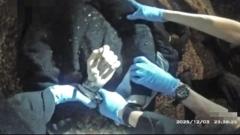
An 18-year-old student lies on a cold street in Southampton, bleeding from five knife wounds. He tells the responding police officers he has been stabbed. He tells them he can't breathe. The response from the male officer wearing the bodycam? "Don't think you have, mate."
Within minutes, the student is handcuffed, his arms forced behind his back as his life slips away. He becomes unresponsive. He dies right there on the pavement.
The murder of Henry Nowak by 23-year-old Vickrum Digwa is a horrific tragedy. But the national fury gripping Britain right now isn't just about the murder itself. It's about a failure of basic police intuition and a systemic culture that apparently treats allegations of a racial slur as a higher priority than a dying teenager's final breaths.
The Night a True Victim Was Treated Like a Criminal
On December 3, 2025, Henry Nowak, a first-year accountancy and finance student at the University of Southampton, was walking home after a night out with his football teammates. He was unarmed, alone, and according to toxicology reports, well under the legal drink-drive limit.
He crossed paths with Digwa, who was openly carrying a massive, 21-centimeter blade attached to his belt. Spotting the weapon, Nowak asked Digwa if he was a "bad man." Digwa took this as an insult. What followed was a brutal, sustained attack on an unarmed teenager. Nowak tried to flee, desperate enough to climb a bin and scramble over a fence, but Digwa pursued him, stabbing him five times, including a fatal blow to the heart. Digwa even filmed Nowak as he lay dying, taking intrusive, humiliating close-up videos of the boy's face.
Then the cover-up began. Digwa called his parents, who rushed to the scene before the authorities. His mother, Kiran Kaur, took the blood-stained weapon and hid it at the family home. When Hampshire Police arrived, Digwa put on a performance. He claimed Nowak was a drunk, aggressive racist who had assaulted him and knocked off his turban.
When the police saw Digwa's missing turban and heard the magic words of a racially motivated assault, their investigative critical thinking completely vanished.
They didn't look at the blood trail on the street. They didn't check Nowak for injuries. They ignored his repeated cries of "I've been stabbed" and his final plea: "Please, brother, I can't breathe." Instead, they handcuffed the dying teenager and placed him under arrest for assault. By the time they realized the catastrophic reality, uncuffed him, and began CPR, it was too late. Henry Nowak was pronounced dead at 12:37 AM.
The Courtroom Exposure of a Wicked Lie
The truth finally caught up with Digwa at Southampton Crown Court. On May 28, 2026, a jury unanimously rejected his claims of self-defense, convicting him of murder. On June 1, 2026, Judge William Mousley KC sentenced Digwa to life in prison with a minimum term of 21 years. His mother, Kiran Kaur, faces sentencing in July for assisting an offender.
During the trial, the prosecution exposed Digwa's defense as a fabricated, wicked lie. The judge explicitly cleared Nowak of any wrongdoing, stating he was certain the teenager said nothing racist.
The trial also cleared up a massive point of friction regarding the weapon. Early reports claimed Digwa used a kirpan—the ceremonial dagger carried by initiated Sikhs as an article of faith. The court heard that Digwa was wearing a small, traditional kirpan concealed under his clothes around his neck, which fulfilled his religious obligations. However, he chose to carry a completely separate, massive Persian-style dagger on the outside of his clothes.
The prosecution described Digwa as an individual with a dangerous weapon obsession, someone who slept with weapons and constantly searched for them online. As Judge Mousley told Digwa during sentencing, his actions brought shame on his family and his religion, abusing a sacred privilege to justify a barbaric act.
A Fatal Erosion of Institutional Legitimacy
The release of the harrowing bodycam footage by Hampshire Police has triggered an avalanche of public anger. It reveals an absolute lack of investigative rigor and a casual indifference to human life that has left the public recoiling in horror.
How does this happen? The uncomfortable reality is that UK policing has spent decades deeply embedded in bureaucratic orthodoxies where checking identity boxes and managing community optics often override basic, old-school police work. The officers at the scene were so paralyzed by the fear of mishandling a reported hate crime that they allowed a smooth-talking murderer and his family to direct the narrative, while ignoring the physical evidence of a dying boy.
Mark Nowak, Henry’s father, spoke outside the court with a dignity that the system denied his son. He made it clear that while Digwa is 100% responsible for the murder, Henry should never have died in police custody on a British street. He described his son’s treatment as inhumane and degrading.
The Independent Office for Police Conduct is currently investigating the handling of the incident. Politicians across the spectrum are weighing in, with calls growing to treat knife crime as a full-blown national emergency. There is also an intense political debate brewing over whether religious exemptions for carrying bladed articles need a strict national review, a move heavily backed by Hampshire’s Police and Crime Commissioner, Donna Jones.
The Immediate Steps for Reform
This case cannot be brushed aside as an isolated error by two hapless constables. It points to a fundamental flaw in how first responders are trained to evaluate scenes. To prevent a tragedy like this from happening again, the Home Office and chief constables must implement immediate changes:
- Mandatory Physical Triage Priorities: Protocols must be rewritten to dictate that physical life-safety and medical evaluation always take absolute precedence over taking statements or making arrests based on verbal allegations. If a suspect or victim claims they cannot breathe or have been wounded, an immediate physical check must happen before restraints are applied.
- De-escalation of Victim Blaming: Officers must be trained to look past persuasive performances at a scene. A missing piece of clothing or a claim of offensive speech should never blind an officer to a blood trail, defensive wounds, or physical distress.
- Overhaul of First-Responder Critical Thinking: Police training needs to shift away from rigid, box-ticking administrative compliance and return to aggressive, evidence-based scene assessment.
The Attorney General’s office is currently considering multiple requests to review Digwa's 21-year minimum sentence under the unduly lenient sentence scheme. While the legal system scrambles to fix the fallout, the British public is left with a chilling realization. Henry Nowak didn't just lose his life to a violent attacker; he lost his dignity to the very people sworn to protect him.