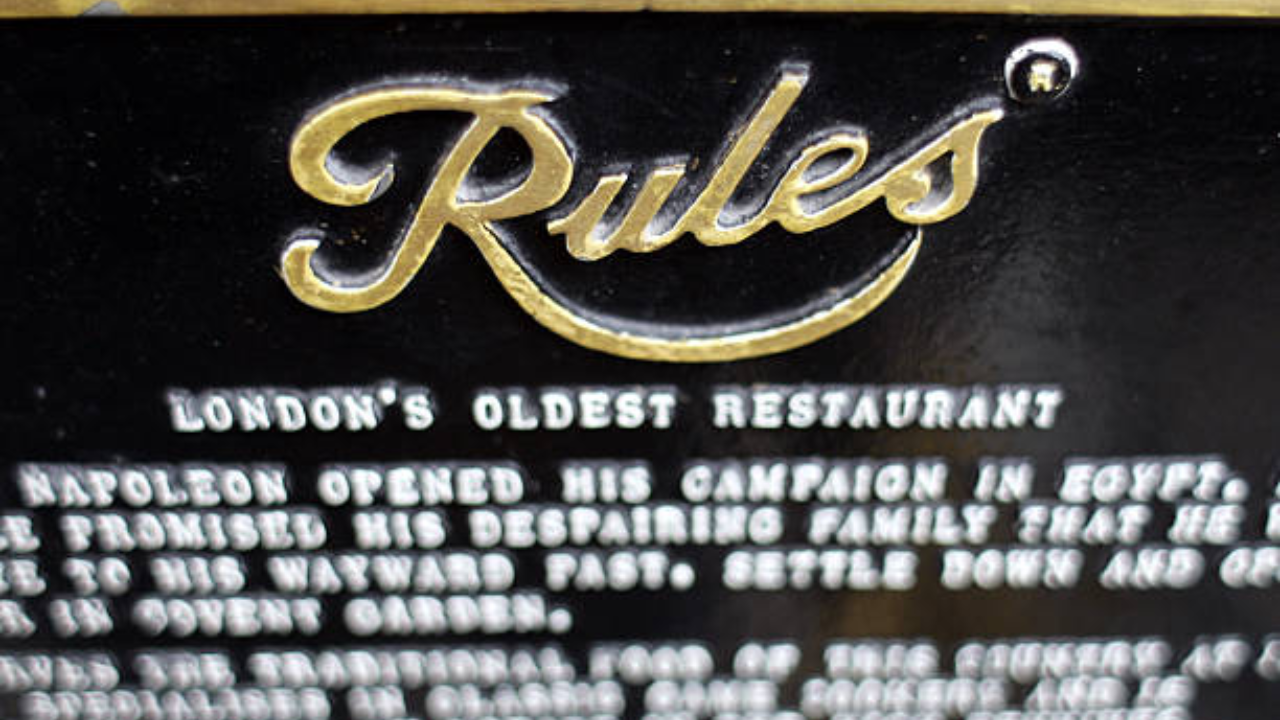
Protecting a multi-century restaurant through a heritage body converts informal cultural goodwill into enforceable legal constraints while altering how commercial operators extract value from historical real estate. This analysis maps the structural mechanics behind placing London’s oldest restaurant—a venue long associated with royal discretion and theatrical patronage—under National Trust stewardship, separating verifiable historical and institutional mechanisms from educated hypotheses where full operating agreements are not publicly disclosed. The framework below breaks down the asset’s value architecture, the governance trade-offs of charitable protection, the operational friction inside historic buildings, and the strategic conditions under which heritage status sustains or erodes a hospitality business.
Standard heritage reporting relies on nostalgic stacking: a founding year, a royal affair, a roster of stage performers, and an announcement of protection. That sequence treats fame as a self-sustaining asset rather than an input that requires continuous capital maintenance and clear property rights. When a headline links Edward VII’s extramarital visits and showbiz gatherings to National Trust protection, it conflates three distinct phenomena: historical provenance, cultural signaling, and legal asset governance. A rigorous evaluation separates what the venue is (a physical hospitality operation inside an old structure), what stories attach to it (aristocratic and entertainment associations), and what institutional protection actually alters (decision rights, alteration limits, and reputational durability). For a deeper dive into similar topics, we suggest: this related article.
The Three Pillars of Historic Hospitality Value
A centuries-old restaurant operates at the intersection of three interdependent value pillars. Weakening any single pillar degrades the others over time, even when foot traffic looks healthy in the short term.
- Provenance Equity: The accumulated weight of documented longevity, architectural continuity, and recognizable past patrons. Provenance lowers customer acquisition friction because the venue already carries a recognizable narrative hook before a single menu item is priced.
- Spatial Scarcity: The non-replicable physical attributes of an older London site, such as compact floorplates, irregular room geometries, aging timber or masonry, and central location advantages. Scarcity caps seating capacity while raising the barrier to entry for competing concepts.
- Operational Viability: The day-to-day commercial engine—kitchen throughput, compliance with modern health and safety rules, labor productivity, and margin discipline—that turns physical rooms and cultural prestige into recurring cash flow.
Cause-and-effect links between these pillars are frequently misread in popular coverage. Royal and theatrical associations do not automatically generate operating profit decades or centuries later; rather, they act as high-salience memory anchors that keep the venue legible to visitors and press. When a restaurant relies too heavily on provenance equity while neglecting operational viability, service bottlenecks, rising maintenance bills, or menu stagnation eventually erode repeat local demand. Conversely, optimizing strictly for table turns without respecting spatial scarcity and provenance risks flattening the exact character that differentiates the room from a modern chain. For further information on this issue, in-depth reporting can also be found at MarketWatch.
Consider a hypothetical operator running a narrow, multi-level dining room built centuries ago. Adding covers in tight corners may lift gross sales on peak nights, yet cramped circulation slows server pacing, strains kitchen dispatch, and wears down fragile finishes faster than budgeted. The short-term revenue gain comes at the expense of the spatial intimacy and maintenance reserve that underpin long-term brand equity.
Governance Mechanics and Known Versus Hypothesized Effects
When a heritage organization such as the National Trust becomes involved with a historic property or business interest, the central analytical question is not "Is it historic?" but "Who controls what, under which covenants, and who bears which costs?"
Known Institutional Mechanisms
Several structural features of historic preservation and charitable stewardship are well established in principle, even without inspecting confidential commercial contracts:
- Separation of Heritage Stewardship and Commercial Execution: Conservation bodies specialize in long-term preservation, public interest, and architectural or cultural integrity, whereas hospitality operators specialize in culinary execution, staffing, procurement, and daily service delivery. Splitting or formalizing roles along these lines clarifies accountability around fabric preservation versus commercial yield.
- Constraint on Physical Modification: Heritage protection typically formalizes limits on structural alterations, interior stripping, signage, and layout changes. What a private owner might reconfigure freely to chase modern trends becomes subject to conservation standards, heritage approvals, or covenant restrictions.
- Reputational Shielding Against Short-Termism: Formal conservation backing raises the visibility and scrutiny of major changes. An operator cannot quietly gut a historic interior or abandon traditional identity without triggering public and institutional pushback.
Educated Hypotheses Where Full Terms Are Unseen
Because exact legal instruments, lease structures, maintenance schedules, and revenue-sharing terms for a specific arrangement are not always public in full detail, several downstream effects remain educated hypotheses rather than settled facts:
- Capital Expenditure Allocation: Heritage buildings often carry lumpy, specialized repair costs—roofing, damp mitigation, historic joinery, electrical and ventilation retrofits—that exceed standard commercial fit-out budgets. Whether the heritage body, the operator, or a hybrid structure absorbs major fabric repairs determines net operating margins.
- Menu and Experience Positioning: Formal heritage alignment may encourage menus and service styles that honor historical continuity, potentially reinforcing prestige pricing while testing appeal among diners seeking novelty.
- Tourism Versus Local Repeat Mix: High-profile heritage recognition can boost destination visits and media coverage, which may lift average check sizes but also expose revenue to seasonal travel swings if local regulars feel priced out or underserved.
A useful mental model here is the Principal-Agent Tension in Heritage Assets. The conservation principal optimizes for multi-generational preservation and public cultural value; the commercial agent optimizes for risk-adjusted cash flow and operational agility. Protection works best when contract design aligns both sides around clear service standards and transparent maintenance obligations rather than leaving gray zones that spark disputes when equipment fails or costs spike.
The Cost Function of Heritage Hospitality
Popular accounts rarely examine the cost function governing an ultra-old restaurant. In plain economic terms, total cost is not just ingredients and wages; it is the sum of baseline operating costs, heritage compliance and maintenance costs, and opportunity costs foregone due to physical or regulatory limits.
- Fixed Floorplate and Capacity Ceilings: Older buildings frequently impose fixed room sizes, narrow staircases, and awkward back-of-house layouts. Fixed physical capacity limits how easily volume can scale during high-demand periods, making pricing power and booking mix critical to profit.
- Retrofit Friction: Installing modern commercial extraction, refrigeration, fire suppression, accessibility adaptations, or acoustic treatments inside historic fabric often costs more and takes longer than in standard retail shells. Every constraint adds engineering complexity or reduces usable square footage.
- Maintenance Asymmetry: Routine wear happens every service, while major structural or fabric interventions arrive in large, irregular tranches. Without a dedicated sinking fund or clear responsibility split, a single major building repair can wipe out months or years of modest hospitality profits.
- Opportunity Cost of Preservation: Preserving authentic character often means saying no to maximum density, aggressive branding overlays, or rapid layout churn. That foregone expansion is a real economic cost, even though it never appears as an invoice line item.
These cost drivers interact rather than sitting in isolation. Suppose a historic dining room has limited seating and strict limits on external signage or structural expansion. Raising menu prices can help offset tight capacity, yet price increases must stay anchored to perceived quality and authenticity so guests view the premium as earned rather than opportunistic.
Why Celebrity and Royal Lore Misleads Buyers and Operators
Stories about Edward VII’s discreet meetings or showbiz figures gathering at a venue are compelling hooks, yet they carry an analytical trap for readers, investors, and operators. Famous past patrons signal cultural salience, not durable business fundamentals.
Royal and celebrity associations travel well in headlines because they condense complex social history into recognizable figures. In London’s hospitality history, venues near theaters, clubs, or central thoroughfares naturally intersected with performers, writers, and elites over time. Treating those anecdotes as proof of guaranteed future demand ignores how consumer habits shift across generations. A diner in the 2020s may appreciate historical atmosphere without feeling any personal loyalty tied to nineteenth- or twentieth-century social circles.
There is also a second distortion: survivorship bias. We remember the venues that survived and carried famous names, while forgetting the many historic rooms that closed, rebranded, or struggled financially despite rich histories. Legacy fame buys attention at the door; consistent food, hospitable pacing, clean execution, and sound unit economics keep guests coming back.
Tactical Framework for Evaluating Heritage Venues
Whether you are benchmarking a historic hospitality asset, advising an operator, or assessing how heritage protection reshapes a landmark business, apply a disciplined sequence rather than relying on sentiment.
Step 1: Audit the Physical and Legal Envelope
Map exact ownership, lease tenure, conservation status, and maintenance responsibilities before projecting financial performance. Separate routine operational upkeep from structural and heritage fabric obligations so capital surprises are priced early.
Step 2: Decompose Demand by Cohort
Segment guest demand into repeat local diners, business or occasion bookers, and heritage or leisure visitors. Track how each cohort responds to seasonal shifts, menu changes, and price adjustments so the business does not become overly dependent on a single fragile traffic source.
Step 3: Engineer Back-of-House Throughput Around Constraints
Treat layout limitations as fixed engineering parameters. Optimize prep schedules, batching, storage flow, and station design around tight spaces so front-of-house warmth and speed do not degrade when the dining room is full.
Step 4: Price Authenticity Without Neglecting Core Value
Anchor pricing to a coherent combination of setting, service, and culinary delivery. Heritage status justifies distinctiveness, not sloppiness; if the food or service falls short of the price tier, historical novelty will not rescue repeat ratings.
Step 5: Monitor Reputational and Compliance Guardrails
Establish clear internal checkpoints for brand standards, conservation rules, and safety regulations. Proactive compliance prevents costly stoppages, public friction, or strained relationships with heritage stakeholders.
Limitations and Boundary Conditions of This Framework
No analytical model removes uncertainty from running a centuries-old hospitality business. First, public reporting rarely discloses full commercial terms, meaning conclusions about financial split, lease economics, or private covenants must remain provisional until verified against actual agreements. Second, heritage protection is not a substitute for commercial competence; a protected building can still lose money if food quality slips, labor costs outrun productivity, or debt service is misaligned with cash flow. Third, heavy preservation rules can slow adaptation during sudden market shocks, such as sharp spikes in energy, food, or wage costs, where faster physical or operational pivots might otherwise help a modern venue adjust.
Strategic Recommendation
Operators, investors, and heritage stewards involved with landmark venues like London’s oldest restaurant should treat National Trust protection as a long-horizon governance anchor and pair it immediately with a ring-fenced historic capital reserve and throughput audit. Instead of leaning on royal and showbiz lore to carry commercial performance, lock in explicit clarity on who funds structural versus operational maintenance, align daily service execution with the physical limits of the rooms, and protect core repeat demand so cultural prestige reinforces—rather than substitutes for—hard operating discipline.