Instinct is a Terrible Lifeboat
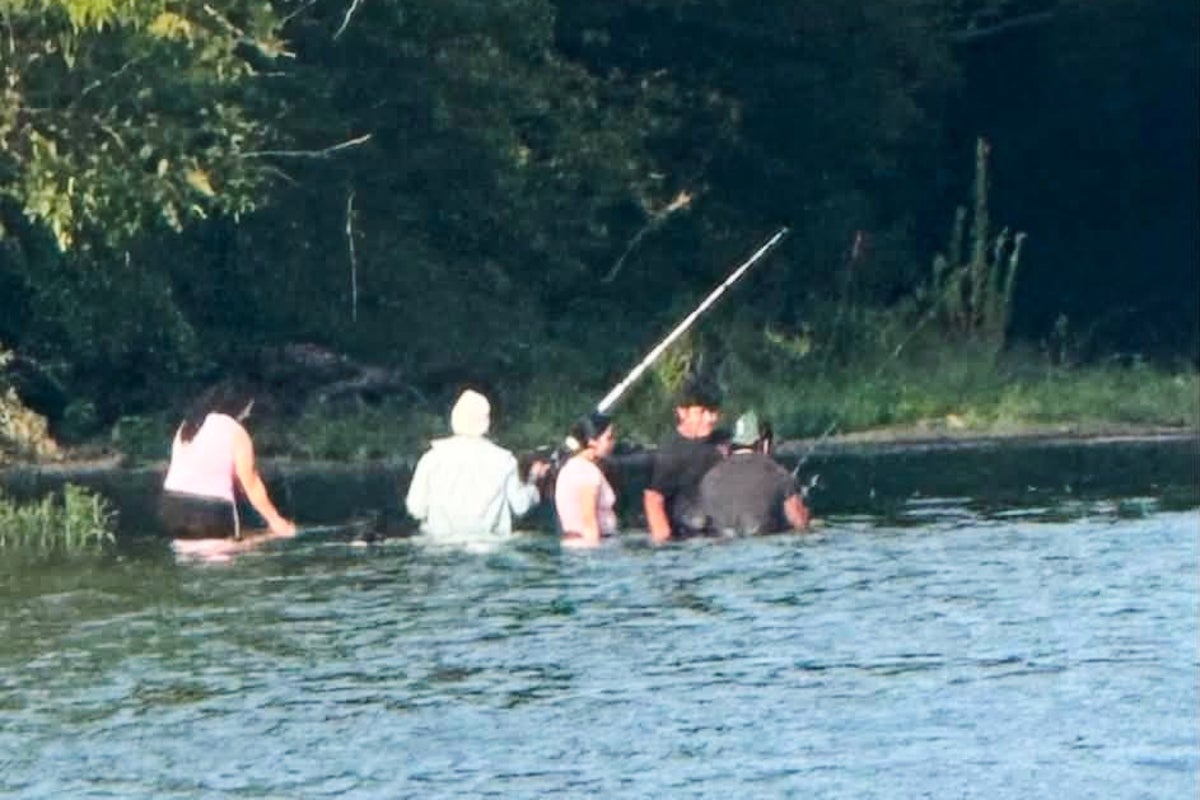
When four people leap into a churning river to save a struggling swimmer and all five end up dead, newsrooms run the standard playbook. They write heartbreaking tributes. They call the rescuers selfless heroes. They frame the event as a tragic, unavoidable act of bravery.
That narrative is comfortable. It is also deadly.
Call it cold, but hero worship in water rescue hides a brutal physical reality: jumping into swift water without equipment or specialized training is not an act of rescue. It is a fatal miscalculation. Instinct tells us to jump. Fluid dynamics, hypothermia, and human physiology guarantee that almost everyone who follows that instinct will drown.
If we actually care about saving lives instead of just canonizing victims after the fact, we have to stop romanticizing the impulse that gets good people killed.
The Mechanics of a Multi-Victim Drowning
In water safety circles, there is a well-documented phenomenon known as the Aquatic Victim Resuscitation or Multiple Drowning Syndrome. It follows a predictable, terrifying pattern.
One person enters a river, gets caught in a hydraulic or a current, and panics. A onlooker sees the distress and reacts purely on adrenaline, diving in. What the bystander fails to grasp is that a drowning human being is not capable of rational thought.
A drowning victim is driven by an involuntary physiological response. They do not see a savior. They see a floating platform.
When a panicked swimmer grabs a rescuer, they will climb that rescuer like a ladder. They will push the rescuer’s head underwater to keep their own above it. It is not malicious; it is a primal instinct to breathe.
Now, instead of one tired swimmer, you have two people submerged, exhausting their oxygen reserves in seconds. A second bystander sees two people struggling and dives in to help. The cycle multiplies.
[Distressed Swimmer]
       │
       ▼ (Panics & Submerges)
[Bystander #1]
       │
       ▼ (Climbs & Exhausts)
[Bystander #2]
       │
       ▼ (Multiplies Casualty Count)
[Multi-Victim Tragedy]
Rivers do not care about your intentions. A standard river current flowing at just 4 miles per hour exerts roughly 17 pounds of force per square foot against your body. Double that speed to 8 miles per hour, and the force quadruples to nearly 68 pounds per square foot. No amount of heart or athletic conditioning allows a human body to fight those physics while dragging a 180-pound panicking adult.
Reach, Throw, Row, Go: The Order We Keep Ignoring
For decades, organizations like the Red Cross and the National Drowning Prevention Alliance have preached a simple four-word mnemonic for water emergencies: Reach, Throw, Row, Go.
Notice where "Go" sits on that list. It is the absolute last resort, reserved almost exclusively for trained professionals with personal flotation devices (PFDs) and tether systems. Yet, untrained bystanders routinely invert the list, skipping straight to "Go" without a second thought.
1. Reach
Use a branch, a towel, a paddle, or a pole. Extend your reach while anchoring yourself securely to the bank. Never offer your bare hand unless your body is firmly anchored to something immovable; otherwise, you will simply be pulled in.
2. Throw
Throw something that floats. A cooler, a plastic jug, a ring buoy, or a throw bag. Even if the item does not pull the victim to shore, giving them flotation buys time. It breaks the immediate cycle of panic and stops them from sinking.
3. Row
If a vessel is available—a kayak, a canoe, a motorboat—use it. Put an hull between yourself and the water.
4. Go
Do not enter the water unless you have a flotation device for yourself and a separate one for the victim, plus the physical conditioning to handle swift water. If you lack these, stepping into the river does not double the chances of a rescue; it doubles the casualty list.
The Hard Truth About Swift Water Hydraulics
People view rivers as moving swimming pools. They aren't.
Rivers contain hidden low-head dams, strainers (fallen trees that let water through but trap human bodies), and recirculating currents known as hydraulics or "keep-alive" holes.
A hydraulic acts like a natural washing machine. Water pours over a ledge or structure, drops to the bottom, and recirculates back toward the drop point. Once caught in a powerful hydraulic, swimming harder does not work. The water is so aerated that it lacks the density required for your arms and legs to generate buoyancy or propulsion. You sink like a stone, regardless of how strong a swimmer you claim to be.
When four people drown trying to save one, they almost always enter the exact same hydraulic or strainer that trapped the first victim. They leap into the trap, expecting a different result because their intentions are noble. The river does not negotiate with good intentions.
Dismantling the "Hero" Narrative
Media coverage of these events is part of the problem. By framing impulse-driven rescues purely as heroic sacrifices, news outlets reinforce a dangerous social script. They tell the public that jumping in is what a good person does.
It is time to change that narrative.
Standing on the bank while someone drowns feels agonizing. Retaining your composure while someone screams for help goes against every human impulse. But staying on dry land to call emergency services, throwing floating debris, and guiding professional first responders to the exact location is the only action that actually works.
Entering the water without equipment is not heroism. It is an emotional reaction that converts a single rescue operation into a mass-casualty recovery mission for fire departments and dive teams.
If you want to save a life in a river, commit this cold reality to memory before you ever step foot near the water: If you do not have a flotation device to throw, your boots stay on the shore.