The fluorescent lights in the Riverside County administrative building hum with a flat, indifferent buzz that seems to vibrate right behind your eyes. It is the sound of bureaucracy in motion—slow, heavy, and paid for by the hour.
For years, I sat on the hard plastic chairs of municipal council chambers and county board meetings across Southern California, watching how public money actually moves. You learn quickly that the loudest debates rarely happen over the biggest line items. A thirty-million-dollar infrastructure bond passes on a consent calendar in four seconds flat, while a forty-thousand-dollar dispute over park benches turns into a three-hour shouting match. Why? Because people can picture a park bench. They know what it feels like to sit on splintered wood.
What they cannot picture—what gets buried beneath layers of legal jargon, campaign rhetoric, and administrative posturing—is the quiet bleeding of a county’s general fund when an elected official decides to turn public office into a personal stage.
Consider a hypothetical resident—let’s call her Elena—who runs a small auto repair shop off Highway 74 in Perris. Every quarter, Elena sits down at her kitchen table with a stack of receipts, a calculator, and a cup of lukewarm coffee to figure out her local tax obligations. She pays property taxes on her shop. She collects sales tax on every spark plug and brake pad she installs. She pays fees for hazardous waste disposal, business licenses, and local assessments. She does not complain about the checks she writes, provided she can see where the money goes. When a sheriff’s cruiser rolls down her street at two in the morning, checking the deadbolts on the local businesses, Elena feels a quiet, unspoken contract being honored. She pays the bill; the county keeps the peace.
That contract relies entirely on trust. It assumes that the person wearing the badge—and commanding a budget approaching a billion dollars—is focused on the safety of Elena’s street, not the trajectory of his own political career.
The Architecture of a Political Stunt
To understand how public money gets hijacked for political theater, you have to look closely at what happens when ambition outgrows a job description.
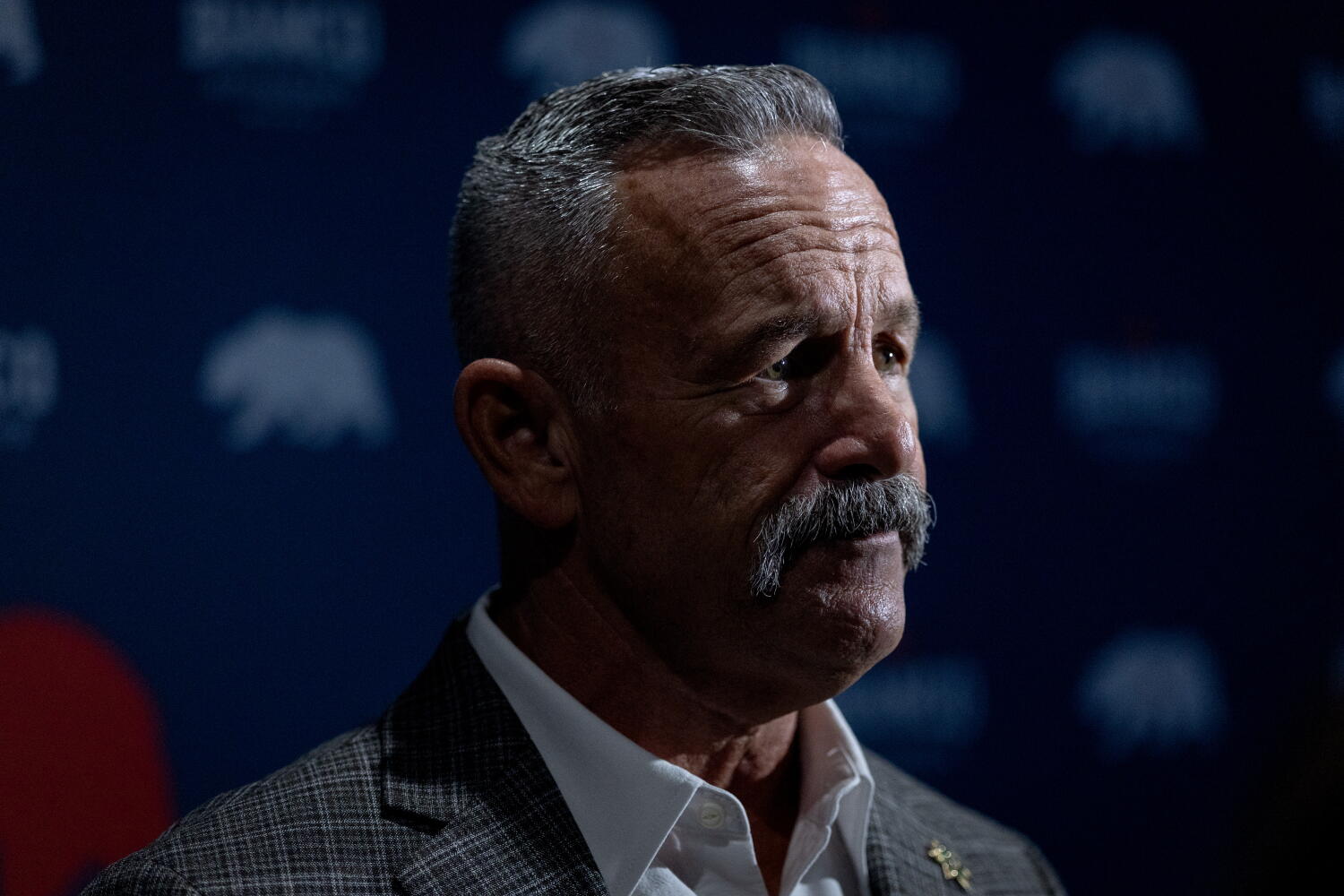
In Riverside County, Sheriff Chad Bianco has spent years cultivating an image that stretches far beyond the traditional boundaries of local law enforcement. Whether holding press conferences that read like campaign rallies, weighing in on state-level culture wars, or positioning himself for higher office in Sacramento, the pattern has become unmistakable. And when an elected official uses the machinery of their office to stage political theater, the bill does not go to their campaign donors. It goes straight to the taxpayers.
Let’s strip away the partisan noise and look at the mechanics of a political stunt funded by public dollars.
Imagine a sheriff’s department decides to launch a high-profile initiative, a legal challenge against state mandates, or an out-of-county media tour disguised as official business. On paper, every single expense can be coded under a legitimate-sounding administrative category. Travel expenses become "intergovernmental liaison." Legal fees drawn from county counsel or outside firms become "constitutional defense." Hours spent by salaried command staff drafting press releases, coordinating camera crews, and staging backdrops become "community outreach."
None of these line items carry a label that reads Campaign Advertisement. Yet functionally, that is precisely what they become.
When a county sheriff uses taxpayer-funded staff, taxpayer-funded vehicles, and taxpayer-funded airtime to audition for statewide office, every resident of that county becomes an involuntary campaign contributor. You do not get to opt out. You do not get a receipt showing how much of your property tax went toward staging a press conference designed to boost a politician's name recognition in Modesto or Fresno.
What the Ledger Actually Shows
I remember the first time I audited a municipal overtime report alongside a retired county controller. He pointed a nicotine-stained finger at a column of numbers and told me something I have never forgotten: "A budget is a moral document. Show me where a man puts his overtime hours, and I’ll tell you what he actually worships."
In Riverside County, the numbers tell a story that press conferences cannot obscure.
Law enforcement in a sprawling, rapidly growing region of nearly 2.5 million people is an extraordinarily difficult, expensive undertaking. Riverside County stretches from the suburban edges of Los Angeles and Orange counties all the way to the Arizona border. Policing it requires patrolling dense urban corridors in Moreno Valley and Corona, vast agricultural stretches in the Coachella Valley, and remote desert highways where backup can be forty minutes away.
Every dollar spent in that department carries an immediate, tangible opportunity cost.
Think of the county budget not as an endless reservoir of cash, but as a single glass of water sitting on a table in the middle of the Mojave Desert. Every sip taken for political posturing is a sip denied to someone dying of thirst.
When millions of dollars are absorbed by legal battles fought largely for ideological headlines, or when departmental resources are diverted toward political grandstanding, what quietly starves?
- Response times in unincorporated communities. In places like Mead Valley, Thermal, or Anza, residents rely entirely on county deputies because they have no city police force of their own. Every deputy pulled off patrol for a ceremonial detail or an administrative media event leaves a wider gap in coverage.
- Jail operations and oversight. Riverside County’s detention facilities have faced intense scrutiny, federal oversight, and costly wrongful-death settlements over the years. Fixing systemic failures inside county jails requires relentless, unglamorous administrative focus—not television appearances.
- Cold case investigations and forensic backlogs. Real detective work happens in windowless rooms over months and years. It does not generate viral clips on social media, so it rarely gets the spotlight, even when lab backlogs leave grieving families waiting in agonizing limbo.
The true cost of a political stunt is never just the direct dollar amount spent on the stunt itself. It is the quiet erosion of basic competence across the rest of the agency.
The Seductive Trap of Performative Policing
Why do voters fall for it? Why do so many people cheer when a local official picks a loud, expensive fight with the state government, even when the fight has zero chance of changing a single law or making a single neighborhood safer?
Because anger is intoxicating, and theater is easy to watch.
Real governance is boring. Negotiating a better mental health crisis response protocol with county social workers does not make for a punchy thirty-second soundbite. Auditing inmate medical care contracts to prevent costly lawsuits does not get you invited onto cable news panels. Fixing dispatch software so ambulances and deputies arrive two minutes faster in rural areas will never trend online.
Performative policing, by contrast, offers instant gratification. It turns complex, grinding social problems—homelessness, addiction, retail theft, state sentencing laws—into a simple morality play with a clear hero and a clear villain. The sheriff stands at a podium flanked by uniformed deputies, points a finger at Sacramento, and promises to stand in the breach.
It feels good to watch. For about ten minutes.
Then the cameras pack up, the tripods fold away, and the fundamental problems remain completely untouched. Worse, the county is now poorer by hundreds of thousands—or millions—of dollars in legal fees, staff hours, and lost focus.
If you have ever hired a contractor to fix a leaking roof, only to find him standing on your front lawn shouting at the clouds about how terrible the weather is while water continues to pour into your living room, you understand the frustration of watching performative leadership. You do not pay a roofer for his commentary on the sky. You pay him to nail down the shingles.
The Blurred Line Between Office and Ambition
There is a historical precedent here that California voters should recognize immediately. Across American politics, the office of county sheriff occupies a strange, uniquely powerful twilight zone. Unlike a big-city police chief, who is hired by a mayor or city council and can be fired tomorrow for insubordination or mismanagement, a county sheriff is independently elected.
That independence was designed for a noble purpose: to ensure that the chief law enforcement officer of a county answers directly to the people, free from the political meddling of local machine bosses.
Yet that same independence creates a dangerous vulnerability. When an independently elected sheriff decides that their current office is merely a stepping stone to the governor’s mansion or higher state office, the guardrails begin to bend.
California law draws a strict line between official duties and campaign activities. Public resources cannot be used to advocate for a candidate or build a political war chest. On paper, the rule is crystal clear. In practice, an incumbent official has endless ways to blur that line until it disappears altogether.
Consider how easy it is to weaponize the trappings of the badge:
- The Official Platform: An incumbent can hold press events on county property, using county microphones and county public information officers, to deliver speeches that are indistinguishable from stump speeches.
- The Policy Crises: By picking selective, high-profile fights over state laws—refusing to enforce certain mandates while loudly advertising that refusal—an official generates millions of dollars in free earned media across the state.
- The Legal Battles: Filing or joining politically charged lawsuits allows an official to position themselves as a lone warrior fighting the establishment, while the county’s taxpayers quietly absorb the billings of the lawyers doing the paperwork.
Every single one of these moves builds name recognition outside Riverside County. A voter in Orange County or San Diego watching the evening news sees a tough-talking sheriff standing behind a podium. They do not see the Riverside County tax bill sitting on Elena’s kitchen table in Perris. They do not see the budget deficits being patched over by the Board of Supervisors. They only see the theater.
The Quiet Burden on the Rank and File
There is another group that pays a steep, invisible price when leadership turns political: the men and women actually wearing the uniform on the street.
Talk privately to patrol deputies, correctional officers, and dispatchers in any heavily politicized department, and a very different picture emerges from the one projected at press conferences. Most people go into law enforcement for straightforward, grounded reasons. They want steady work, a decent pension, and the chance to protect people on the worst days of their lives. They do not sign up to be props in a political commercial.
When a department’s leadership becomes synonymous with partisan warfare, every deputy on the street inherits the fallout.
Imagine pulling someone over for a broken taillight in Palm Desert or walking into a domestic disturbance call in Jurupa Valley when the public already views your badge through the lens of your boss’s latest political controversy. De-escalation becomes harder. Community trust—the single most vital tool any police officer possesses—fractures along partisan lines. Witnesses hesitate to come forward. Local business owners wonder whether the department is focused on neighborhood crime or political score-settling.
Meanwhile, inside the department, resources follow the priorities of the top brass. When leadership rewards loyalty, media savvy, and political alignment over quiet operational excellence, the culture shifts. Good supervisors get sidelined; loud ones get promoted. The focus drifts away from the fundamentals of policing and toward protecting the image of the person at the top.
Accountability at the Kitchen Table
So how do ordinary taxpayers push back against a system designed to hide the true cost of political ambition?
It starts by refusing to be distracted by the show.
Whenever a public official stages a dramatic press conference, announces a sweeping ideological stand, or launches a high-profile legal crusade, taxpayers need to ask three simple, unglamorous questions before they applaud:
- Who is paying for the stage? Find out how many salaried staff hours, county vehicles, and outside legal contracts were used to produce the moment. Public records laws exist precisely so citizens can follow the paper trail behind the podium.
- What did this actually change on the street? Did the press conference lower property crime in Hemet? Did it reduce response times in Temecula? Did it improve safety inside the county jails? If the only measurable outcome is higher name recognition for the speaker, it was not governance—it was marketing.
- What was left undone while this happened? Every hour an executive spends chasing cameras is an hour not spent managing budgets, reviewing use-of-force policies, or solving staffing shortages.
The Board of Supervisors holds the purse strings in county government, yet supervisors frequently hesitate to challenge a popular or combative sheriff out of fear of being labeled "anti-law enforcement." That fear is precisely what allows political stunts to flourish unchecked. Fiscal responsibility is not anti-police; it is the foundation that makes effective policing possible. Demanding that a sheriff spend county money on county safety rather than statewide ambition is the most pro-law-enforcement position a taxpayer can take.
Back in Perris, Elena eventually finishes her quarterly tax calculations. She writes the check, seals the envelope, and walks out to the mailbox at the edge of the parking lot. Across the street, the streetlights flicker on as dusk settles over the valley, turning the distant mountains a bruised, deep purple.
She does not ask for miracles from her county government. She does not need speeches about the state of the union, viral clips on her phone, or ideological crusades fought in her name. She just wants the cruiser to roll past at two in the morning, the deadbolts checked, and the money she earned with her own two hands spent on the streets she actually drives.