The human ear cannot hear the deepest groans of the planet. When a tectonic plate shifts or an artificial explosion rips through the bedrock miles beneath the surface, it leaves a signature. A tremor. A low-frequency shiver that travels through thousands of miles of solid rock. For decades, scientists have listened to these vibrations to keep the world safe from unannounced nuclear threats.
But sometimes, listening too closely to the silence of the earth can make a person a target.
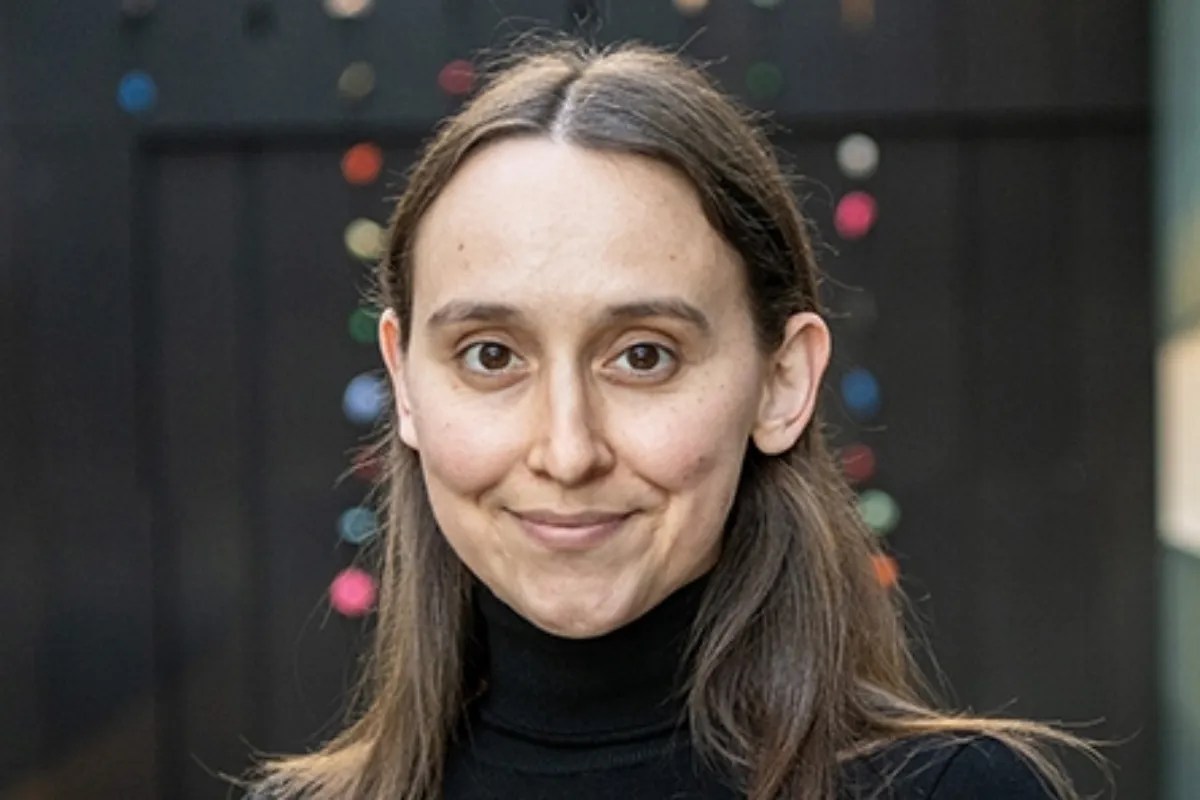
Consider a departure gate at Beijing Capital International Airport on a chilly afternoon. November 5, 2024. A fifty-four-year-old father and husband stands in line, holding a ticket home to Boston. He has spent the last few weeks doing what academics do: visiting aging family members and delivering guest lectures at local universities. His name is Dr. Youlin Chen. He is a naturalized American citizen, a mild-mannered seismologist who spends his days looking at wavy lines on computer screens.
He never boards the plane.
Instead, plainclothes state security officers step out of the crowd. A quiet conversation occurs. A passport is taken. In an instant, the ordinary terminal dissolves into the terrifying bureaucracy of international espionage.
For nearly two years, the world outside heard nothing about this disappearance. The silence was deliberate. Behind closed doors, a desperate, high-stakes diplomatic gamble was playing out between Washington and Beijing. Only now, as the limits of quiet diplomacy crumble, has the human cost of this geopolitical chess match finally come to light.
The Stool and the Silence
When a person vanishes into the custody of a foreign superpower, the abstractions of international law vanish too. Everything shrinks to the dimensions of a room.
For the first months of his detention, Dr. Chen was subjected to a grueling routine designed to break the spirit without leaving a mark. Imagine being forced to sit upright on a narrow, hard wooden stool. Hour after hour. Day after day. You are forbidden to stand. Forbidden to stretch. Forbidden to read a book or look out a window. For a man managing diabetes, high blood pressure, and high cholesterol, the physical toll is immediate.
His wife, Yufang Rong, waiting in Boston, could only watch the calendar pages turn. One hundred days. Four hundred days. Six hundred days without a single phone call.
When American embassy officials were finally permitted to visit him, the meetings were a cruel theater. Chinese handlers stood directly over them, monitoring every syllable. A defense lawyer was blocked from seeing him for more than thirteen months. In the rare moments his family received updates, the physical deterioration was stark. Chen had shed nearly forty pounds, his frame hollowed out by a diet devoid of fresh vegetables or protein, his survival dependent on erratic doses of low-quality medication.
Yet, during this time, his captors remained intensely interested in one specific topic. He was interrogated more than one hundred times. They did not ask about classified military designs or government secrets. They asked about public data. They asked about the rhythm of underground nuclear explosions.
The Physics of a Secret
To understand why a country would detain an academic over publicly available data, you have to understand the strange science of nuclear monitoring.
When a nation detonates a nuclear warhead underground, the blast sends shockwaves through the crust. Seismologists use global networks of sensors to catch these waves, analyzing their speed and amplitude to calculate the exact power of the weapon. For years, Chen’s research focused on decoding the seismic signatures left by North Korea’s rogue nuclear tests.
His work was funded in part by the U.S. State Department and the Air Force Research Laboratory. But it was entirely unclassified. It relied on open-source data shared willingly among international academics. It was published openly on the internet.
But national security experts believe Beijing saw something else in Chen’s expertise: a blueprint.
There is a theoretical concept in nuclear physics known as decoupling. If a country wants to test a weapon without the rest of the world knowing, they can detonate it inside a massive, hollow underground cavern. The air space cushions the explosion, dampening the seismic waves and tricking the global monitoring stations into thinking the tremor was just a minor, natural earthquake.
By interrogating a master of seismic detection, a hostile state can reverse-engineer the process. If you know exactly how the West listens, you learn exactly how to be silent.
The Limits of a Handshake
In the grand halls of power, individual lives are frequently treated as leverage.
In March, U.S. Secretary of State Marco Rubio officially designated Chen as "wrongfully detained." The label shifted his case to the top of the American diplomatic priority list. Yet, the White House chose to keep the designation secret. The logic was simple: public screaming matches often cause authoritarian regimes to dig in their heels. Quiet pressure might actually bring a husband home.
The strategy reached its absolute peak in May, during a high-profile state visit to Beijing. President Donald Trump sat across from Chinese leader Xi Jinping. Amid discussions of trade tariffs and global military postures, Trump directly raised the fate of the lone Boston seismologist. Xi reportedly promised to look into the matter.
Promises, however, do not always cross borders intact.
Months have passed since that handshake. The Chinese Ministry of Foreign Affairs publicly maintains that there is "no instance of wrongful detention" and that the case is being handled strictly according to domestic law. Chen was formally charged with espionage over a year ago, and a closed-door trial looms on the horizon. In the opaque Chinese judicial system, an espionage conviction carries the terrifying potential of life in prison—or worse.
The Resonant Chord
The tragedy of the modern world is that global security relies on the very transparency that authoritarian systems despise. Science requires collaboration. It demands that data be shared across oceans so that humanity can collective decipher the warning signs of a dangerous world.
When the act of reading open-source data and publishing peer-reviewed papers is reclassified as espionage, the scientific community shrinks. The world becomes a darker, more suspicious place.
As September approaches, diplomatic planners are preparing for Xi’s scheduled visit to Washington. The case of Youlin Chen will undoubtedly be on the agenda again, a tiny human fragment caught between the grinding gears of two nuclear-armed rivals.
Back in Boston, a home remains quiet. The medication sits unused. A desk covered in seismic charts remains exactly as it was left in late 2024. The earth continues to shift, its deep, silent vibrations recorded by thousands of automated sensors around the globe, while the man who dedicated his life to interpreting those warnings sits on a wooden stool in a concrete room, waiting to find out if the country he adopted can pull him back from the country of his birth.