The fluorescent lights in an oncology waiting room hum at a frequency that seems designed to vibrate directly inside your sternum. You notice the scuff marks on the linoleum first. Then you notice the clock. It is always moving too fast when you are waiting for a name to be called, and impossibly slow when you are waiting for a date on a calendar.
Wait. You might also find this connected story useful: The Eraser in the Waiting Room and the Ghost of an Old Fever.
That single word holds the entire architecture of modern terror when a doctor uses the word "suspicious." For decades, the British social contract rested on a quiet, sturdy promise: if you got sick, the National Health Service would catch you before you fell too far. Regarding cancer, that promise had a specific, measurable heartbeat. Eighty-five percent of patients urgently referred for suspected cancer would begin their first definitive treatment within sixty-two days.
Two months. Sixty-two sunrises to biopsy the tissue, read the slides, convene a multidisciplinary team, and fire the first beam of radiation or drip the first bag of chemotherapy into a vein. As discussed in detailed reports by World Health Organization, the effects are worth noting.
Today, that promise is fracturing in slow motion. Projections and performance data across NHS England reveal a stark, suffocating reality: the health service is on track to miss its core sixty-two-day cancer treatment target by roughly ten thousand patients.
Ten thousand.
Numbers that large have a way of numbing the human brain. We read "ten thousand" in a morning headline over toast, nod grimly at the state of public infrastructure, and turn the page. When a statistic grows past the size of a village, it stops looking like people and starts looking like an accounting error.
To understand what those ten thousand missed targets actually mean, we have to shrink the lens down to a single kitchen table. Let us construct a hypothetical patient—call her Eleanor. She is fifty-eight, a retired primary school librarian in the Midlands, and she has just found a persistent, painless lump near her collarbone. Eleanor is not a real person, though her composite profile mirrors thousands of real case files logged across hospital trusts this year.
Eleanor sees her general practitioner on a Tuesday. The GP feels the node, keeps her voice admirably steady, and submits an urgent two-week-wait referral. Eleanor goes home, brews a pot of tea she does not drink, and begins the mental arithmetic of survival. In her mind, the system is a sleek, urgent conveyor belt. She is on the track now. Help is coming.
Except the conveyor belt has jammed.
The Anatomy of a Bottleneck
Why does a health system built by some of the most dedicated clinicians on earth suddenly lose its footing by ten thousand people? If you ask policymakers, you will hear about post-pandemic backlogs, workforce shortages, and aging demographics. All of those are true. None of them explain the sheer mechanics of how a sixty-two-day window collapses from the inside out.
Think of cancer care not as a single appointment, but as a narrow, multi-stage canal lock. A boat cannot enter the third chamber until the second chamber has drained, and the second cannot drain until the heavy iron gates of the first have swung shut.
In NHS England right now, the water is backing up at every single gate.
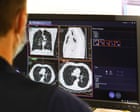
First comes diagnostics. Before an oncologist can prescribe a single milligram of targeted therapy, a radiologist must read a CT scan, an endoscopist must thread a camera, and a pathologist must stain tissue under a microscope to read its genetic signature. Across the UK, diagnostic capacity has been stretched to the breaking point. Scanners sit idle not for lack of electricity, but for lack of radiographers to operate them and consultants to interpret the shadows on the screen. When a hospital trust lacks enough histopathologists, a biopsy sample sits in a wax block in a laboratory queue for three weeks instead of three days.
During those three weeks, Eleanor’s lump is not waiting politely.
Cellular division does not observe bank holidays, staffing rotas, or budgetary reviews. Oncologists speak quietly about "stage migration"—a clinical, sanitized phrase for a devastating biological event. It means a tumor that was Stage I when the GP first felt it, localized and curable with a straightforward surgery, quietly crosses a microscopic boundary into Stage II or Stage III while the patient sits at home refreshing their inbox for an appointment letter.
I remember sitting beside a close family member during a six-week diagnostic delay a few years ago. We spent our evenings becoming amateur epidemiologists, scouring medical journals at two in the morning, trying to calculate doubling times for cell types we could barely pronounce. You begin to hate the calendar on the wall. Every Friday afternoon at five o'clock feels like a trapdoor slamming shut, because you know no lab results will be reviewed, no surgical lists will be finalized, and no phone calls will be made until Monday morning. That weekend silence is heavy. It smells like cold coffee and tastes like copper.
What the Official Numbers Conceal
To grasp the true scale of this shortfall, you have to look closely at how NHS England tracks the clock. The sixty-two-day standard was never meant to be an aspiration; it was designed as a clinical safety net. Historically, when the target was introduced in the early 2000s, it transformed British cancer survival rates, dragging them upward toward European averages by forcing hospitals to treat time as a finite, perishable drug.
By 2014, however, the system began to fray. For more than a decade now, the national eighty-five percent benchmark has been missed almost continuously, slipping from an occasional dip to a chronic, structural deficit. In recent reporting cycles, performance has hovered closer to the low-to-mid sixty percent range. When you apply that gap against the soaring volume of urgent referrals—more people than ever are coming forward with symptoms, which should be a public health triumph—the math turns brutal. Roughly ten thousand patients who should have started treatment within two months are left waiting past the deadline.
And what happens to the people inside that statistical margin?
Consider what happens next when a surgical slot is canceled because an intensive care bed is occupied by an emergency admission from A&E. That single cancellation ripples backward through the entire schedule. The patient who was supposed to have a lung resection on Thursday is pushed back three weeks. Because they cannot have surgery yet, their post-operative chemotherapy is delayed. Meanwhile, the patient behind them—our hypothetical librarian, Eleanor—cannot even get onto the surgical list because the queue ahead of her has frozen solid.
Health economists often point out that delayed cancer treatment is the worst kind of false economy. Treating Stage I bowel cancer costs a fraction of what it costs to manage Stage IV metastatic disease, both in pounds sterling and in human endurance. Early-stage intervention often means a minimally invasive procedure and a return to normal life within months. Late-stage intervention demands years of complex immunotherapy, palliative radiation, emergency admissions for pain management, and round-the-clock community nursing. By failing to treat those ten thousand patients on time today, the health service is guaranteeing a far heavier, more expensive, and more heartbreaking clinical burden tomorrow.
The Invisible Toll of the Waiting Room
There is a psychological injury inflicted by medical delay that never shows up in Department of Health spreadsheets. Medicine measures morbidity and mortality; it rarely measures dread.
When you tell a human being they might have a life-threatening illness and then ask them to wait nine, ten, or twelve weeks to find out what you are going to do about it, you induce a low-grade trauma that alters their physiology before the disease even has a chance to progress. Sleep fractures. Cortisol spikes. Relationships strain under the weight of forced optimism. Friends stop asking how you are doing because they do not know what to say when the answer is still, week after week, "We're still waiting to hear."
I have often thought that if hospital administrators had to spend forty-eight hours sitting in a patient’s living room watching them stare at a silent landline phone, diagnostic backlogs would be solved within a fiscal quarter. We treat administrative delay as a bureaucratic inconvenience, when in oncology, delay is an active clinical harm.
Let us be honest about the complexity here, because pretending there is an easy lever to pull would be a disservice to everyone working inside those exhausting hospital corridors. You cannot conjure a consultant oncologist out of thin air. Training a specialist takes over a decade of grueling medical education, junior doctor rotations, and fellowship exams. Many senior clinicians, burned out by years of relentless pressure and pension tax disincentives, have retired early or reduced their hours. At the same time, Britain’s population is growing older, and age remains the single biggest risk factor for developing malignancy. More scans are ordered. More biopsies are taken. More complex regimens are available—miraculous new targeted drugs and immunotherapies that keep people alive for years longer than was possible a generation ago, yet require far more chair time in infusion suites and far more monitoring by specialist nurses.
The science of curing cancer has sprinted ahead. The plumbing required to deliver those cures has rusted shut.
Where the Fracture Can Be Mended
If the problem is structural, the solution cannot be cosmetic. Shifting target definitions—a tactic governments have occasionally reached for in the past to make dashboards look tidier—does nothing for the woman waiting for a mastectomy in Manchester or the man waiting for prostate radiotherapy in Bristol. Patients do not survive on revised metrics; they survive on timely intervention.
Yet there are clear, proven ways to unclog the canal locks if political will matches clinical urgency.
Look first at diagnostic hubs. Across parts of England, community diagnostic centers have begun separating routine, high-volume scanning from acute hospital emergencies. When an MRI machine sits inside a dedicated outpatient facility rather than a chaotic general hospital, a stroke emergency arriving in A&E does not bump a cancer patient’s scan off the afternoon schedule. Expanding these hubs—and crucially, staffing them with overseas recruits, advanced clinical practitioners, and AI-assisted triage tools that flag abnormal chest X-rays within minutes rather than days—attacks the very first gate where bottlenecks form.
Second, we must protect surgical capacity. Ring-fencing "cold" surgical beds—operating theaters and recovery wards strictly insulated from winter flu surges and emergency department overflow—has already shown dramatic results in specialized centers. When surgical teams know their theater lists will not be canceled at seven o'clock in the morning because there are no ward beds available, throughput rises and morale recovers.
Third, workforce retention matters more than recruitment headlines. Keeping an experienced oncology nurse or radiographer from leaving the profession saves years of training lag and preserves institutional memory that cannot be replaced by agency staff. That requires competitive pay, sane shift patterns, and the basic dignity of functioning IT systems that do not take twenty minutes to load a single patient record.
None of this is mysterious. Every Royal College, every cancer charity, and every frontline clinical director has laid out the blueprint in agonizing detail. What has been missing is the relentless, unblinking prioritization that treats a missed sixty-two-day target not as a statistical dip, but as an emergency.
The Measure of a Promise
Return for a moment to Eleanor, sitting at her kitchen table in the Midlands.
In a system that works, her story is unremarkable. Her biopsy is read in four days. Her CT scan happens the following Tuesday. By day thirty-eight, she is in recovery after a clean surgical excision, annoyed by the hospital food and already planning her spring garden. By day sixty-two, she is home, tired, sore, and alive—another quiet triumph buried inside an eighty-five percent compliance figure that nobody writes a news story about.
In the system we have right now, day sixty-two comes and goes while Eleanor is still staring at an unopened envelope on her doormat, wondering if the ache in her shoulder is new or just her imagination.
Ten thousand patients is not a rounding error. It is ten thousand kitchen tables where the tea goes cold, ten thousand calendars marked with anxious red circles, and ten thousand families discovering that the safety net they paid into their entire working lives has holes wide enough to fall through.
The clock on the waiting room wall is still ticking. Nobody in those chairs has the luxury of waiting for next year’s budget review.