The Gordie Howe International Bridge will not open on schedule. While official press releases blame the pandemic for pushing the completion date from late 2024 to September 2025, the reality is far more complex. Supply chain friction, escalating labor costs, and the sheer engineering friction of connecting Windsor and Detroit have all played a part. More importantly, this delay underscores a deeper struggle involving international trade logistics, border security infrastructure, and the legacy of political interference that has shadowed the project since its inception.
This cross-border span is not just another piece of concrete. It is an economic artery. Over 25 percent of all surface trade between the United States and Canada moves through this single corridor. When a project of this magnitude stalls, the ripple effects hit automotive supply chains, agricultural distribution, and consumer goods across North America.
Anatomy of a Border Standoff
The bridge represents a direct challenge to the status quo. For nearly a century, the privately owned Ambassador Bridge held a lucrative monopoly over the Detroit-Windsor crossing. Manuel "Matty" Moroun, the billionaire owner of the Ambassador Bridge, spent decades launching lawsuits, funding political campaigns, and buying television advertisements to kill the Canadian-backed public alternative.
Political opposition reached a peak when Donald Trump threatened to block the project during his first presidency. Trump questioned why the United States should support a bridge where Canada was footing the entire bill, including the construction of the American customs plaza. Washington insiders lobbied the administration to view the bridge as a national security risk, framing it as an unnecessary dependency on foreign infrastructure funding.
Canada outmaneuvered these roadblocks by agreeing to pay for the entire $4.4 billion project through a public-private partnership. The Windsor-Detroit Bridge Authority took control, securing a deal where toll revenues would eventually reimburse the Canadian government. It was a masterclass in bureaucratic persistence, but the political scar tissue remains. The current delay is not a isolated incident of bad luck. It is the predictable outcome of building a massive piece of infrastructure in a highly politicized environment.
The Engineering Reality
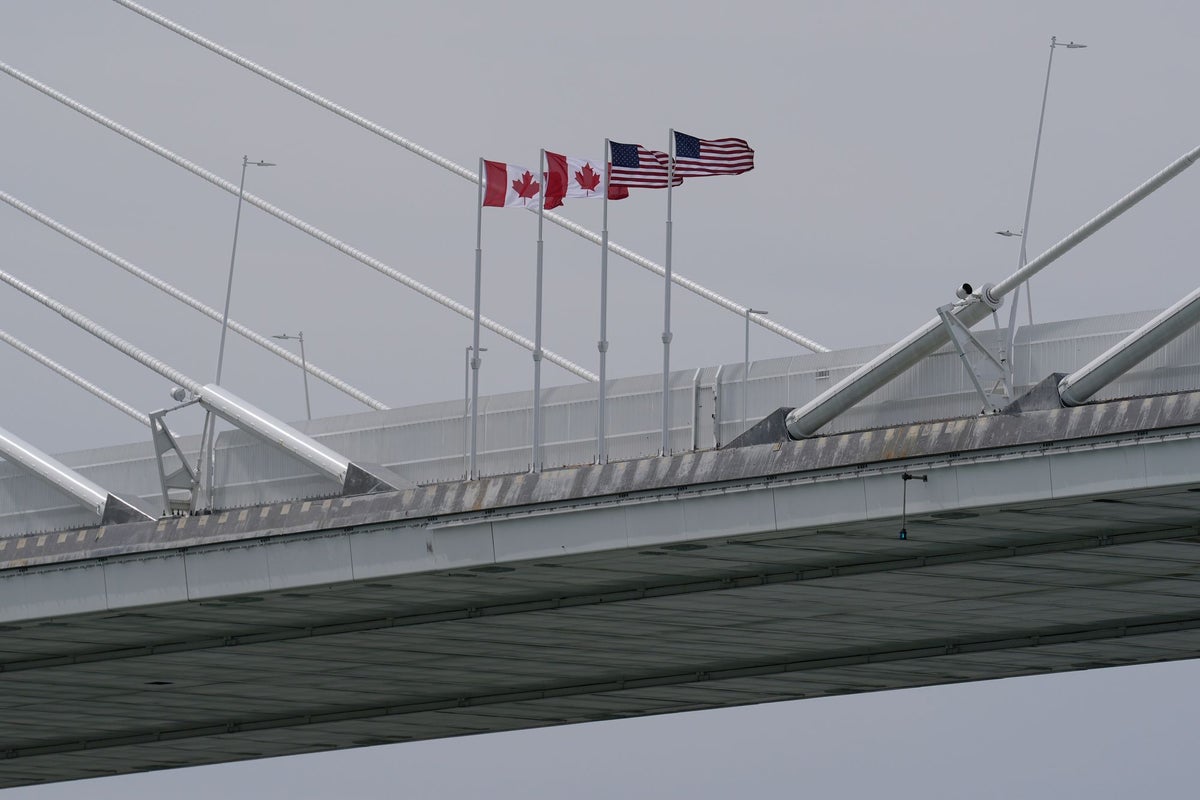
The physical challenges of the Gordie Howe International Bridge are staggering. It is a cable-stayed design, featuring a clear span of 853 meters. That makes it the longest cable-stayed bridge in North America.
Suspended bridges rely on absolute precision. The twin towers, standing 220 meters high, must anchor stay cables that hold the weight of a six-lane highway and a multi-use path. Every millimeter of variance can compromise the structural integrity.
[Detroit Approach] --- (Tower) === [853-Meter Clear Span] === (Tower) --- [Windsor Approach]
The construction consortium, Bridging North America, encountered unforeseen subterranean issues early on. The soil conditions near the Detroit River required extensive remediation and stabilization before the massive foundations could be poured. This was not simple excavation work; it involved drilling deep shafts into bedrock through layers of soft clay and industrial runoff from Detroit's manufacturing past.
Then came the labor market contraction. The skilled labor required for specialized cable-stayed construction is scarce. Ironworkers, crane operators, and specialized engineers were pulled away by competing domestic infrastructure projects funded by the U.S. Bipartisan Infrastructure Law. The bridge authority found itself competing for the exact same workforce needed for hundreds of other projects across the Midwest.
The Ports of Entry Problem
Focusing solely on the river span misses the real bottleneck. The bridge itself is nearly finished. The real crisis lies on the ground, specifically at the Customs and Border Protection plazas on both sides of the river.
The U.S. Port of Entry is one of the largest border plazas ever constructed in North America. It spans 148 acres and requires dozens of buildings, inspection lanes, and advanced radiological screening technology. The Canadian Port of Entry covers another 133 acres. Integrating these massive complexes with the federal agencies of two different nations is an administrative nightmare.
- Software integration: Border security systems must communicate in real-time across international networks.
- Security protocols: Installing classified screening hardware requires specialized clearance, limiting the speed of deployment.
- Interstate connections: The construction of the Michigan Interchange, which connects the bridge directly to Interstate 75, involves rebuilding over three kilometers of highway and constructing three new pedestrian bridges.
The Michigan Department of Transportation has had to coordinate closures, utility relocations, and detours through historic Detroit neighborhoods. This is a slow, meticulous process. A single mistake in utility relocation can cut power to thousands of residents or disrupt existing rail lines, leading to immediate work stoppages.
The Economic Cost of Waiting
Every month of delay costs millions. Trucking companies operating between Ontario and Michigan must continue to rely on the aging Ambassador Bridge or the Detroit-Windsor Truck Ferry for hazardous materials. The Ambassador Bridge lacks a direct highway connection on the Canadian side, forcing thousands of semi-trucks to crawl through 17 sets of traffic lights on Windsor's Huron Church Road daily.
This bottleneck wastes fuel, increases emissions, and adds hours to supply chains that rely on just-in-time delivery. The automotive sector is particularly vulnerable. A part manufactured in Ontario might cross the border multiple times before it becomes part of a finished vehicle in Michigan. Any delay at the border distorts production schedules and drives up retail prices.
| Metric | Ambassador Bridge | Gordie Howe Bridge (Projected) |
|---|---|---|
| Direct Highway Connection | No (Windsor side utilizes local streets) | Yes (Direct connection to Rt 401 and I-75) |
| Inspection Capacity | Constrained by urban footprint | 130+ acres of dedicated customs plazas |
| Hazardous Material Access | Highly restricted | Full compliance with modern hazmat transit |
The new timeline pushes the opening into late 2025, right into the teeth of a changing geopolitical climate. Trade agreements are up for review, and border enforcement policies are tightening. The bridge authority has agreed to a $35 million community benefits plan to appease frustrated residents on both sides of the river who are dealing with prolonged dust, noise, and traffic. This money funds local infrastructure, parks, and workforce training, but it also reflects the rising price of project management failures.
Public-private partnerships are designed to shift risk away from taxpayers, but the contracts contain clauses for force majeure and unforeseen disruptions. The pandemic provided a legitimate legal shield for the contractors to renegotiate timelines without facing catastrophic financial penalties. Taxpayers might not be footing the direct bill for the delay penalties, but they are paying the price through lost economic productivity and extended pollution in working-class neighborhoods.
The Gordie Howe International Bridge will eventually open, and it will fundamentally change how goods move across the North American continent. The current delay is a reminder that mega-projects are never just about engineering. They are a battlefield where politics, labor scarcity, and regulatory red tape collide. The extra months spent tightening bolts and laying fiber-optic cables in Detroit and Windsor are the price of building a monument to international trade in an era defined by friction.