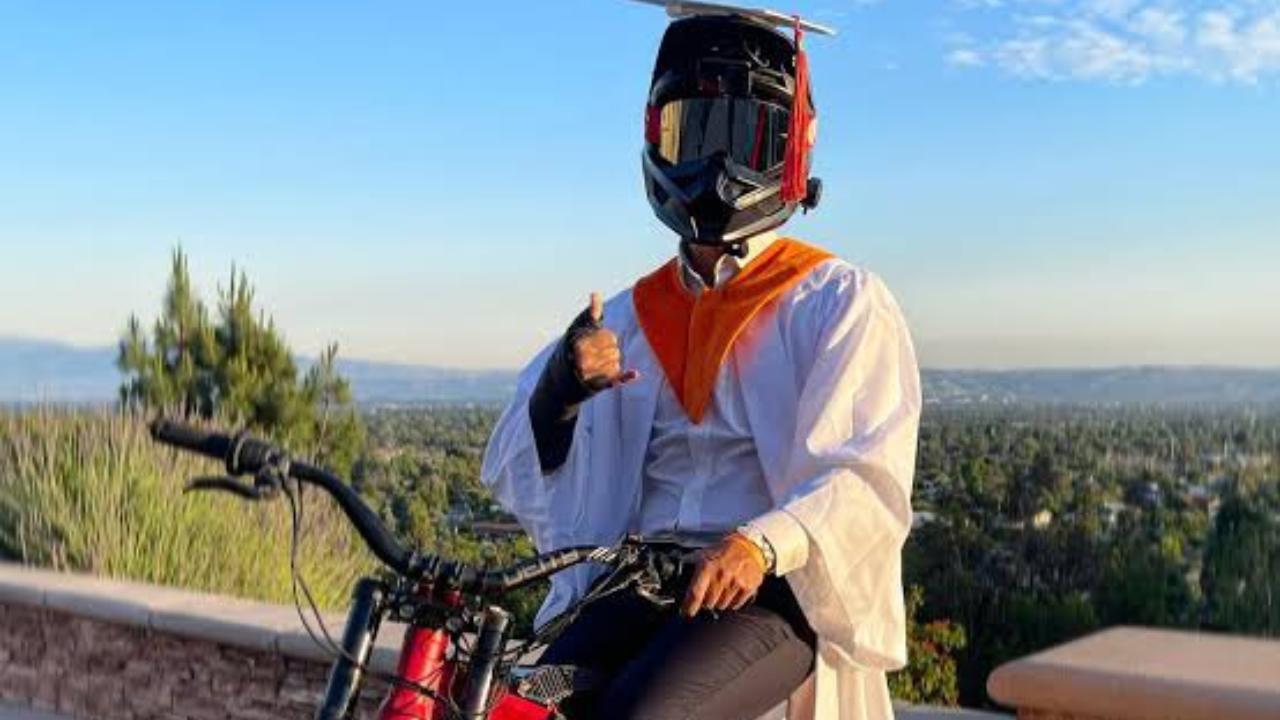
The prominent electric bike content creator known online as Sur Ronster is currently recovering from what his management team terms the most severe crash of his digital career. The incident occurred during a mid-week test session involving a Sur Ron Ultra Bee, a high-voltage machine that occupies a legally murky territory between lightweight bicycle and full-power dirt bike. On July 5, 2026, a brief video dispatch posted to his millions of followers displayed a heavily gouged full-face helmet alongside the scarred remains of the vehicle. No specific diagnoses have been made public, but the statement confirmed the twenty-six-year-old rider was hospitalized and stable enough to read messages from his audience.
This violent separation from his machine highlights a growing crisis within the micro-mobility sector. It is an industry expanding far faster than the laws designed to contain it. Content creators push these lightweight, silent machines to their absolute limits to satisfy the demands of digital algorithms. The machines respond with instant torque. When something goes wrong at seventy miles per hour on a vehicle that weighs less than half of a traditional gas motorcycle, the physics of the impact are brutal and unforgiving.
The Impact of a High Speed Crash
The crash itself happened away from the public eye during a dedicated testing run. He fell hard. For a creator whose entire brand relies on anonymity hidden behind a tinted visor, the sight of his severely abraded safety gear served as a sobering reminder of the physical stakes involved in high-output electric riding.
The social media update was brief but intentional. It urged riders to wear full-face protection at an absolute minimum. This specific recommendation hints at the violent nature of the impact, suggesting a forward pitch over the handlebars that brought the rider's head into direct, high-velocity contact with the ground. In the immediate aftermath, internet forums filled with unverified claims regarding permanent injury, a common occurrence when a highly visible internet figure suddenly goes silent. The official channel communications have since tamped down the most extreme rumors. The creator survived, but the machine he was operating remains a subject of intense debate among transportation experts and safety advocates.
The vehicle in question was not a standard commuter e-bike. It was a high-performance electric platform capable of generating massive acceleration without the warning sign of a loud exhaust note. The silence is deceptive. It allows operators to reach extreme speeds in areas where a conventional combustion engine would instantly draw local opposition or law enforcement attention. When traction fails or a mechanical component gives way under load, the rider transitions from a state of controlled acceleration to a catastrophic ballistic trajectory in milliseconds.
Bridging the Gap Between Bicycles and Motorcycles
To understand why this specific incident resonates beyond the community of online stunt riders, one must examine the engineering profile of the modern electric trail bike. Traditional electric bicycles operate under strict federal and state classifications that limit top speeds to twenty or twenty-eight miles per hour with motors capped at seven hundred and fifty watts.
The Sur Ron Ultra Bee completely ignores those parameters. It weighs roughly one hundred and eighty-five pounds and delivers peak power outputs that allow it to contest territory historically reserved for two-hundred-and-fifty-cubic-centimeter gas dirt bikes. It is light. This extreme power-to-weight ratio makes the machine incredibly agile but highly unstable when things go wrong at high speeds.
Traditional motorcycles use heavy engines low in the frame to provide gyroscopic stability at high velocities. A lightweight electric dirt bike lacks this inherent physical dampening. A minor deflection from a rock or an over-eager twist of the throttle can instantly upset the chassis. The suspension systems on these vehicles are frequently pushed beyond their design limits by riders who modify the battery packs and controllers to extract even more speed.
The market has responded to this performance capability with a massive surge in purchasing. Young buyers who have never thrown a leg over a traditional motorcycle can purchase these machines online and have them delivered directly to their doorsteps in a cardboard box. They require no registration, no specialized licensing, and no formal safety training in most jurisdictions. They are treated by consumers as toys until the moment they interact with public infrastructure or unpredictable terrain.
Regulatory Friction from Sydney to the United States
This structural ambiguity has created a hostile environment on public streets worldwide. Only four months before his recent crash, Sur Ronster found himself at the center of an international law enforcement controversy in Australia. During a promotional visit to Sydney in February 2026, the creator organized an unpermitted mass ride that culminated in a crowd of approximately forty electric bike riders taking over the lanes of the Sydney Harbour Bridge during peak commuter hours.
The response from local authorities was swift and severe. New South Wales Police issued multiple traffic infringement notices to the creator, publicly labeling the event as incredibly irresponsible, stupid, and dangerous. The police argued that the sudden influx of high-speed, silent vehicles into a dense arterial roadway threatened the lives of both the riders and everyday motorists.
The creator defended the action to local journalists by claiming it was one of the safest group rides he had ever witnessed. He argued that the gathering under the bridge was meant to be a simple meet-and-greet rather than an active disruption of transit infrastructure. This disconnect between law enforcement perspectives and rider attitudes is not unique to Australia.
Throughout the United States, municipal governments are scrambling to pass emergency ordinances to keep these high-velocity electric machines off public sidewalks, pedestrian beach paths, and dedicated bicycle lanes. The lack of visible registration plates makes enforcement nearly impossible for officers in standard patrol vehicles. A rider can simply mount a curb, navigate a narrow pedestrian walkway, and vanish into an urban park before a police cruiser can clear an intersection. The legal system is playing catch-up to a product category that moves faster than the bureaucratic process can adapt.
The Cultural Undercurrent of the Digital Stunt Economy
The growth of this vehicle segment is inextricably linked to the mechanics of online attention economies. YouTube and TikTok do not reward moderate, law-abiding transit. They reward escalation. To maintain a subscriber base that numbers in the millions, a content creator must continually produce videos that feature higher jumps, faster acceleration runs, and riskier urban navigation.
The viewers demand spectacle. This structural incentive structure forces creators into an escalatory spiral where safety equipment becomes a secondary consideration to the visual impact of the stunt. The anonymity provided by full-face helmets serves a dual purpose. It protects the rider's skull during a failure, but it also shields their identity from local law enforcement agencies tracking illegal street activity online.
This creates an environment where young viewers see their idols treating public spaces as private racetracks without observing any immediate legal or physical consequences. The videos are edited tightly. The hours of mundane preparation, mechanical maintenance, and minor falls are left on the cutting room floor, leaving a polished product that suggests these machines can be operated at the absolute edge of physical reality with zero risk. The recent crash disrupted that narrative entirely. It forced an acknowledgment that the laws of physics apply equally to internet celebrities and ordinary consumers alike.
Unmasking the Safety Dilemma of Lightweight Electric Power
The ultimate resolution of this crisis will not come from simple social media warnings or pleas for personal responsibility. It will require a fundamental restructuring of how these vehicles are manufactured, sold, and classified by international transport authorities. Manufacturers have found a highly profitable legal loophole by selling these machines as off-road-only recreational vehicles, knowing full well that a significant percentage of their customer base will operate them exclusively on suburban streets and city asphalt.
Insurance companies are beginning to take notice. Actuarial data regarding electric bike accidents involving pedestrians and automobiles shows a sharp upward trend in severity over the last twenty-four months. Medical centers are reporting specific injury patterns—complex orthopedic fractures, severe concussions, and deep road rash—that look identical to high-speed motorcycle trauma rather than traditional bicycle tumbles.
The recovery process for the creator will likely be long, and his eventual return to the internet will be met with intense scrutiny from both loyal fans and regulatory critics. The damaged helmet posted by his team serves as an undeniable piece of physical evidence that the line between a high-tech recreational toy and a dangerous motor vehicle has been completely erased. If the industry fails to implement internal guardrails regarding power delivery and point-of-sale licensing requirements, state and federal governments will eventually step in with heavy-handed restrictions that could dismantle the enthusiast market entirely. The silent speed of the electric revolution has outpaced the social structures meant to govern it, and the cost of that velocity is currently being paid in the emergency rooms of local hospitals. It is a structural failure wrapped in an entertainment product.