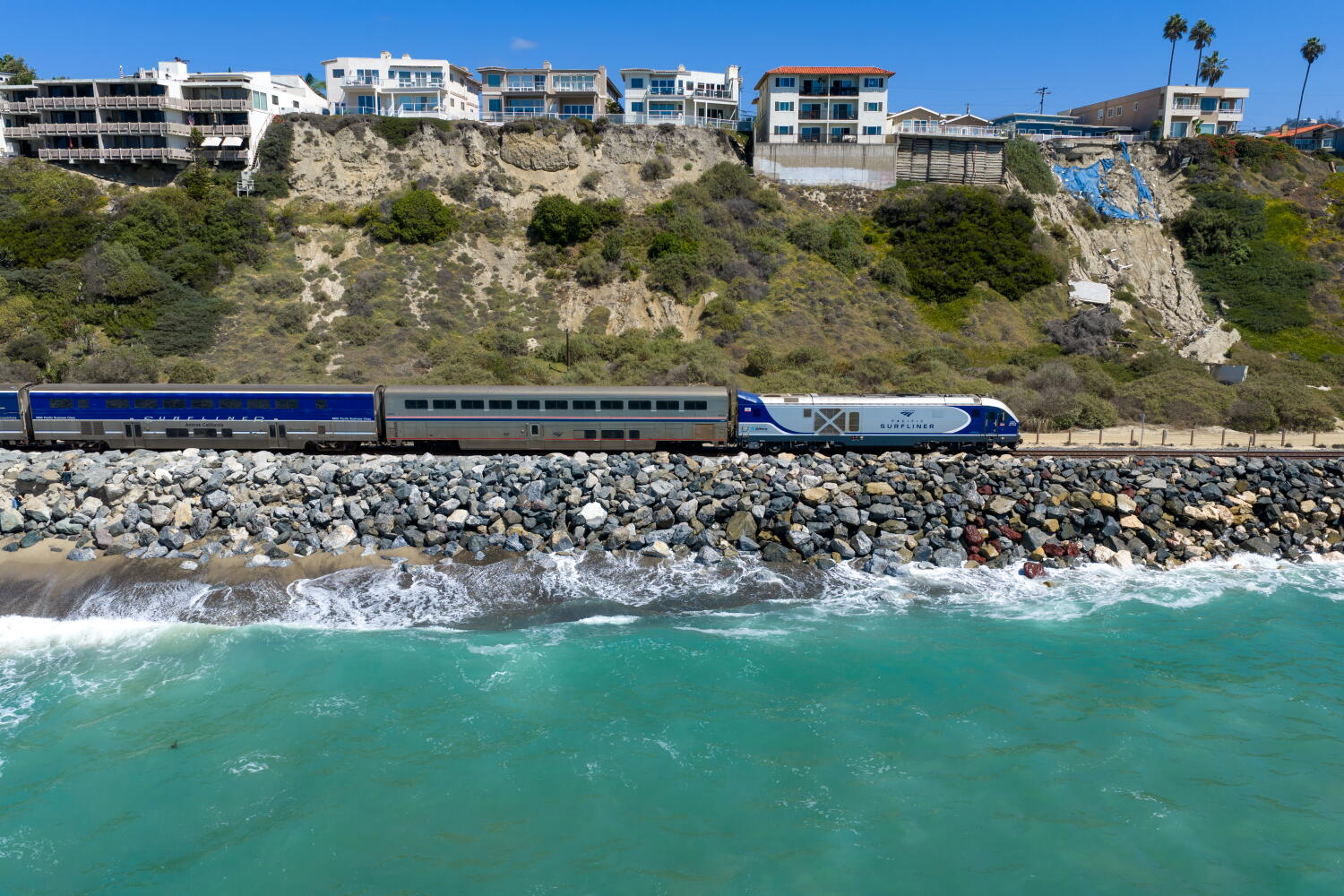
Anyone who rides the train between Los Angeles and San Diego knows the drill by now. You buy your ticket, pack your bag, and pray the Pacific Ocean decides to behave. Once again, Metrolink has been forced to suspend service along its iconic coastal route because of high tides, leaving commuters and weekend travelers scrambling for bus bridges and alternative rides.
It's frustrating. Honestly, it's getting a little predictable.
When big swells collide with king tides along the Orange County coastline—specifically through San Clemente—the tracks essentially turn into a seawall. Saltwater splashes over the ballast, erodes the ground beneath the ties, and forces transit officials to pull the plug on passenger trains for safety reasons. While the competitor headlines frame this as a sudden weather disruption, the reality is much deeper. This isn't just a one-off storm problem anymore. It's a structural battle between a historic rail corridor and a rising, relentless ocean.
What Actually Happens When Metrolink Suspends Coastal Service
Most people hear "high tides" and picture a little water lapping gently near the gravel. That's not what shuts down a multi-ton commuter rail line.
The issue comes down to a dangerous combination of astronomical king tides and large ocean swells. When those two forces hit the coast at the same time, waves don't just roll onto the beach—they slam directly into the rail bed. The tracks run right along the sand in several stretches of southern Orange County, separated from the surf by nothing more than boulders known as riprap.
Water gets underneath the tracks. It washes away the fine sediment and crushed rock that hold the heavy concrete ties in place. Even a tiny shift in track alignment can derail a train moving at 50 or 60 miles per hour. So when coastal monitoring crews spot wave overtopping or shoreline erosion, Metrolink and the Orange County Transportation Authority (OCTA) don't take chances. They suspend service immediately.
For riders on the Orange County Line and the Inland Empire-Orange County Line, a suspension usually means trains stop short at Laguna Niguel/Mission Viejo. If you're trying to reach San Juan Capistrano, San Clemente, or Oceanside, you're out of luck on the rails. Amtrak's Pacific Surfliner—which shares the exact same corridor—faces the exact same shutdowns, often forcing thousands of intercity travelers onto chartered buses.
The San Clemente Chokepoint Nobody Can Ignore
If you want to understand why this specific coastal route is so vulnerable, look at San Clemente.
The rail line through this stretch of the coast is part of the LOSSAN Rail Corridor, a 351-mile stretch connecting San Luis Obispo, Los Angeles, and San Diego. It's the second-busiest intercity passenger rail corridor in the entire United States, right behind the Northeast Corridor. It also carries billions of dollars in freight every single year.
Yet for miles through San Clemente, that vital piece of national infrastructure sits perched between unstable coastal bluffs on one side and the Pacific Ocean on the other.
Over the past few years, this exact stretch has suffered repeated closures. Sometimes it's landslides from the wet bluffs above, like the massive slide near Casa Romantica that halted trains for months. Other times, like right now, it's the ocean chewing away from below. Transit agencies have dumped hundreds of thousands of tons of emergency boulders along the shoreline just to buy time.
Boulders aren't a permanent fix, though. Riprap reflects wave energy, which can actually accelerate sand loss right in front of the tracks. As the beach narrows, waves hit the rocks with even greater force during the next high-tide cycle. It's a vicious loop.
How This Disruption Hits Daily Commuters and Local Businesses
When the tracks close, the ripple effects hit fast. If you're a daily commuter heading north from Oceanside or San Clemente toward Irvine or downtown Los Angeles, your morning routine gets wrecked overnight.
Transit agencies usually set up bus bridges to ferry passengers around the closed section of track. In theory, a bus bridge keeps the network moving. In practice, it adds anywhere from 45 minutes to two hours to your trip, depending on how badly Interstate 5 is backed up. And let's be honest—Interstate 5 through southern Orange County is almost always backed up.
Weekend travelers feel it too. The coastal train ride is famous for a reason. Watching the sunset over the surf from a train window beats sitting in bumper-to-bumper traffic every single time. When Metrolink suspends service, tourism dollars dry up quickly for small shops and restaurants near the San Clemente Pier and San Juan Capistrano stations. People simply cancel their day trips rather than deal with a bus transfer.
Why Moving the Tracks Isn't Happening Anytime Soon
Every time high tides force another shutdown, the same question pops up online. Why don't they just move the tracks inland?
It sounds simple on paper. Just build a new tunnel or lay new tracks a few miles east, away from the beach.
In reality, relocating the LOSSAN corridor away from the coast is a multi-billion-dollar mega-project that will take decades to plan, fund, and build. Southern Orange County is densely developed. You can't just draw a straight line through existing neighborhoods, protected open spaces, and steep coastal hills without running into massive engineering hurdles and years of environmental reviews.
The Orange County Transportation Authority has already launched studies looking at long-term relocation options, including inland tunnels. Even under the most optimistic timelines, though, trains will keep running along the current coastal alignment well into the 2030s and 2040s.
That means short-term coastal protection—sand nourishment, seawall reinforcement, and constant track monitoring—is the only thing keeping the route alive right now. Sand replenishment projects help by rebuilding the buffer between the waves and the rail bed, giving the beach room to absorb wave energy before it reaches the tracks. Still, big winter swells and king tides can strip away newly placed sand in a matter of days.
What Riders Need to Do Right Now
If you have travel plans along the Southern California coast during high-tide warnings or winter storm swells, don't just show up at the station expecting normal service.
First, check the Metrolink Service Advisories page or the official Metrolink mobile app before you leave the house. Suspensions can happen quickly if an overnight high tide causes unexpected erosion during morning track inspections.
Second, know your ticketing options. When coastal tracks shut down, Metrolink and Amtrak frequently honor each other's tickets on select trains or provide dedicated bus transfers for ticketed passengers. Don't buy a duplicate ticket without checking if your existing pass covers the alternate route.
Third, give yourself an extra 90 minutes if you're connecting to a flight at LAX or San Diego International Airport. A bus bridge combined with freeway traffic will easily make you miss a boarding window if you cut it close.
The coastal train remains one of the best ways to travel in California when the weather cooperates, so bookmark Metrolink's live alert feed, download the mobile app for push notifications, and always have a backup freeway plan ready whenever king tides are on the calendar.


