Every time search and rescue teams recover a missing climber buried in the snow on Mt. Whitney, the comment sections fill up with the exact same bad takes. People blame "arrogant amateurs" or act like the mountain is a freakish death trap reserved for reckless thrill-seekers. They're wrong on both counts.
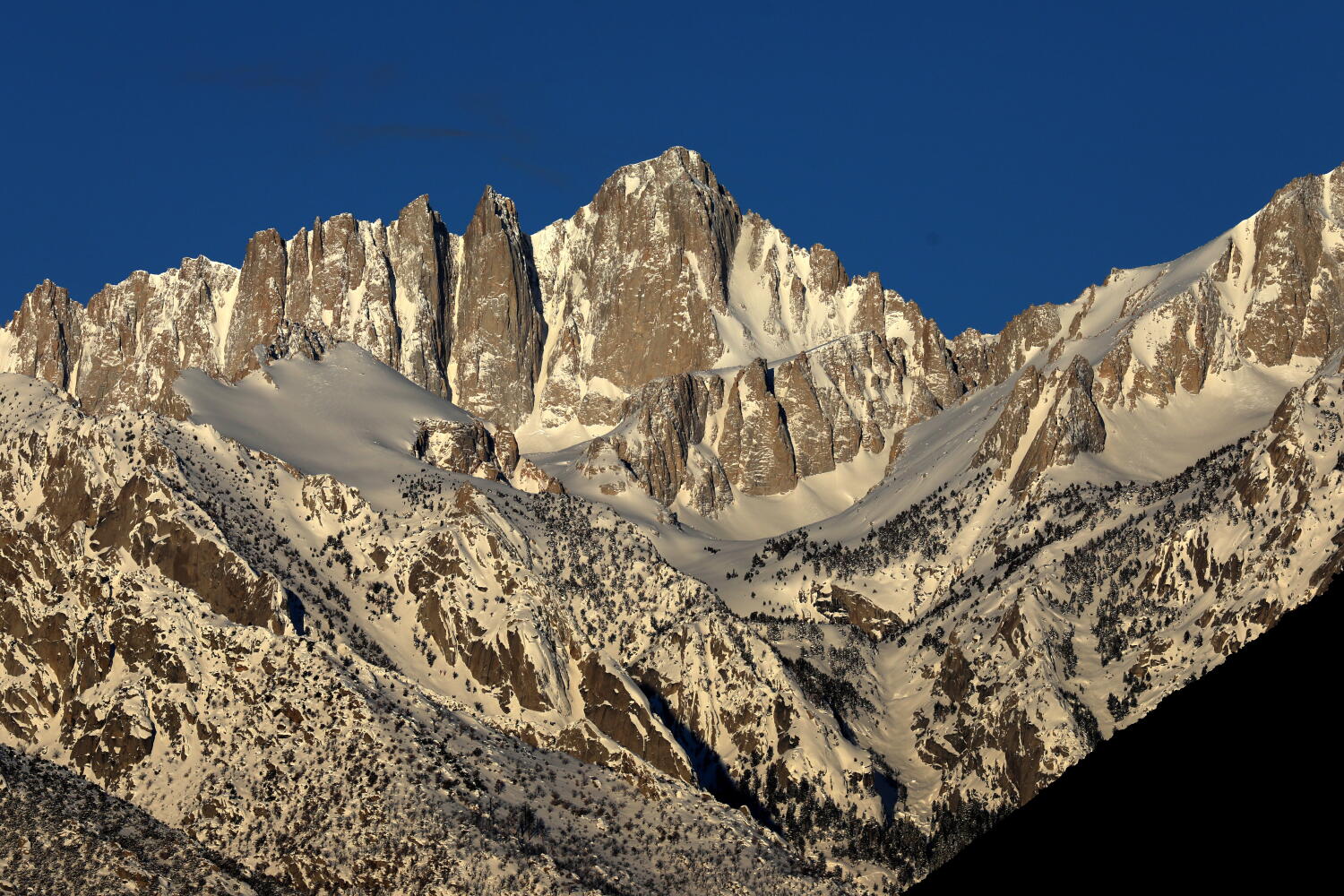
When a missing climber's body is found buried under snow on Mt. Whitney, it's rarely the result of one dramatic mistake. It's usually a quiet, compounding chain of weather shifts, terrain traps, and underestimated Sierra Nevada winter conditions that can catch even experienced mountaineers off guard. At 14,505 feet, the highest peak in the contiguous United States doesn't care how many summer fourteeners you've bagged in Colorado.
I've spent enough time studying Inyo County Search and Rescue (SAR) reports and winter mountaineering incidents in the Eastern Sierra to know that the public narrative almost always misses the real story. Let's look at why climbers go missing on Whitney, how snow burials actually happen, and what the harsh reality of high-altitude recovery tells us about surviving the Sierra.
The Myth of the "Easy" Fourteener
If you only know Mt. Whitney by its reputation, you probably think of it as a long, grueling day hike. Between May and October, thousands of people march up the 22-mile round-trip Main Trail with trekking poles, trail runners, and daypacks. That summer accessibility creates a dangerous psychological blind spot.
Once snow hits the Eastern Sierra—often as early as October and lingering well into June—the Main Trail ceases to exist.
Those famous 97 switchbacks above Trail Camp turn into a steep, icy death slide. In winter and spring conditions, the standard route becomes unusable, forcing climbers onto technical snow and ice routes like the Mountaineer's Route. Suddenly, you aren't hiking. You're front-pointing up 40-to-50-degree couloirs where a single unarrested slip sends you tumbling over granite cliffs into snow-choked gullies.
Honesty matters here. Most people don't realize that Mt. Whitney sits right on the edge of the Great Basin, creating a massive topographic wall that wrings moisture out of Pacific storms. Weather doesn't gradually roll in on Whitney; it slams into the crest, dropping visibility to zero and dumping feet of wind-loaded snow in a matter of hours.
How Climbers End Up Buried in the Snow on Mt. Whitney
When news breaks that a missing climber was found buried in snow on Mt. Whitney, people immediately picture a Hollywood-style wall of white roaring down the mountain. Avalanches do happen in the Whitney zone, especially in the North Fork of Lone Pine Creek and along the steep chutes below the summit ridge.
Yet an avalanche is only one way a body ends up beneath the snowpack.
Wind Loading and Sluff Slides
In the High Sierra, fierce westerly winds strip snow from the upper slopes and deposit it into leeward gullies and chutes. Even on days when the regional avalanche danger is rated low or moderate, localized wind slabs can fracture under the weight of a single climber. A small slide doesn't need to be massive to be fatal. If it knocks you off your feet in steep terrain, the snow carries you into a terrain trap—a narrow gully or rock basin—where the debris piles ten feet deep over you in seconds.
The Post-Storm Burial
Often, a climber isn't buried by moving snow at all. If someone gets disoriented in a whiteout, suffers a fall, or succumbs to hypothermia near the crest or along the Mountaineer's Route, the mountain simply covers them up. High-altitude winds drift snow rapidly over any stationary object. Within a single storm cycle, a bright red hardshell jacket can disappear beneath three feet of wind-packed snow, making visual detection from a helicopter completely impossible.
Cornice Collapses
Along the summit plateau and the ridges flanking the Mountaineer's Route, wind builds massive overhanging lips of snow called cornices. They look like solid ground from above. Step too close to the edge while trying to navigate in flat light, and the shelf breaks off beneath your boots, sending you and tons of heavy snow straight down the vertical east face.
Why Search and Rescue Takes Weeks or Months
You might wonder how a climber can vanish on one of the most famous mountains in North America and not be found until snowmelt or a lucky break by a passing mountaineer. If you've never seen the East Face of Mt. Whitney in winter, it's hard to grasp the sheer scale of the terrain.
Inyo County Search and Rescue is an all-volunteer team, and they are among the best mountain rescuers in the country. Still, they're fighting brutal physics.
- Helicopter Limits: At 14,000 feet, the air is thin. Rescue helicopters from the California Highway Patrol (CHP) or the Naval Air Station Lemoore have strict weight and wind limits at that altitude. If gusts exceed 30 or 40 knots—which is practically a calm Tuesday on Whitney—air support is grounded.
- Avalanche Exposure for Rescuers: SAR teams cannot put twenty volunteers into a steep chute right after a storm when the snowpack is unstable. Sending rescuers into an active slide path just creates more victims.
- The Electronics Problem: Cold kills lithium-ion batteries fast. A climber's phone or GPS beacon might ping once near the summit and die ten minutes later in sub-zero temperatures. Without a RECCO reflector or an active avalanche transceiver (beacon), finding someone under four feet of consolidated spring snow is like looking for a needle in a concrete block.
This is why so many Whitney searches get suspended during the peak of winter, only to resume months later when the Sierra sun finally melts down the snowfields and exposes clues—a trekking pole, a backpack strap, or a glove—that lead teams to the body.
The Silent Killers Altitude and Hypothermia
We love dramatic explanations, so we focus on the snow burial. In reality, snow is often just the final chapter of a physiological breakdown that started hours earlier.
Above 12,000 feet, your brain doesn't work right. Acute Mountain Sickness (AMS) and High Altitude Cerebral Edema (HACE) impair judgment long before you collapse. A climber who is mildly hypoxic will make terrible decisions. They'll push for the summit at 2:00 PM when clouds are already building on the western horizon. They'll forget to eat or drink because the cold numbs their appetite, accelerating exhaustion and hypothermia.
Once hypothermia sets in, fine motor skills vanish. You can't zip your jacket. You can't pull out a map or operate a satellite messenger. You sit down behind a boulder "just to rest for five minutes," and the blowing snow quietly drifts over you.
What Actually Keeps You Alive on Winter Whitney
If you're planning to climb Mt. Whitney when there's snow on the ground, standard hiking gear isn't just inadequate—it's a liability. You need to treat it like a serious alpine mountaineering objective, because that's what it is.
Carry the Holy Trinity of Avalanche Gear
If there is enough snow to slide, you need an avalanche transceiver, a probe, and a metal shovel—and you need to know how to use them in under three minutes. Even if you're climbing solo (which carries massive risk on Whitney in winter), wearing a beacon and a RECCO reflector gives SAR teams a fighting chance to locate you before spring.
Master Self-Arrest Before You Need It
Carrying an ice axe strapped to your pack is useless. If you're on steep snow, the axe belongs in your uphill hand, and you should have practiced self-arresting on safe slopes until the motion is pure muscle memory. Once you hit 30 miles per hour on icy Sierra snow, an ice axe won't stop you; it'll just get ripped out of your hands.
Set a Hard Turnaround Time
This is the simplest rule in mountaineering and the one most frequently ignored. Pick a non-negotiable turnaround time—usually no later than noon—and stick to it even if the summit is 200 vertical feet away. The mountain will be there next year.
Check the Eastern Sierra Avalanche Center (ESAC)
Never rely on a standard weather app for Mt. Whitney. Before leaving Lone Pine, read the Eastern Sierra Avalanche Center forecast and check the National Weather Service point forecast for 14,000 feet. Pay close attention to wind direction and speed, not just precipitation. Wind moves snow, and moved snow kills climbers.
Respecting the Crest
News of a climber found buried in the snow on Mt. Whitney is always a sobering gut-punch to the outdoor community. Behind every headline is a family that waited through agonizing weeks of uncertainty and a volunteer rescue team that risked their own lives in unforgiving terrain to bring someone home.
Whitney isn't malicious, and it isn't unconquerable. It's simply a massive, exposed granite peak that demands total honesty about your skills, your gear, and your willingness to walk away when the weather turns. Before your next trip into the High Sierra, audit your pack, check the snowpack data, and make sure someone back home has your exact route itinerary and check-in times.