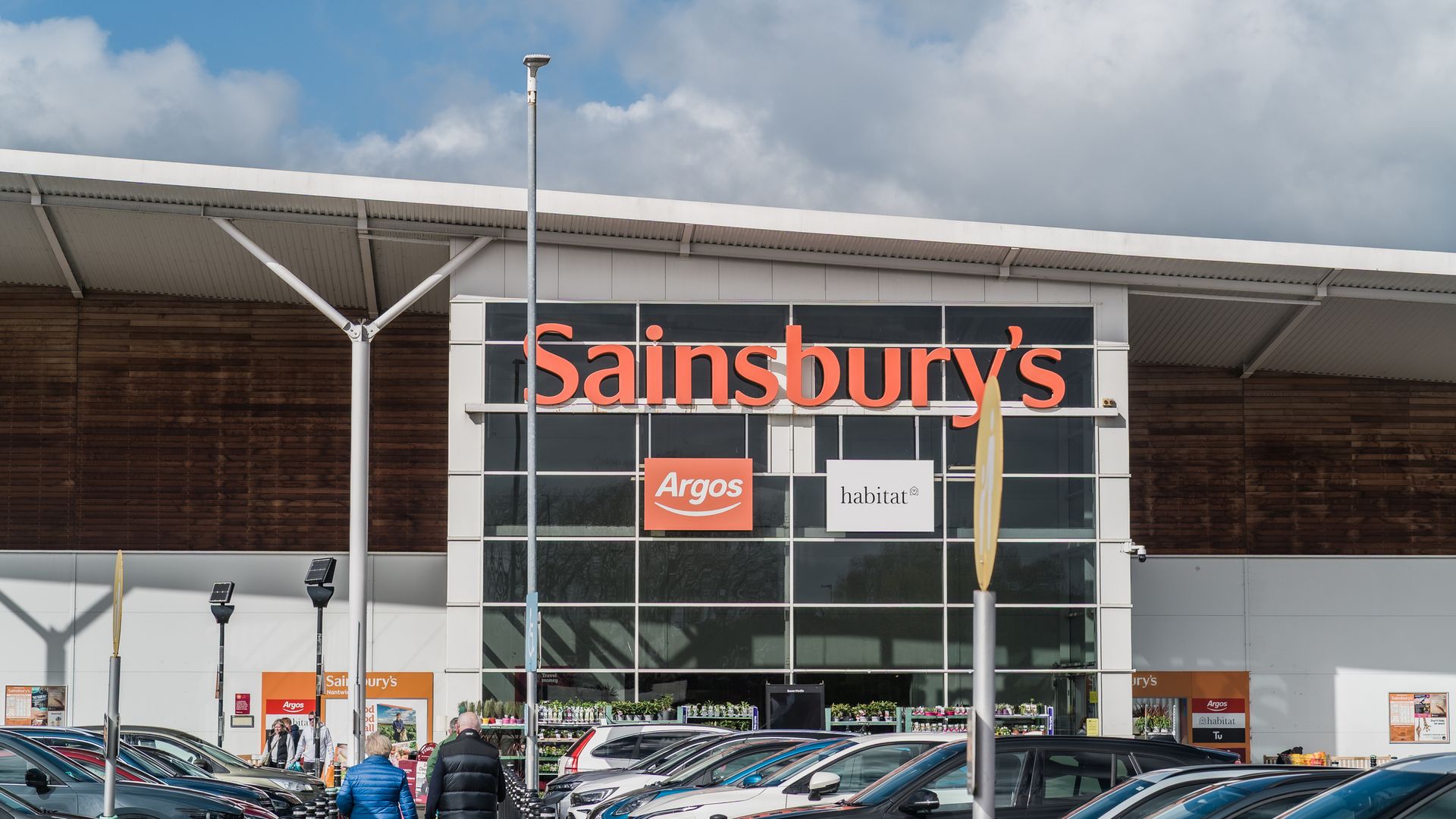
The City of London loves a tidy narrative. When news broke that former Tesco executive Steve Wheway was in talks to become the next chair of J Sainsbury plc, the financial press practically wrote the press release for them. Safe pair of hands. Deep sector pedigree. Understands the trenches of British grocery.
That narrative is dangerously lazy. You might also find this related story insightful: Why Calling the APEC Summit All Gloss and No Progress Misses the Real Power Play.
Bringing in a veteran from the golden era of traditional supermarket dominance to oversee Sainsbury’s is not a stroke of governance genius. It is an admission of strategic exhaustion. While analysts applaud the comfort of institutional familiarity, they are ignoring the glaring reality of UK retail. The playbook that built Tesco into a juggernaut in the 2000s—and the boardroom instincts forged during that era—are actively poisonous to a modern grocer fighting an existential war on two fronts.
If Sainsbury’s wants to survive the next decade without becoming a permanent margin donor to Aldi, Lidl, and Amazon, it does not need another career grocer at the head of the table. It needs an outsider who refuses to accept the industry’s broken math. As highlighted in latest reports by Bloomberg, the implications are significant.
The Myth of the Safe Pair of Hands
Corporate boards suffer from a chronic addiction to pattern matching. When a chair steps down—in this case, Martin Scicluna, whose tenure oversaw the failed Asda merger and a subsequent pivot back to a "food first" strategy—nomination committees panic. They reach for resumes that look like the job description from twenty years ago.
Steve Wheway’s credentials look impressive on paper. He spent years at Tesco during its aggressive expansion phase under Terry Leahy, before moving on to executive roles at Boots and non-executive chairmanships at companies like Centrica and Scottish Widows. He knows how FTSE 100 boards operate. He knows how to manage institutional shareholders when profit warnings loom.
Here is what the consensus misses. Pedigree in legacy retail is often a liability disguised as an asset.
Executives trained inside the Big Four during their peak market share years internalized a specific set of assumptions about pricing power, supplier squeezing, and real estate scale. Those assumptions are dead. Today, UK grocery is a zero-sum trench war where net profit margins hover around a miserable 2 to 3 percent. When you appoint a chair whose foundational retail instincts were shaped before the German discounters permanently rewired British consumer psychology, you risk institutionalizing nostalgia.
I have sat in boardrooms where legacy retail veterans spent three hours debating promotional end-cap compliance while losing four percentage points of market share to a competitor with a fraction of their SKU count. Experience in an old model does not translate to mastery of a new one. Often, it just makes the boardroom slower to recognize when the floor has collapsed beneath them.
Understanding What a Chair Actually Does
Most business commentary treats the chair of a public company like a co-CEO. That is a fundamental misunderstanding of UK corporate governance.
Under the UK Corporate Governance Code, the division of responsibilities is explicit. The chief executive—currently Simon Roberts at Sainsbury’s—runs the business. The chair runs the board. The chair sets the agenda, controls the flow of information, manages the relationship with major shareholders, and, most critically, decides when the CEO’s strategy has run out of road.
When you install a chair from the exact same industry ecosystem as the CEO, you collapse the creative tension that makes a board effective.
Consider the dynamic inside the Sainsbury’s boardroom:
- Shared Blind Spots: A former Tesco executive and a career Sainsbury’s CEO speak the exact same dialect of retail jargon. They validate each other’s assumptions about supply chain costs, loyalty card economics, and property valuations. Nobody asks the naive, devastating question that only an outsider would dare to voice.
- The Clubbiness Problem: The upper echelon of British retail is remarkably small. Everyone knows everyone. Everyone served on the same trade bodies or fought the same regulatory battles. Polite consensus replaces ruthless challenge.
- Risk Aversion: A chair with a reputational stake in the grocery sector rarely champions radical structural surgery—like spinning off Argos or radically shrinking the hypermarket footprint—because doing so looks like an indictment of the very business model they spent their career championing.
A great chair does not need to know how to negotiate a rebate with Unilever. The CEO and the commercial director already know how to do that. The chair needs to know how to allocate capital across entirely different business models, how to ruthlessly prune low-return divisions, and how to read macroeconomic shifts that the operational team is too busy to notice.
The Structural Trap Sainsbury's Refuses to Escape
To understand why a conventional grocery appointment is the wrong move, look at the actual anatomy of Sainsbury’s balance sheet. It is not a pure-play grocer. It is an awkward conglomerate wearing a supermarket uniform.
Sainsbury’s carries three distinct, often conflicting operational burdens:
- The Core Food Business: Competing directly against Tesco’s sheer scale on one side and Aldi and Lidl’s stripped-back cost structures on the other.
- Argos: A general merchandise retailer acquired in 2016 for £1.4 billion that exposes the group to discretionary consumer spending cycles, brutal electronics margins, and relentless competition from Amazon.
- Sainsbury's Bank: A financial services arm that spent years tying up regulatory capital for meager returns before the company finally began unwinding its core banking operations to focus on retail.
Simon Roberts deserves genuine credit for stabilizing the core food business since taking over in 2020. By pouring cost savings into matching Aldi prices on staple goods and leaning heavily into Nectar Prices, Sainsbury’s clawed back market share and silenced critics who predicted a slow slide into irrelevance.
But stabilization is not a growth thesis.
Sainsbury’s is trapped in the squeezed middle of British retail. It lacks Tesco’s unmatched buying power, which sits comfortably above 27 percent of the UK grocery market. At the same time, it carries legacy store leases, complex supply chains, and unionized labor costs that make it structurally impossible to match the operating expense ratios of Aldi or Lidl.
A chair raised in the Tesco school of thought looks at that problem and sees an execution challenge. They think the answer is sharper promotional mechanics, tighter working capital management, and incremental efficiency gains.
An outsider—someone from private equity, high-margin tech infrastructure, or global logistics—looks at that exact same problem and sees a capital allocation crisis. They ask why a company trading at a modest earnings multiple is still tying up billions in general merchandise inventory through Argos instead of returning cash to shareholders or funding automated micro-fulfillment centers.
Dismantling the Common Defenses
Whenever you challenge a blue-chip board appointment, the same three defenses emerge from institutional investors and financial commentators. Every single one collapses under scrutiny.
Defense 1: "He knows how to beat the discounters."
No, he knows how Tesco reacted to the discounters. Those are two entirely different things. Tesco’s counter-offensive relied on leveraging its massive market share to force suppliers into funding price cuts, backed by a balance sheet big enough to absorb short-term margin compression. Sainsbury’s sits roughly ten percentage points behind Tesco in market share. Trying to run Tesco’s playbook with Sainsbury’s scale is like bringing a knife to an artillery duel. You bleed cash while achieving half the price perception impact.
Defense 2: "His utility and financial services chairmanships bring broader perspective."
Serving as chair of Centrica—a regulated energy supplier mired in political scrutiny and commodity volatility—and Scottish Widows teaches you how to survive parliamentary select committees and manage pension liabilities. It does not teach you how to disrupt a low-margin consumer business facing deflationary pressure from nimble digital rivals. Regulatory survival skills are not the same as commercial offense.
Defense 3: "Continuity calms the markets."
Markets love continuity right up until the moment continuity produces three straight years of flat share price performance. Institutional investors in London are notorious for demanding safety, then quietly dumping the stock when safe leadership fails to generate alpha. True shareholder value in mature retail comes from bold portfolio restructuring, not steady stewardship.
What Boards Actually Need in Low-Margin Industries
I have watched dozens of legacy enterprises try to hire their way out of structural decline by recruiting stars from their biggest rival. It almost never works. When Blockbuster needed to reinvent itself, it did not need a sharper video store executive. When traditional media conglomerates faced streaming, hiring a veteran cable network boss only delayed the inevitable write-downs.
Imagine a scenario where Sainsbury’s bypassed the usual London headhunter shortlist entirely. Instead of calling a former Tesco director, imagine the nomination committee approached a battle-hardened executive from a brutally efficient global logistics operator, a subscription-based digital platform, or an activist turnaround fund.
Here is what changes in that boardroom on day one:
- Nectar Stops Being a Discount Card: Under traditional grocery leadership, loyalty schemes are treated as glorified coupon engines to defend market share. An outsider with platform experience sees Nectar for what it actually should be—a high-margin retail media and consumer data business capable of generating software-like profits that subsidize low food margins.
- Real Estate Gets Treated as a Financial Asset: Legacy grocers fall in love with their physical stores. A capital-markets-focused chair views every square foot of hypermarket space through the lens of return on invested capital, aggressively monetizing underperforming sites or converting them into dark stores without emotional attachment.
- The CEO Faces Real Intellectual Friction: Simon Roberts is an exceptional retail operator. Pairing an elite operator with a chair who thinks like a ruthless capital allocator creates the exact yin-and-yang dynamic that turns good FTSE 100 companies into compounders. Pairing an operator with another operator just creates an echo chamber.
The Real Risk Nobody Is Pricing In
The biggest danger of hiring a former Tesco heavyweight is not catastrophic failure. Sainsbury’s will not go bust under Steve Wheway. The stores will stay clean, the supply chain will run on time, and the annual report will hit every corporate governance tick-box required by institutional proxy advisors.
The real danger is polite mediocrity.
In modern retail, polite mediocrity is a slow death sentence. While Sainsbury’s celebrates holding its market share steady at around 15 percent, Amazon continues quietly wiring grocery delivery into Prime memberships, Lidl keeps opening dozens of new stores every year with ruthlessly simple supply chains, and Tesco uses its scale advantage to outspend everyone on retail media and automation.
There is, of course, an honest counterpoint to my skepticism. If Sainsbury’s were facing an immediate operational meltdown—empty shelves, broken logistics, collapsing cash flow—hiring a steady veteran with deep industry muscle memory would be the exact right call. Crisis management rewards familiarity.
Sainsbury’s is not in an operational crisis. It is in a strategic plateau. And you do not climb off a plateau by hiring someone who spent their career mastering the flatlands.
Boards are paid to look around corners, not stare into the rearview mirror. By reaching back into the Tesco alumni network, Sainsbury’s is signaling to the market that it wants to play the old game slightly better rather than change the rules entirely. In a sector where the rules are being rewritten every quarter, that is the riskiest bet on the table.