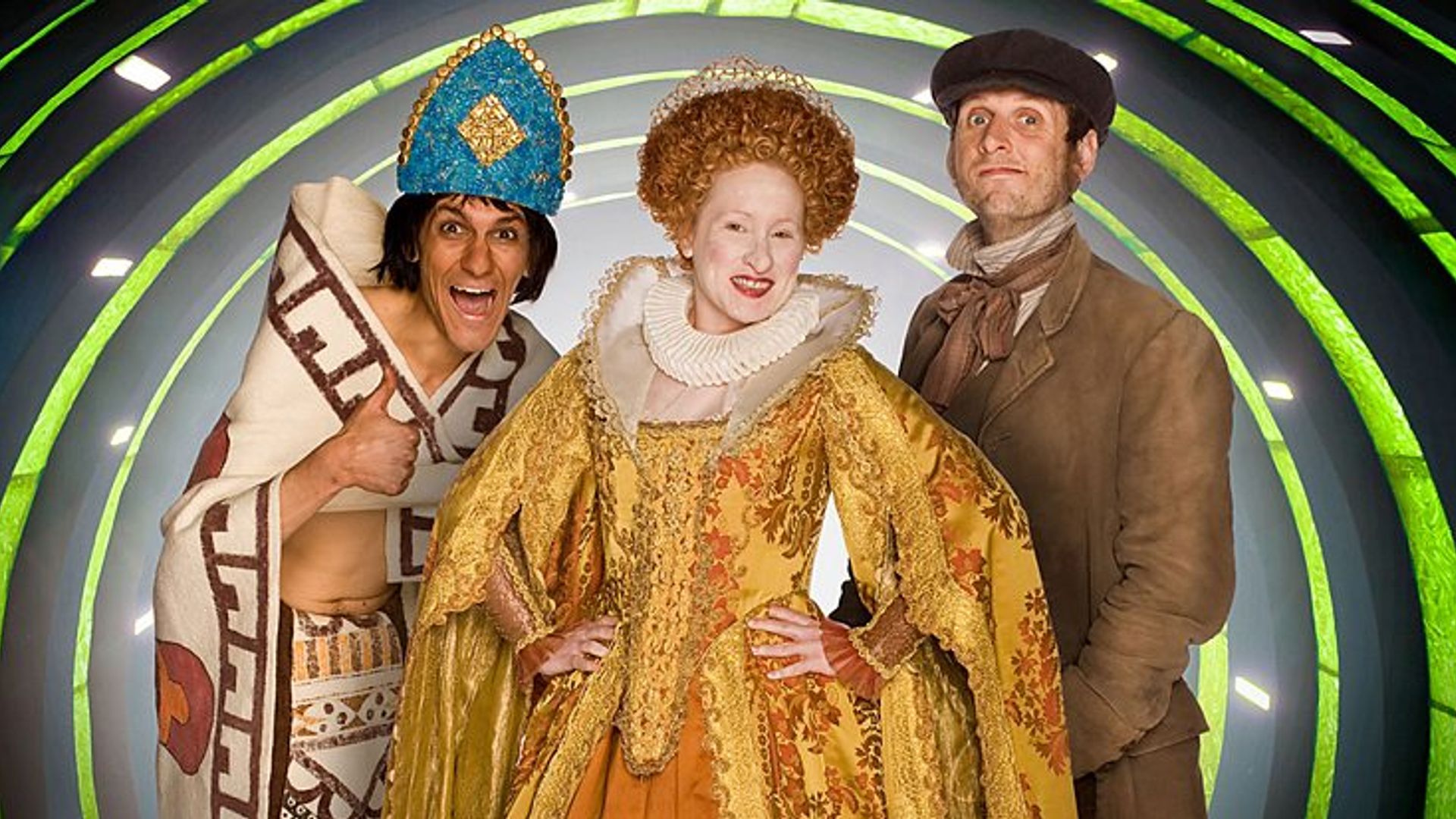
Picture a classroom where history is not a dusty monument behind velvet ropes, but a pie to the face, a catchy pop parody about Tudor hygiene, and a gleeful reminder that our ancestors were profoundly, wonderfully ridiculous. For over a decade, Horrible Histories achieved the impossible. It made children care about the past by refusing to sanitize it. It showed the boils, the bloodletting, the terrible dental hygiene, and the sheer absurdity of human survival through the ages.
Then, the scissors came out.
Behind the scenes of modern broadcasting, a quiet reckoning has been taking place. Editorial guidelines, designed to protect tender sensibilities, began to turn a critical eye toward sketch comedy that had once been celebrated for its anarchic educational zeal. Certain scenes quietly vanished from streaming platforms and broadcast schedules. Not because the facts were wrong, but because the framing, the tone, or the visceral shock value rubbed contemporary standards the wrong way.
This is not merely a story about a children's television show trimming its runtime or tidying up its archive. It is a collision between two irreconcilable impulses in modern culture: our desire to protect the vulnerable and our desperate need to understand who we actually are.
The Anatomy of an Uncomfortable Past
History is messy. It smells of unwashed wool, turnip stew, and open sewers. When television attempts to translate centuries of plague, execution, and royal dysfunction for a Saturday morning audience, it walks a razor-thin tightrope.
Consider how children learn. They do not digest dry chronologies of kings and parliament. They latch onto the grotesque, the bizarre, and the shockingly unfair. When a sketch portrays a Georgian dentist pulling a tooth with pliers while the patient screams, it is crude, yes. But it is also unforgettable. It anchors a truth in the mind: life used to hurt, deeply.
When broadcasters apply modern editorial filters to vintage comedy sketches, they often target the very elements that made the medicine go down. Satire is inherently abrasive. Mocking historical figures, poking fun at archaic religious practices, or dramatizing the gruesome realities of medieval warfare leaves bruises. Yet, those bruises are precisely what distinguish a living narrative from a fairy tale.
To understand why certain scenes were excised, we have to look at the shifting baseline of what constitutes appropriate children's entertainment. Producers operate under an ever-tightening umbrella of risk aversion. A gag about cannibalism during a siege, a song mocking a historical monarch's syphilis, or a parody that skirts too close to cultural mockery can trigger viewer complaints, regulatory scrutiny, and social media storms.
The easiest path through this minefield is deletion.
The Cost of Sanitizing the Ancestors
When you remove the grit from history, you do not make it safer. You make it a lie.
Imagine telling the story of the Industrial Revolution without mentioning child labor, or teaching the Roman Empire without acknowledging slavery because it feels too heavy for young viewers. You wind up with a cardboard-cutout past where everyone wore funny hats and smiled politely while building aqueducts.
The genius of original Horrible Histories sketches was their egalitarian cynicism. No one was spared. Romans, Greeks, Stuarts, and Victorians were all treated with the same irreverent disrespect. The show operated on a brilliant pedagogical principle: if you can laugh at a Roman general crying over his upset stomach, you realize that history is made of people just like you. Flawed, fragile, and temporary.
When scissors are applied to these moments due to modern editorial guidelines, a subtle message is transmitted to the viewer. The message is that the past should be clean. It suggests that suffering, ignorance, and cruelty can be edited out of existence if we just look away or change the channel.
That is not protection. That is amnesia.
The Invisible Stakes of Laughter
Laughter is a tool for processing terror. For centuries, humans have used gallows humor to stare down plague, war, and political oppression. By sanitizing children's media of its darker comedic edges, we inadvertently strip away one of the healthiest coping mechanisms we possess: the ability to mock our own historical atrocities.
Think about the sketches that usually find themselves on the chopping block. They are rarely the dry factual segments about crop rotation. They are the songs about death tolls, the skits involving bodily fluids, the irreverent takes on executioners. They are the things that make a nine-year-old squirm and yell, "Gross!" before running to tell their parents about the Black Death.
That squirm is where learning happens. It is the friction of a young mind realizing that the world was not always as comfortable, polite, or enlightened as the one in their suburban bedroom.
When those moments are quietly excised to comply with compliance checklists, we risk raising a generation that expects history to conform to modern comfort standards. We foster a fragile relationship with the truth, where anything that offends our current aesthetic or emotional sensibilities is swept under the rug.
Living in the Aftermath of the Cut
I remember watching similar sketch shows growing up—programs that didn't talk down to their audience, that trusted children to handle the macabre alongside the miraculous. There was a profound respect in that condescension-free zone. It said: You are smart enough to know that the world used to be a terrifying place, and you are resilient enough to laugh about it.
Today's media landscape is different. Algorithms flag potential triggers before human editors even review the footage. Compliance departments function like anxious parents, wrapping every historical corner in foam padding.
Yet, the irony remains: the real history books are far more brutal than any sketch show ever dared to be. No broadcast guideline can alter the fact that people died of scurvy, fought pointless wars over spices, and believed that leeches could cure a fever.
When we pretend otherwise for the sake of broadcast convenience, we do not protect children. We simply deprive them of the context they need to understand their own moment in time.
The deleted scenes are gone, buried in vault archives and forgotten digital edits. But the question they leave behind is much larger than a children's television show. It asks whether we are brave enough to look at our own story without an eraser in our hands.
History is a mirror, not a postcard. If we smudge the glass until all the ugly parts disappear, we are left looking at nothing at all.