The media is currently tripping over itself to mock Hollywood.
The narrative writes itself: a bunch of ultra-liberal studio executives and wealthy prop masters are lobbying against California’s latest gun control measure. Specifically, Assembly Bill 1089, which aims to restrict the sale and possession of CNC milling machines and 3D printers used to manufacture firearms without serial numbers. The mainstream press calls it hypocrisy. They point at the entertainment industry’s public stance on gun safety and contrast it with their desperate backroom dealings to preserve 3D printers on studio lots. You might also find this connected article insightful: Ewan Mitchell Did Not Make Aemond Targaryen Human He Made Him an Architectural Feat.
They are missing the entire point.
This isn't a story about Hollywood hypocrisy. It is a story about regulatory incompetence. California lawmakers, in their zeal to curb the rise of untraceable firearms, are attempting to regulate basic manufacturing software and consumer-grade hardware. In doing so, they are threatening to dismantle the digital fabrication workflows that keep the physical effects industry alive. As highlighted in recent articles by Variety, the effects are widespread.
Hollywood isn’t fighting for the right to build untraceable weapons. They are fighting to protect the fundamental technology of modern prop and set design from a bill drafted by people who don't understand how a file downloads.
The Blind Spot in Assembly Bill 1089
To understand why the industry is pushing back, you have to look at how poorly these statutes are constructed. The legislation targets "three-dimensional printers" and "computer numerical control milling machines" that are marketed or designed to manufacture firearms.
On paper, that sounds targeted. In reality, it is a logistical nightmare.
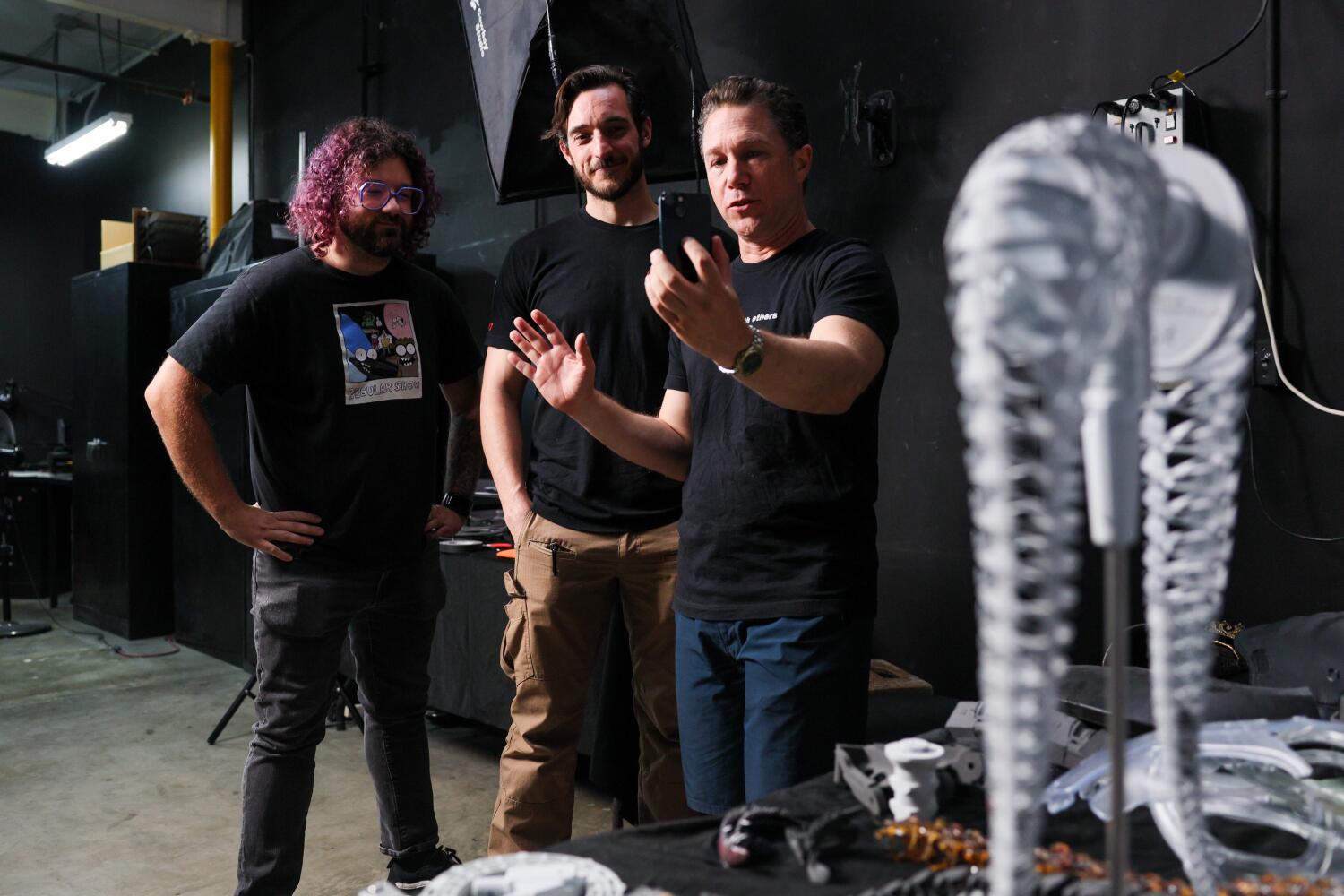
I have spent years consulting with fabrication houses that build everything from sci-fi armor to hyper-realistic historical replicas. The machinery used to carve a futuristic rifle out of high-density foam or print a breakdown prop is exactly the same machinery used by hobbyists to make functional receivers. A CNC mill does not know what it is cutting. A 3D printer does not know what it is extruding. It only executes G-code.
By imposing strict liability and heavily regulated permit requirements on the possession of these digital fabrication tools, the state is effectively treating an Ultimaker or a Haas mill like a controlled substance.
If a prop house in Burbank wants to rapidly prototype a fantasy sword for a streaming series, they rely on open-source slicing software and standard stereolithography. Under the broad strokes of poorly drafted legislation, merely possessing software capable of modifying digital files that could be adapted into firearms components exposes these businesses to massive legal liability.
The Myth of the Controlled File
The lazy consensus among gun-control advocates is that you can stop digital manufacturing at the border of a state. It is a fundamental misunderstanding of the internet.
Imagine a scenario where a state attempts to ban the distribution of a specific text file. We already know how that ends. The cryptographic community proved in the 1990s that code is speech. When the US government tried to classify encryption software as a munition under ITAR regulations, developers printed the source code on t-shirts and dared the state to arrest them.
Trying to regulate 3D printing blueprints or the machines that read them is the modern equivalent of that failed crusade.
If California restricts the sale of CNC milling machines capable of cutting metal within certain tolerances, they do not stop criminals from acquiring them. They merely create a massive compliance burden for legitimate businesses. A criminal looking to build an unserialized firearm will buy a machine in Nevada, drive it across the border, and run it in a basement. Meanwhile, a legitimate visual effects studio faces an administrative wall of paperwork, background checks for equipment operators, and potential asset forfeiture if an employee downloads the wrong CAD file on a company network.
The Massive Downside of Hollywood's Stance
Let’s be brutally honest here: Hollywood brought this on itself.
For decades, the entertainment industry has weaponized its cultural influence to push for stringent regulatory frameworks on various industries while assuming its own exemption clauses would always be grandfathered in. The industry relies on specialized "theatrical exemptions" for fully automatic weapons, short-barreled shotguns, and destructive devices.
But as the line between a weapon and a digital asset blurs, those traditional exemptions are failing.
The downside of the industry's current defensive lobbying strategy is that it looks terrible. It alienates the very political base the studios court. When the Motion Picture Association asks for a carve-out so a major studio can possess manufacturing equipment that a private citizen in Oakland is banned from owning, it destroys the credibility of the legislative process. It creates a multi-tiered legal system where corporate copyright holders enjoy manufacturing freedoms denied to the public.
Yet, from a purely operational standpoint, they have no choice. Without these tools, physical production in California grinds to a halt.
The Failure of the Premise
Look at the questions routinely asked by policy analysts:
- How do we regulate the distribution of 3D-printed gun files?
- Can we force printer manufacturers to install digital rights management (DRM) to block firearm components?
These questions are fundamentally flawed. They assume that a digital file can be accurately categorized by an automated system before it is executed.
If you mandate that a 3D printer must scan a file for known firearm geometries before printing, you create a system that is incredibly easy to bypass. A user can simply split a component into three separate files, print them individually, and friction-weld them together later. The printer's firmware would see nothing but generic geometric shapes.
The only thing a DRM mandate accomplishes is adding thousands of dollars in licensing fees to consumer hardware and causing false positives for legitimate designers. Imagine a prop designer trying to print a custom camera rig or a steadicam mount, only for the printer to lock up because the algorithm flagged a hollow tube as a potential gun barrel.
The Reality of Manufacturing
The obsession with restricting the hardware ignores a basic truth known to anyone who has ever worked in a machine shop: you cannot regulate a file format.
The tools used to create high-end cinema props are identical to the tools used in aerospace, automotive prototyping, and medical device manufacturing. When you pass a law that vaguely defines "dangerous manufacturing technology," you do not make streets safer. You make local manufacturing uncompetitive. You force prop houses to move their fabrication departments to Atlanta, Vancouver, or London, where they can innovate without a compliance lawyer staring over their shoulder.
California’s approach is a textbook example of passing a law to look like you are solving a problem, regardless of whether the mechanics of the law are enforceable. It targets the machine instead of the behavior, assuming that if you make the tool illegal, the intent disappears.
Stop trying to fix the ghost gun issue by regulating the tools of the third industrial revolution. It is an unenforceable, technologically illiterate strategy that protects absolutely no one, while systematically crippling the creative industries that drive the local economy.
The physical world is now digital. You cannot pass a law to undo the invention of the desktop factory.