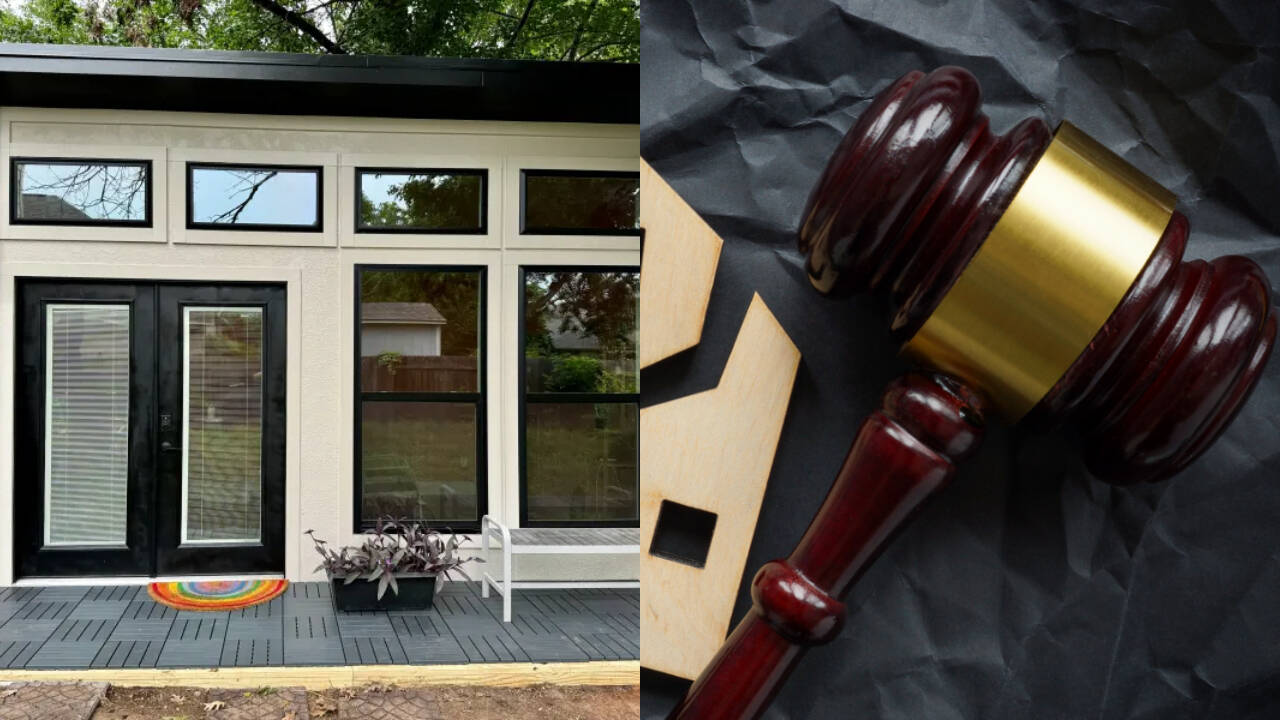
Most homeowners think an HOA board holds absolute power over every square inch of their property. They don't. A recent court victory in Texas proves that when a homeowners association oversteps its actual governing documents, that overreach can cost them $100,000 in legal fees.
If you've ever dealt with a neighborhood architectural committee, you know the drill. You want to put a prefabricated shed, a studio, or a backyard office on your own lot. You submit the paperwork, wait weeks, and get hit with a vague denial citing "neighborhood aesthetics" or "unapproved structures." Most people just give up and eat the cost. One Texas homeowner refused to fold, took her HOA to court over her backyard office, and walked away with a massive six-figure legal-fee award that puts every overzealous board on notice. Don't forget to check out our earlier coverage on this related article.
Why HOA Boards Lose When They Invent Rules
Homeowners associations derive their authority from a single place: the Declaration of Covenants, Conditions, and Restrictions (CC&Rs). Think of CC&Rs as a strict contract between you and the association. If a restriction isn't explicitly written in that recorded document, the board doesn't get to make it up on a Tuesday night because a board member dislikes how your backyard looks.
In disputes over backyard offices and accessory structures, boards routinely trip over three specific legal hurdles: If you want more about the context of this, TIME provides an excellent breakdown.
- Vague architectural standards. Many older CC&Rs mention "residential structures" or "outbuildings" without defining what a modern modular office actually is. Under well-established property law principles in states like Texas, ambiguous restrictive covenants are construed in favor of the free use of land—meaning the homeowner wins the tie.
- Arbitrary and capricious enforcement. If three neighbors on your street already have storage sheds, playhouses, or detached studios visible over the fence line, an HOA cannot suddenly single out your backyard office. Selective enforcement destroys a board's credibility in front of a judge.
- Ignoring statutory deadlines. Texas Property Code Chapter 209 and related architectural review statutes place strict procedural guardrails on how associations process denials, conduct hearings, and levy fines. When boards skip steps or refuse reasonable compromise, they hand opposing counsel ammunition.
Honestly, HOA boards bank on the fact that litigation is expensive. They assume you won't spend $40,000 or $50,000 fighting over a $15,000 backyard pod. That's a dangerous bet in states with fee-shifting statutes.