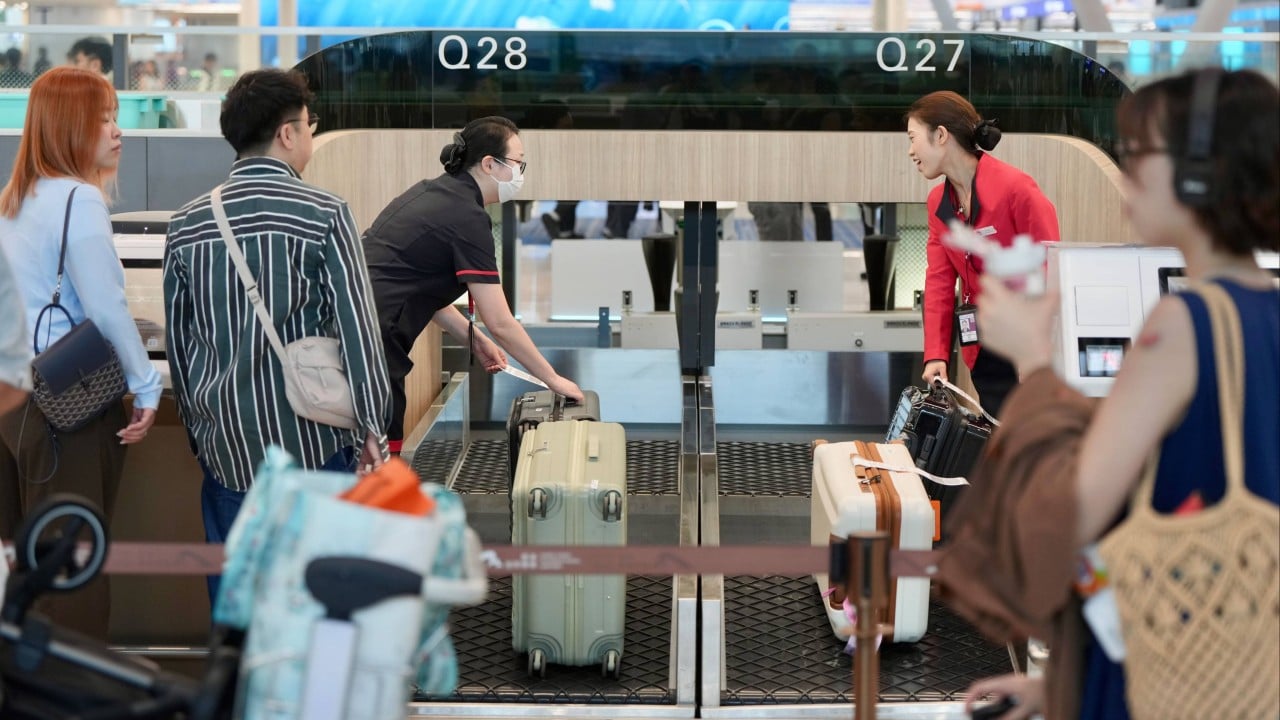
Every few months, a predictable press release lands on aviation desks across Asia. Labor unions in Hong Kong warn that low pay, chronic fatigue, and severe staff shortages are pushing the city’s status as a premier international aviation hub to the brink of collapse. Legacy outlets copy-paste the quotes. Industry observers nod along. Everyone agrees that throwing more money at ground handlers, cabin crew, and pilots will magically restore Chek Lap Kok to its pre-2020 glory.
That consensus is lazy, economically illiterate, and actively dangerous to the survival of Hong Kong’s aviation sector.
The unions are diagnosing a real symptom—operational strain—and prescribing a poison pill. If Hong Kong’s airlines and airport authorities simply capitulate to across-the-board wage hikes without restructuring how they move metal and baggage, they will price themselves out of the regional market entirely. The real threat to Hong Kong’s hub status isn't a shortage of warm bodies willing to work the tarmac for current wages. It is an obsession with an obsolete, labor-heavy operating model in a region where neighboring hubs are automating faster, pricing cheaper, and capturing connecting traffic without begging for headcount.
The Myth of the Underpaid Hub
Let’s look at the unit economics of an airline hub. When an aviation union argues that low pay is driving away talent, they treat labor costs as an isolated variable. They ignore the brutal reality of Cost per Available Seat Kilometer (CASK)—the fundamental metric that determines whether a carrier lives or dies.
I have sat in boardrooms where carriers tried to buy their way out of operational bottlenecks by inflating base salaries by 20% across the board. Within eighteen months, those same carriers were slashing routes because their ticket prices were no longer competitive against rival transit hubs. Passengers booking a flight from London to Sydney do not care about the collective bargaining agreements at their layover airport. They care about total transit time, schedule reliability, and the price on their screen.
Hong Kong already operates with one of the highest cost bases in Asia. Commercial real estate, housing, and basic living expenses mean that a "living wage" in Hong Kong is vastly higher than in Bangkok, Kuala Lumpur, or Guangzhou. Trying to solve a headcount deficit purely through wage inflation creates a vicious cycle:
- Higher wages drive up airport landing fees and ground handling charges.
- Airlines pass those costs onto transit passengers via higher fares.
- Price-sensitive connecting traffic shifts to Singapore Changi, Seoul Incheon, or the expanding megahubs in the Greater Bay Area.
- Lower passenger volume reduces airline revenue, leaving less capital to pay the inflated wage bill.
When unions frame the crisis solely around paychecks, they are asking the industry to commit slow-motion financial suicide to preserve headcount ratios designed for the 1990s.
What Everyone Gets Wrong About Aviation Fatigue
Fatigue in aviation is not a joke. In flight operations and aircraft maintenance, exhaustion kills people. The regulatory frameworks set by the International Civil Aviation Organization (ICAO) and local civil aviation departments exist for a reason. When unions point to rosters pushed to the absolute legal limit, they are highlighting a genuine operational hazard.
Where the mainstream narrative fails is assuming that the only cure for roster fatigue is hiring thousands of additional staff at higher pay grades.
Fatigue is rarely just a function of total hours worked; it is primarily a function of roster volatility and manual friction. When a hub relies on manual baggage reconciliation, paper-heavy maintenance sign-offs, and legacy crew-scheduling software, every minor weather delay cascades into a twelve-hour rostering nightmare. Crews spend hours sitting in terminal lounges waiting for delayed inbound aircraft or stuck in inefficient turnaround loops.
Imagine a scenario where an airport cuts aircraft turnaround times by fifteen minutes—not by forcing ramp agents to run faster, but by deploying automated guided vehicles (AGVs) for baggage transport and predictive AI for gate allocation. Suddenly, the exact same number of human workers handles the exact same flight schedule with less overtime, fewer disrupted rest periods, and zero drop in safety margins.
The union playbook refuses to acknowledge this. Protecting headcount requires defending manual processes. By fighting automation and demanding more human bodies for low-margin tasks, labor groups inadvertently lock their own members into the very high-stress, physically grueling shifts they claim to oppose.
The Elephant in the Pearl River Delta
If you want to understand why Hong Kong’s aviation hub status is actually under threat, stop looking at union picket lines and start looking forty kilometers north.
The Greater Bay Area (GBA) is no longer a theoretical infrastructure project. Shenzhen Bao'an International Airport and Guangzhou Baiyun International Airport have spent the last decade pouring concrete and deploying capital on a scale that makes Western aviation executives weep. Between them, they possess massive domestic feeder networks that Hong Kong—hemmed in by border controls and immigration bottlenecks—simply cannot match on its own.
For decades, Hong Kong International Airport (HKIA) survived on a simple monopoly: it was the undisputed international gateway to southern China. Foreign carriers flew into Hong Kong because direct access to mainland cities was restricted, cumbersome, or commercially unviable.
That moat has evaporated.
Today, mainland carriers fly direct from Shenzhen and Guangzhou to Europe, North America, and Australasia using modern, fuel-efficient widebodies like the Airbus A350 and Boeing 787. Meanwhile, Singapore Changi has solidified its stranglehold on Southeast Asian and Kangaroo Route transit traffic by offering a passenger experience that feels effortless, backed by aggressive state-sponsored infrastructure investment.
Hong Kong’s aviation sector is caught in a pincer movement. To the north, competitors enjoy massive scale and lower domestic labor costs. To the south, Singapore executes with ruthless operational efficiency. In this environment, debating whether Hong Kong’s ground staff need a 15% raise to attract applicants is like arguing about the price of coal while your competitors are building nuclear reactors.
Dismantling the "Staff Shortage" Illusion
Whenever an industry cries "staff shortage," translate that phrase immediately into what it actually means: a shortage of people willing to do a specific job under outdated working conditions at a price the business model can afford.
Hong Kong suffers from a structural demographic contraction. Its working-age population is shrinking, and younger generations entering the workforce have zero interest in standing on a tarmac in 35-degree heat with 90% humidity loading suitcases for stagnant wages. You cannot fix a demographic cliff with a recruiting poster.
Yet, the Airport Authority Hong Kong (AAHK) and major local carriers spent years clinging to traditional hiring pipelines before finally turning to imported labor schemes—a move fiercely resisted by local unions who claimed it would depress wages.
Let’s be brutally honest about the trade-offs here. Importing labor is a temporary bridge, not a permanent foundation. Relying on imported workers solves immediate ramp and catering bottlenecks, sure, but it introduces training friction, language barriers in safety-critical environments, and political blowback. More importantly, it delays the inevitable reckoning: Hong Kong cannot remain a labor-intensive hub.
Look at the numbers from Changi Airport Group or Amsterdam Schiphol. The most resilient hubs in the world are aggressively decoupling passenger growth from headcount growth. They are investing in:
- Biometric, touchless passenger processing from curb to gate, eliminating the need for armies of document checkers.
- Autonomous baggage tractors and robotic sorting systems that operate 24/7 without fatigue, overtime pay, or heatstroke.
- Predictive maintenance telemetry that alerts engineers to component wear before an aircraft lands, slashing unscheduled AOG (Aircraft on Ground) delays.
Hong Kong’s Three-Runway System (3RS) dramatically expands the airport's physical capacity, pushing potential throughput toward 120 million passengers annually. Building a third runway while operating the ground game like it’s 2005 is a recipe for permanent gridlock. You do not need ten thousand more ramp workers; you need ten thousand fewer manual touchpoints.
Answering the Wrong Questions
When travelers and policymakers search for answers about Hong Kong’s aviation future, they usually ask the wrong questions because the media feeds them union talking points. Let’s dismantle the most common misconceptions directly.
"Will raising pilot and crew salaries fix Hong Kong’s flight capacity?"
No. Throwing money at flight decks solves retention in the short term, particularly when Middle Eastern carriers like Emirates and Qatar Airways are poaching experienced captains with tax-free packages and housing allowances. However, salary hikes alone do not create simulator slots, they do not speed up regulatory type-rating approvals, and they do not fix air traffic control bottlenecks in the congested Pearl River Delta airspace. You can pay a captain double, and they will still sit in a holding pattern over the South China Sea because regional airspace coordination remains fragmented.
"Is Hong Kong losing its hub status permanently?"
Only if it continues to compete on the wrong metrics. Hong Kong still possesses massive structural advantages that neither Shenzhen nor Singapore can easily replicate: unmatched geographic proximity to half the world's population within a five-hour flight radius, the world’s busiest air cargo operation, and deep integration with global financial markets. Air cargo alone—driven by cross-border e-commerce giants—is a cash cow that subsidizes passenger belly capacity in ways few other hubs enjoy. Hong Kong isn't dying; it is shedding its old skin, and the process is ugly.
"Are labor unions entirely to blame for the operational mess?"
Not even close. Management at Hong Kong’s legacy airlines and airport operators made catastrophic miscalculations during the pandemic years. By slashing headcount too deeply, gutting senior institutional knowledge, and misjudging the speed of the post-border-reopening rebound, executives created the vacuum that unions are now exploiting. Management broke the trust; unions are simply sending the bill.
The Uncomfortable Truth About the Contrarian Path
Advocating for aggressive automation, imported labor bridges, and strict unit-cost discipline comes with severe downsides that polite industry consultants usually gloss over.
First, capital expenditure is brutal. Transitioning an aging, space-constrained island airport to fully autonomous ground operations requires billions in upfront CapEx at a time when interest rates are high and balance sheets are still healing from years of zero-revenue lockdowns. You cannot flip a switch and turn Chek Lap Kok into a robotic wonderland overnight.
Second, ruthless efficiency alienates your remaining workforce. When management talks about "automation" and "cost discipline," frontline workers hear "layoffs" and "speed-ups." If airline executives fail to bring their senior pilots, engineers, and ground supervisors along for the transition—offering profit-sharing, upskilling into technical oversight roles, and genuine schedule predictability—they will face wildcat slowdowns and toxic morale that no algorithm can fix.
Third, over-automating creates single points of failure. When a manual system breaks down, humans improvise. When a centralized biometric or baggage-sorting network crashes—as we have seen at major hubs from London to Tokyo—the entire airport grinds to an absolute standstill for twelve hours. Resilience requires hybrid redundancy, not blind faith in software.
How Hong Kong Actually Wins
If Hong Kong wants to silence the doomsayers and secure its aviation dominance for the next thirty years, leadership needs to stop negotiating inside the unions' framework. The goal is not to make Hong Kong a cheap place to hire manual labor—that is impossible. The goal is to make Hong Kong the most technologically dense, high-yield transit machine on earth.
Here is what that actually requires:
- Stop subsidizing low-yield transfer traffic. Hong Kong should not try to beat Guangzhou on economy-class connecting fares. It should double down on high-yield corporate travel, premium leisure, and time-sensitive air freight where reliability commands a massive price premium.
- Mandate automation milestones for ground handlers. Airport franchise renewals for ground handling agents should be tied directly to measurable reductions in manual turnaround times and investments in autonomous ground support equipment—not minimum headcount quotas.
- Fix the cross-boundary friction. Seamless "air-to-land" and "air-to-sea" transit links connecting HKIA directly to Zhuhai, Macau, and Shenzhen without forcing passengers through repetitive customs clearances must become the default experience, effectively turning the entire Greater Bay Area into Hong Kong's domestic catchment zone.
- Pay elite wages to fewer, higher-skilled people. Instead of spreading payroll thin across an army of low-paid generalists, shrink the footprint of manual roles and pay top-of-market rates to the technicians, dispatchers, and flight crews who run a high-tech operation.
The unions are fighting to save jobs that technology and demographics have already marked for extinction. Management is busy apologizing for yesterday’s mistakes while praying for recruitment numbers to magically rebound. Both sides are staring in the rearview mirror while competitors build the future right across the water.
Hong Kong’s aviation hub won't be killed by low pay. It will be killed by the refusal to admit that the era of cheap, abundant human labor is never coming back.